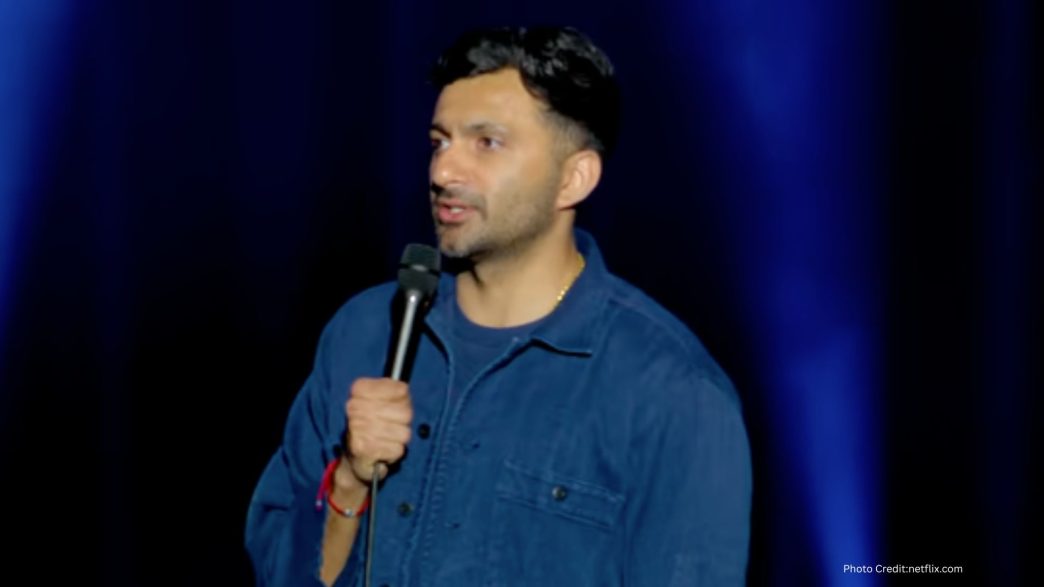
Nimesh Patel’s new Netflix special, ‘Buy the Dip,’ reflects on his journey from finance to stand-up comedy, addressing personal experiences and broader political issues, including immigration and the Israel-Palestine conflict.
Nimesh Patel, a comedian who has gained recognition for his unique blend of humor and social commentary, recently released his Netflix comedy special, ‘Buy the Dip.’ The special showcases Patel’s adeptness at weaving personal anecdotes with broader societal issues, providing insight into his life experiences and the cultural context that shapes his comedy.
Born and raised in New Jersey, Patel initially pursued a pre-med degree at New York University before transitioning into finance. However, his career took a pivotal turn in 2016 when he lost his finance job, coinciding with an opportunity presented by comedian Chris Rock, who discovered Patel at the Comedy Cellar in New York. This serendipitous moment led Patel to write for Rock during the 2016 Oscars and eventually to become the first Indian American writer in the history of ‘Saturday Night Live’ (SNL), a role that earned him an Emmy nomination.
“It was a very star-aligning kind of a moment,” Patel reflected in a recent interview, emphasizing the unexpected trajectory of his career. “I’ll happily admit that I was not good at those jobs… I was still finding and having to cultivate my own voice.” This search for authenticity continues to inform his comedic style, which combines his finance background with observational humor.
Personal and Political Commentary
‘Buy the Dip’ not only serves as a showcase of Patel’s comedic talent but also as a platform for him to address significant issues affecting society today. The title itself references a common financial strategy, which Patel uses as a metaphor for optimism amidst challenges. He shared, “I have a kid. I’m trying to remain an optimist in this world that tries to shake down optimism and punch it in the face.” This duality of finance and hope resonates throughout the special, as Patel navigates topics like parenting, healthcare, and political sentiment in America.
Patel also tackles more contentious subjects, such as the Israel-Palestine conflict. He recalls a viral moment from 2018, where an impromptu joke about Israeli progressive rock led to a deeper reflection on the ongoing strife in the region. “I wish, at that time, I had more of a knowledge base about the conflict to really dig in on it,” he admitted. Over the years, Patel’s stance has evolved as he grapples with the implications of the situation. He expresses a clear understanding of the suffering in Gaza, framing it within his identity as a brown person and the historical context of oppression.
In ‘Buy the Dip,’ Patel critiques the false equivalencies drawn between Judaism and the Israeli government’s actions, highlighting the complexities of religious identity and political affiliation. He humorously yet pointedly addresses the weaponization of religion in political discourse, stating, “The way that religion’s been weaponized is ugly.” This commentary reflects Patel’s desire to foster understanding while also confronting the uncomfortable realities of political affiliations, particularly within the South Asian community.
Addressing Immigration and Identity
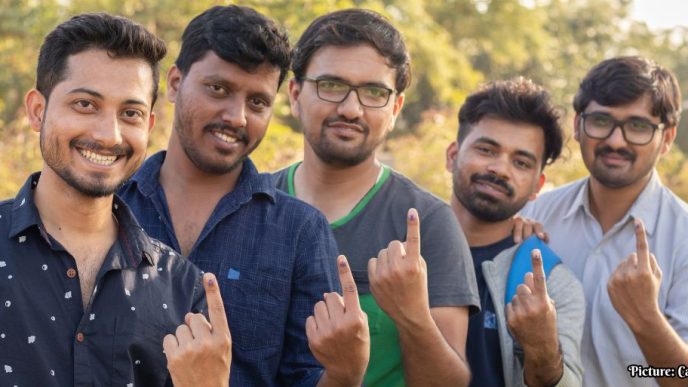
Patel’s reflections extend to the rising anti-immigrant sentiments observed in the United States and beyond. He brings attention to a recent incident involving Bo French, the Republican nominee for Texas railroad commissioner, who criticized a photo of South Asian students celebrating a college football victory. Patel countered this narrative, asserting, “Those kids likely represent some of the best students in Texas. And they are Americans.”
Continuing his analysis, Patel scrutinizes the systemic issues surrounding immigration policies, citing the H-1B visa program established during the George H.W. Bush administration. He argues that addressing the root causes of immigration—driven by corporate interests—should take precedence over anti-immigrant rhetoric. “Every place is richer and better because of immigrants and what they bring to the countries that they go to,” he stated, advocating for a more inclusive narrative about the contributions of immigrants in America.
Patel’s comedy not only entertains but also serves as a critical examination of societal norms and political landscapes. He aims to bridge the gap between humor and serious discourse, encouraging his audience to reflect on their own beliefs and the narratives that shape their understanding of identity and community.
Conclusion: A Unique Perspective
‘Buy the Dip’ encapsulates Patel’s journey as a comedian and an individual navigating a complex cultural landscape. Through his humor, he invites viewers to engage with profound issues while maintaining an optimistic outlook. Patel hopes that audiences can find something relatable and meaningful in his work, stating, “It’s probably the most Indian special I’ve put out… But it’s also deeply American, and I think very universal.” The special is currently available for streaming on Netflix, offering a blend of laughter, insight, and a reflection on the intricacies of modern life.