

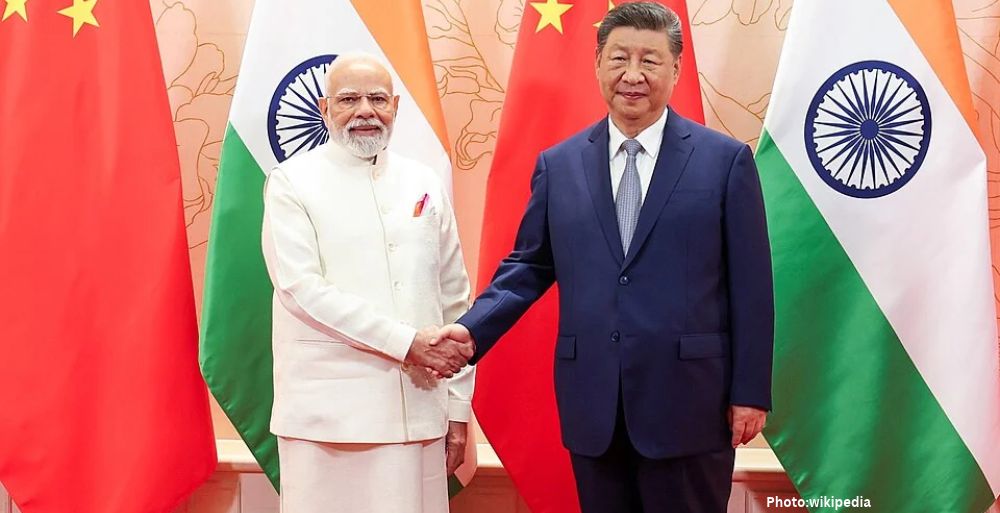
November 5, 2026 — The Asia Society Policy Institute’s Center for China Analysis (CCA) has published a new paper, “What Is Driving the Pragmatic Re-engagement in the Sino-Indian Relationship?,” written by Brian Wong, Non-Resident Honorary Fellow at CCA, and Aravind Yelery, an Associate Professor at Jawaharlal Nehru University in New Delhi.
Standoffs and skirmishes along the India-China border in 2017 and 2020 left the relationship between the two countries at a nadir. However, Delhi and Beijing have made recent advancements toward a fragile détente through careful political engagements and the loosening investment restrictions.
The authors find that this shift toward “pragmatic re-engagement” not only has been motivated primarily by domestic factors in both India and China, but also can be sustained through a roadmap which they outline.
Wong and Yelery lay out Delhi and Beijing’s cases for thawing ties with each other, demonstrating that this drive towards normalization had been underway long before U.S. President Donald Trump returned to office in 2025. “It would thus be erroneous to read too much into the U.S.’ role in prompting the repair to the bilateral relationship,” they write.
To advance further toward normalization, the authors identify three key pillars of action on which India and China can engage without power asymmetries or excess dependence:
- “The Low-Hanging Fruits:” Pursue selective integration in sector-specific areas such as electronics, electric vehicle, and battery manufacturing which present opportunities for bilateral cooperation with low political risk, commercial precedent, and minimal incremental policy costs;
- “The New Fruits of Synergy:” Expand this integration into the pharmaceutical, fertilizer, and green technology industries which are characterized by a deeper dependency;
- “The Human Connection:” Foster cultural cooperation through people-to-people exchanges to build a sustainable relationship that extends past government relations.
“The proposed incremental approach offers a far more credible path than naïve, unstructured engagement or unbridled decoupling,” Wong and Yelery write. “Ultimately, it serves as a litmus test for the extent to which economic interdependence can be fostered in a way that yields reciprocal benefits, without requiring either government to set aside broader security and political concerns.”
India and China are the two most populous countries in the world. As key economic powerhouses exhibiting a high degree of respective strategic autonomy in their foreign policies, they share memberships in multilateral forums and organizations such as BRICS+, Shanghai Cooperation Organization (SCO), and the consultative trilateral Russia-India-China (RIC) grouping.1 India and China trace their origins to historically prominent civilizations—a history that both governments draw heavily and tactically upon as sources of legitimacy.
The Republic of India gained independence in 1947 and the People’s Republic of China was founded in 1949. Despite both countries being key participants in the 1955 Bandung Conference, an initially warm period of leader-to-leader exchanges, and their similarly non-aligned foreign policies,2 questions over the status of Tibet and its adjoining borders had simmered for years. This mistrust finally reached a tipping point in 1962, when the boundary war exposed how deep the rift between the two sides had grown, leaving the Sino-Indian relationship in a state of fundamental, deep mistrust, enduring antagonism, and, as that war first demonstrated, occasional kinetic conflict.
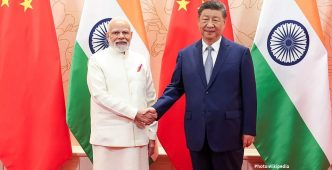
The visit by then-Prime Minister Rajiv Gandhi in 1988, followed by sustained efforts under successive Congress-led, NDA, and UPA governments, ushered in roughly thirty years of relatively constructive, pragmatic engagement between the two countries. That trajectory reversed with the Doklam standoff in 2017 and the 2020–21 border skirmishes between the People’s Liberation Army (PLA) and the Indian Armed Forces, which together precipitated a multi-year freeze in bilateral relations, backchannel and commercial engagement notwithstanding. That freeze ended with the October 2024 talks between Prime Minister Narendra Modi and President Xi Jinping in Kazan. 3
The two years since the Kazan meeting (16th BRICS Summit, October 22–24, 2024) have seen cautious attempts to thaw the bilateral relationship, which the authors term as indicative of pragmatic re-engagement. High-level meetings between the Indian Minister of External Affairs S. Jaishankar, Indian National Security Advisor (NSA) Ajit Doval and China’s top diplomat Wang Yi across both multilateral forums and bilateral settings in late 2024 and early 2025, capped off by two visits by Jaishankar and Wang to each other’s country in July and August, paved the way for the Modi–Xi meeting in Tianjin, on the sidelines of the 2025 SCO summit. 2025 saw the recommencement of commercial flights, the gradual reopening of cross-border trade, and talk of easing visa and people-to-people exchanges between the two economies, followed by Delhi’s amendment of the Press Note 3 stipulations and lifting of de facto restrictions on Chinese businesses vis-à-vis critical infrastructural tenders in 2026.4
The Modi–Xi bilateral meeting on the sidelines of the 18th BRICS Summit in New Delhi on September 12, 2026—during President Xi’s first visit to India in seven years—came after a difficult summer along the LAC, marked by Chinese patrol activity and temporary encampments in the Taksing sector.5 This friction threatened to unsettle the gradual normalization set in motion by the May 2026 WMCC talks and talks over normalizing cross-border (across the Himalayas) trade in late July and early August.6 The 25th Special Representatives’ round in Beijing on August 26, together with the Modi–Xi meeting at the SCO Summit in Bishkek, did much of the work of easing tensions beforehand.7 Beijing, for its part, sought to insulate the BRICS visit from the boundary dispute altogether, stressing that established bilateral mechanisms remained equal to managing differences. On September 11, China reiterated its readiness to follow the two leaders’ strategic guidance, “properly handle differences” and approach the relationship from a “strategic and long-term perspective,”8 subordinating bilateral friction to the wider imperative of BRICS cohesion.
It would be tempting and partially reasonable to attribute such normalization to factors exogenous to the two countries—such as the return of U.S. President Donald J. Trump to the White House, which has contributed to an escalation in tensions between Washington and Delhi, as marked by the acrimonious rhetoric emerging from key advisors to the Trump administration.9
Yet such a reading obscures the role of prominent Indian manufacturers, businesses, and economically oriented technocrats, whose advocacy is driven largely by supply chain-oriented considerations. Indeed, over the past two decades, China has mostly alternated between being India’s largest and second-largest trading partner,10 though Chinese equity inflows in India remain heavily limited.11 Such a view also overlooks the Chinese party-state’s growing desire to strategically and discursively position itself as a partner in global governance and export its robust supply of global public goods, such as renewables, to the rest of the “Global South.”12
The path towards a comprehensive improvement in bilateral relations—defined by a degree of sustained de-militarization along the border and rebalancing of trade—remains fragile and uneven. For the Sino-Indian relationship to truly evolve towards a more mutually conducive modus vivendi, three low-hanging fruits should be pursued: more substantive alignment in the renewable value chains, carefully specified and selective integration of pharmaceutical, and fertilizer supply chains and strengthening of people-to-people connectivity and exchanges.
I. Winds of Change—The Drive toward a Fragile Détente?
The past six years have seen apparent dramatic oscillations in the bilateral relationship, with a significant deterioration in diplomatic and political relations triggered by the 2020 clash, even whilst economic ties remained broadly stable. A series of high-level backchannel talks then provided the foundation for a high-visibility episode of rapprochement in late 2024, with momentum apparently picking up throughout 2025-26.
Navigating the Aftermath of the Galwan Clash
The events of 1962 resulted in a de facto Sino-Indian border known as the Line of Actual Control (LAC). The LAC, coupled with the border between Sikkim and Tibet, emerged as the primary basis of heated, at times acrimonious disputes between both Beijing and Delhi concerning their trans-Himalayan border.13 Indeed, the Galwan clash could be traced to an intensifying spiral of border and military disputes, driven primarily by the unsettled status of the Sino-Indian boundary, disputes over tri-junction areas involving Bhutan, including Doklam, as well as a broader military build-up along the LAC.
In 2017, the Indian Armed Forces and the People’s Liberation Army engaged in a standoff over the Chinese construction of a road in Doklam—in territory claimed by both China and Bhutan. Between June and August 2017, Chinese and Indian troops faced off against one another over the touted road construction. Indian troops entered the area and blocked the construction, acting under India’s 2007 friendship treaty obligations to Bhutan.14 Both Beijing and New Delhi became precipitously convinced that the other’s territorial claims were fundamentally incompatible with their own, a disagreement that would remain as a core non-negotiable issue, even despite growing economic synergies.15
Between 2000 and 2019, the Indian Border Roads Organization (BRO) built out the Darbuk-Shyok-DBO Road (DS-DBO Road) as a piece of strategic infrastructure that connected Leh (administrative capital of the Ladakh Union Territory in India) with the DBO military post near the Line of Actual Control.16 The completion of the road in 2019 was perceived by elements of the People’s Liberation Army as fundamentally altering the power distribution along the border—in enabling direct military supplies to expediently reach DBO from Leh, the road effectively shored up India’s strategic leverage and deployment capacity vis-à-vis the region. Select Chinese voices saw the infrastructure as a direct threat to China’s strategic and economic interests in the region—including the multibillion-dollar China-Pakistan Economic Corridor (CPEC).17
The two sides have been at loggerheads on patrolling along the LAC for a long time, with forward patrol troops often complaining of being obstructed by the other side. At Galwan, disagreements over patrol access and resistance to changing force postures came to a head. Indian patrols were prevented from reaching several Patrolling Points (PPs) along the LAC, particularly in the vicinity of PP14, where the prolonged standoff turned violent on the evening of June 15, 2020. This was the first deadly confrontation on the India-China border in more than 40 years and the event that changed the terms of the relationship for years to come.18 Former NSA Shivshankar Menon described China’s behaviors as “different from what [India has] seen in the past.”19 He separately noted that the event marked a “fundamental and consequential shift in [China’s] behavior.”20
Numerous first-hand accounts21 shared with the authors point to the emergence of significant and enduring mistrust on the part of the Indian strategic and foreign policy apparatus towards China, with the incursions described as a “tipping point” in the relationship.22 Within weeks, the Indian government banned 59 Chinese mobile applications, whilst senior officials vowed that India would not yield on “integrity and sovereignty.”23
In contrast to Indian discourses, in the aftermath of the skirmish, some voices in the Chinese strategic community sought to play down the clash as a regrettable24—albeit by no means paradigmatically disruptive—manifestation of India’s long-standing “Forward Policy” doctrine.25 Whether such voices were representative of the highest leadership or were merely tasked with discursively hedging and undertaking damage control in the aftermath of the rupture remains an open question. Select prominent state-affiliated figures, including diplomats, scholars, and media commentators, sought to bracket off the particular border standoff from a more general “normal state-to-state relationship,” stressing that it would not be in China’s interest for India to develop engrained antipathy toward it.26 Such apparent disparities in perceptions were inherently worthy of note.
A series of backchannel conversations set a de facto floor and precluded the relationship from entering a genuine free-fall, which could have taken the form of unbridled securitization and escalation in violence between the two armies. Whilst the first commander-level conversation on the border situation took place on June 6—a little over a week prior to the casualty-inducing clashes—the second talk was held on June 24,27 with 23 rounds of Corps Commander Level Meetings having taken place between June 2020 and October 2025.
On the civilian front, Ajit Doval and Wang Yi held a direct phone call in July 2020, with a five-point consensus established between S. Jaishankar and Wang Yi in Moscow in September the same year.28 A mutual, “synchronized and organized disengagement” of troops from the two banks of the Pangong Tso lake in February 2021 further ameliorated tensions and was followed a year later by Wang Yi’s visit—the first since 2020—to Delhi in March 2022.29 These developments spoke to an attempt by senior diplomatic and intelligence leaders on both sides to build upon the momentum generated through the military-to-military dialogues.
Beneath the surface, the commercial relationship also appeared to have survived the political frost. China became India’s second-largest export market in 2021. Bilateral trade crossed USD 136.2 billion in 2023-24,30 with Indian imports of Chinese industrial inputs, electronics, and intermediate goods rising considerably over recent years. Interviews with importers, retailers, warehouses, and industrial development corporations in India revealed that their dependence on Chinese supplies continued to rise in non-niche markets, in part due to the then-ongoing COVID-19 pandemic.
Between 2023 and 2024, high-level engagement intensified, albeit largely on the sidelines of well-established multilateral forums. The sideline diplomatic meetings and discussions created the permissive environment in which a direct conversation on the boundary question became conceivable, making standalone bilateral contact appear less like a concession.31 S. Jaishankar met with Wang Yi on the margins of the ASEAN Regional Forum in July 2023, and the SCO Council of Heads of State and ASEAN-related Foreign Ministers’ Meetings in July 2024. Ajit Doval and Wang held talks on the sidelines of BRICS High-Ranking Officials Responsible for Security Matters meetings in 2023 and 2024. Wang’s resumption of foreign ministerial duties in July 2023 incidentally helped ensure that the Chinese side was represented by a single, overarching voice in securing technically intricate and diplomatically demanding breakthroughs with its counterpart. On the other hand, these sideline diplomatic meetings also provided political cover for the substantive bilateral talks.
The Kazan Meeting and Subsequent Political Developments
While the seeds for détente had been sown prior, the Modi-Xi meeting on the sidelines of the 16th BRICS Summit in October 2024—their first in five years—offered a high-level boost and ceremonially significant validation of the fragile détente. The Chinese readout of Xi’s remarks struck a conciliatory note in positing that “Development is now the biggest shared goal of China and India […] the two sides should continue to uphold their important understandings, including that China and India are each other’s development opportunity rather than threat, and cooperation partner rather than competitor.”32 Modi highlighted that “the India-China relationship is important not only for our people, but also for global peace, stability and progress.”33
The Special Representatives mechanism warranted separate emphasis as the institutional spine of the rapprochement. The 23rd meeting between Special Representatives Doval and Wang took place in Beijing on December 18, 2024,34 the first such meeting since the Galwan clashes. The 24th Meeting was held in New Delhi on August 19, 2025, during Wang Yi’s two-day visit,35 laying the groundwork for the Modi–Xi meeting in Tianjin. The 25th Special Representatives’ talks took place in Beijing on August 26, 2026 and produced an eight-point outcome document, which included critical aspects such as reaffirming their mutual commitment to border peace; agreeing to keep negotiating a boundary settlement under the 2005 framework; setting up a new Expert Group on Boundary Delimitation and a Working Group on Border Management; agreeing to route any ground incidents through diplomatic and military channels (WMCC plus local commander meetings); adding two new General/Senior Military Commander meeting points; opening two additional military hotlines in the Eastern and Middle Sectors; agreeing to reopen three border trading points and expand pilgrim access to Kailash-Manasarovar; and committing to expert-level talks on trans-border river data.36
2025 marked the inauguration of genuine bilateral, as distinct from merely sideline diplomacy. Jaishankar’s July 2025 visit to China—his first standalone trip since 2019—signaled accumulating momentum in the thaw. Wang’s reciprocal visit to New Delhi that August featured a densely packed schedule. A series of meetings spanning August 18 and 19, encompassing foreign minister talks, the 24th round of the Special Representatives, and a call on the Prime Minister, was compressed into a single 48-hour window. Wang advanced the formulation that India and China should be “partners, not adversaries,”37 a rhetorical repositioning that, whatever its sincerity, confirmed that both capitals had chosen to frame the relationship in the idiom of cooperation rather than rivalry.
The Investment Piece
Whilst bilateral trade remained vibrant even during the nadirs of the political relationship, the Indian state had long been reticent about Chinese investments in the country. China’s direct share of India’s cumulative FDI equity inflows between April 2000 and December 2025 stood at a negligible 0.3%, roughly USD 2.51 billion.38 Delhi firmly believed it could restrict Chinese investments without stymying bilateral trade—and so it did. Indeed, in April 2020, Press Note 3, issued by the Indian Department for Promotion of Industry and Internal Trade (DPIIT), amended the country’s FDI policy to require government approval for all investments from countries sharing a land border with India (including China and Pakistan)—in response to concerns that key pandemic-stricken Indian firms would be acquired by opportunistic and non-aligned foreign actors.
The tides began to turn in the thick of the political normalization efforts at the senior ministerial level. Helmed by the Chief Economic Advisor of India V. Anantha Nageswaran, the Economic Survey 2023-24 raised the view that Chinese investment could strengthen India’s export competitiveness, particularly in sectors such as electronics and solar manufacturing, thereby leveraging China’s own supply-chain strengths for Indian industrial ends. 39
The revision of Press Note 3 arrived on March 10, 2026,40 when the Union Cabinet approved amendments enabling investors from China and other land-border countries holding up to 10% noncontrolling stakes to invest through the automatic route, alongside introducing a 60-day timeline for processing proposals in select manufacturing sectors such as electronic components, polysilicon, and ingot-wafer, domains where Chinese firms had developed a decisive lead in global supply.41 The thaw in political relations and loosening of investment restrictions are thus two faces of a multi-dimensional recalibration.
The Xi-Modi Meeting of 2026
The Modi–Xi meeting in September 2026 converted four years of incremental disengagement into a structured normalization track, and the New Delhi Declaration supplies its multilateral scaffolding.42 The “three mutuals” formulation—mutual respect, mutual sensitivity, and mutual interest—highlights Delhi’s negotiating frame as the agreed basis for boundary management, decoupling the border question from the broader macroeconomic discussions, without thereby offering significant concessions on the former.43 The commitment to “meaningful” market access targets the structural asymmetry directly, opening space for Indian pharmaceuticals, agricultural exports, and IT services to address a deficit that remains politically untenable. Investment liberalization is being tested by the Indian side through the relaxation of restrictions in non-sensitive manufacturing sectors, tied to technology transfer and value addition—precisely the agenda advanced in the Declaration’s paragraphs 84 and 86 advance on supply chains and global value chains.44 Symbolically, both capitals now share codified language against unilateral tariff and non-tariff measures (paragraph 21), secondary sanctions (paragraph 22), and carbon border adjustment mechanisms (paragraph 108).45
II. Interpreting the Shift—Endogenous, Not Exogenous?
We contend that the primary explanations for the recent developments in Sino-Indian relations should be primarily found in the domestically oriented calculus of leaders in Beijing and Delhi, as opposed to the decisions and policies adopted by Washington under the second Trump administration.
India’s Economic Case for Re-engagement
In recent years, Delhi’s foreign policy has moved closer to a set of West-anchored frameworks, including deepened European partnerships, in which Delhi retained embedded interests and a degree of normative affinity, even as it consciously diversified its economic engagement with the Gulf states, ASEAN, and Japan. The resultant drive towards multi-alignment reflects a keen desire to reimagine and constructively shore up India’s economic resilience amidst escalating protectionism, though the empirical contours of its trade with China reflect a perhaps more entangled reality. The figures are instructive. According to India’s Department of Commerce, the bilateral trade deficit with China widened to a record USD 99.2 billion in 2024-25, more than double the USD 44 billion gap of 2020-21,46 before swelling to roughly USD 112 billion in 2025-26,47 the year in which China displaced the United States to re-emerge as India’s largest trading partner, with bilateral trade approaching USD 151 billion.48
As India emerged from pandemic lockdowns in 2021–22, its reliance on Chinese industrial chemicals, paints, and construction materials rose sharply.49 With a rebounding real estate sector and increased urban consumption, the demand for raw materials (such as pigments, titanium dioxide, and various resins) used in paints and coatings increased significantly. The significant demand for Chinese glass, sanitary construction supplies, construction engineering, and other materials across tier-two and tier-three markets further exposed these dependencies.50 The surge reflected a fast-recovering manufacturing base, a wave of infrastructural spending, and Chinese inputs that remained too cheap and readily available for Indian industry to pivot elsewhere.51 By the early 2020s, close to 70% of India’s active pharmaceutical ingredients were sourced from China.52
As part of a broader industrial-policy program aimed at expanding domestic manufacturing, attracting investment, creating scale and employment, improving competitiveness, and strengthening pharmaceutical supply chains, Production Linked Incentive (PLI) schemes were crafted carefully. But within the bulk-drug/API component, the advent of import substitution and prevention of dependence on China became central strategic rationales. This is particularly evident in the Indian cabinet’s original announcement, which stated that the scheme was intended to create a “sustainable domestic supply” of critical key starting materials, intermediates and APIs and thereby reduce import dependence. It also explicitly connected continuous API supply with “Drug Security.”53 From the Basic Customs Duty regime on solar panels introduced in 2022 to a laptop import licensing attempt in 2023,54 the Indian state sought to curb reliance upon Chinese components. Yet such efforts have yielded limited results in practice.55 The economic case became more pronounced as Beijing began weaponizing its chokepoints over rare earths and critical minerals. Its export licensing on gallium and germanium from August 2023 onwards, and on graphite from December onwards, stirred anxieties that reached well beyond commercial circles—extending into defense, space, and other critical sectors. These measures were ostensibly aimed at the United States, though they inadvertently exposed India’s downstream fragility.56
China, in effect, persisted as an important supplier of India’s industrial requirements, from the lowest-assembly-line to the highest-value-added products.57 The Confederation of Indian Industry cautioned that the country’s heavy reliance on Chinese electronic components, some 62% of such imports by its estimate, poses a “significant risk” to the long-term sustainability of domestic manufacturing.58 A parallel study by the Federation of Indian Chambers of Commerce and Industry (FICCI) underscored the breadth of the exposure. 59
The country’s own industrial leadership had grasped these constraints and come to realize that whilst the cultivation of domestic self-sufficiency,60 per the vision of Atmanirbharta,61 is of course a desirable long-term objective, a healthier supply chain relationship with China is a short- to medium-term necessity—as a means to an end.62 If leveraged well, such supply chain integration could facilitate vital technology transfers to India in the long term.
These concerns found their way into elite discourse in the run-up and aftermath to India’s 2024 general elections, with youth unemployment hovering above 10% (and reaching as high as 15%, per World Bank estimates) in 2024 and growth rates slowing to 6.5% in 2024-25.63 Of course, such growth rates remain impressive in abstract, and the statistics must be situated in the context of India’s significant economic potential. In line with his remarks in the previous year’s edition, Nageswaran noted in the 2024-5 Economic Survey that despite the “single-source concentration risk” from China, to bolster domestic manufacturing, India should go “all out to attract, promote and facilitate further domestic and foreign investments that India needs to become a competitive and innovative economy”—from countries including China. He also flagged that “the road to energy transition runs through China.”64 Nageswaran’s views echo the perceptions and views of select economically minded technocrats65 66 who worked with the Indian government and favor a pragmatic reset to the bilateral relationship that—in compliance with sovereignty considerations and political constraints—could deliver vital fruits for the Indian economy and people.67
China’s Smorgasbord of Tactical Considerations
When viewed from the Chinese side of the ledger, India appears to be a comparatively minor destination in China’s export portfolio. Against total Chinese merchandise exports of roughly USD 3.57 trillion in 2024, exports to the European Union totaled some USD 500 billion, and those to the United States some USD 453 billion, with each accounting for over 15% of China’s shipments, whilst India comprised only around 3%.68
Yet the economic rationale remains highly relevant for a segment of Chinese manufacturers in electronics, solar componentry, and industrial machinery, for whom the Indian market offers a meaningful and expanding source of demand. The loss of market access would be registered on their order books and bode poorly for their future prospects.69 Furthermore, as Chinese firms seek new overseas markets and potential destinations for manufacturing offshoring—amidst the intense involution that has come to characterize its domestic political economy—a more stabilized relationship with India is indubitably aligned with the country’s macroeconomic objectives.
On a more geopolitical and tactical front, the Chinese state has also exhibited apparent keenness in recent years to stabilize its relations with its land neighbors—particularly India and Vietnam, respectively formidable powers with which its relations have long been complex and at times caustic. The inaugural Central Conference on Work Related to Neighboring Countries was convened between April 8–9, 2025, with all seven members of the Politburo Standing Committee and Vice President Han Zheng partaking in the meeting. This was the clearest signal emitted that Beijing was keen not only on stabilizing its neighborhood relations but also in elevating the apparent tactical priority of fostering a more coordinated approach to its purported “neighborhood” (zhoubian).70 There nevertheless exists limited evidence or precedent to suggest that this newfound emphasis on the neighborhood at this conference connotes a fundamental reorientation of Beijing’s strategic priorities away from other competing preoccupations, such as the Sino-American and Sino-European relationships.
Fundamentally, Beijing’s growing openness to a new modus vivendi with Delhi can be traced to its desire to discursively portray itself as a “benevolent actor” capable of addressing and channeling the “structural grievances of the Global South.”71 The raft of “Global Initiatives”—spanning the domains of AI, civilizations, development, governance, and security—also speaks to the Chinese state’s broader push to be a visible, influential power against the backdrop of talk of a “post-Western” order.72 Indeed, the Chinese readout from Kazan asserted that “as time-honored civilizations, large developing countries and important members of the Global South, China and India both stand at a crucial phase of their respective modernization endeavors. It is in the fundamental interest of the two countries and two peoples to keep to the trend of history and the right direction of bilateral relations”—which could be read as a discursive reframe of the Sino-Indian relationship around the common themes of modernization, development, and “greater democracy in international relations,”73 a co-optation of the normatively loaded term to advocate greater multipolarization in the global order.
The U.S. Factor?
All of this is to say that whilst the return of Trump to the White House indubitably played a role in facilitating the détente, it was by no means the only or primary explanation.
Indeed, the U.S factor played out on at least three fronts: Pakistan, commerce and trade, and politics.
The first and foremost concern for many in the Indian security establishment was the White House’s stance on the 2025 India-Pakistan conflict. In April 2025, a deadly terrorist attack in Pahalgam, Jammu and Kashmir, killed twenty-six innocent tourists.74 The Indian government subsequently launched targeted strikes on militant camps in Pakistan and Pakistan-occupied Kashmir between May 7–8, as part of Operation Sindoor.75 Pakistan responded that same day with mortar shelling along the Line of Control, followed over May 8–9 by an extended aerial, drone, and missile exchange.76 India suspended trade and downgraded diplomatic links, whilst Pakistan closed its commercial airspace for Indian flights.77
The reaction from Washington caught India by surprise. President Trump openly asserted and took credit for brokering a ceasefire to the conflict. Whilst the United States had taken a significant and open pro-India stance in previous clashes such as the 2019 Balakot strikes or the 2020 border standoff, the American diplomatic and national security apparatus was considerably more muted over the course of the 2025 conflict.78 Domestic commentators cast doubt over whether American support can be counted upon—not just vis-à-vis Pakistan, but also when it comes to guaranteeing Indian security against a more strategically demanding and territorially assertive China.79 To rebuild a temporary floor to the Sino-Indian relationship, then, appears to be an advisable interim solution.
Commercially, both the first-order trade protectionist policies and the second-order inconsistencies of the incumbent administration have fueled a growing belief in Indian policy circles that Trump’s United States was neither credible nor receptive towards Indian overtures. These included a 25% “reciprocal” tariff from August 7, 2025, onwards, which doubled to 50% with an additional Russian-crude penalty effective August 27 onwards, and a USD 100,000 H-1B visa fee that fell heavily on the workers in India’s IT service sectors.80 In November 2025, sanctions on Russian oil majors further constrained India’s energy sourcing. Whilst the effective tariff was reduced to 18% through a successfully devised trade understanding in early 2026, the damage had been done—Indian firms that had depended heavily upon the American market are now looking elsewhere for alternatives.
From 2025 onwards, Delhi has pursued trade agreements with countries beyond the United States and China, with negotiations at varying stages of completion. The UK deal is the furthest along, signed in July 2025 and in force since July 2026. The India-New Zealand Free Trade Agreement entered into force on October 20, 2026, whilst the EU agreement, concluded in January 2026, still awaits signature and is expected to be signed by December 2026.
Other negotiations remained active as of September 2026. These included a Preferential Trade Agreement with Mexico (terms finalized, signing pending), an upgrade of the Chile pact to a full Comprehensive Economic Partnership Agreement (targeted for the end of 2026), talks with Peru, and a Free Trade Agreement with the Russia-led Eurasian Economic Union, which had been under negotiation since August 2025.81 The reopening towards China, then, can be seen in part as a core component of such diversification efforts—in turn sparked partially by the capricious vacillations of the White House.
Finally, the critical remarks of Trump and some of his closest affiliates have drawn considerable ire from the Indian population, with the Indian government effectively driven by popular pressure to take a more explicit stance in criticizing such remarks. Peter Navarro, senior counselor for trade and manufacturing to U.S. President, dubbed India “an oil money laundromat for the Kremlin,”82 whilst Trump described India as a “dead economy” with which the US did “very little business.”83 In April 2026, Trump shared on Truth Social the remarks of podcaster Michael Savage, who dubbed “China or India” as “hellhole[s] on the planet.”84 The stern rebuke from the Indian Ministry of External Affairs spoke to the growing sense of frustration and resentment towards the Trump administration’s attitudes on India amongst senior policymakers.85
Yet whilst American rhetoric and actions certainly had a role to play, the above chronology demonstrates clearly that the drive towards normalization had begun long before Trump’s second term (January 2025 onwards). Additionally, intensifying trade protectionism is by no means a U.S.-only phenomenon—the EU introduced non-tariff barriers through the 2023 Deforestation Regulation, which afflicted Indian exports of coffee, leather, and paperboard;86 if anything, it was the ‘pull factor’ of Chinese dominance in critical supply chains that played a more substantive role in prompting the Indian private sector to advocate deepening trade ties and strengthening technology transfers-partnerships vis-à-vis its Chinese counterpart. It would thus be erroneous to read too much into the U.S.’ role in prompting the repair to the bilateral relationship.
III. Three Key Pillars of Recommendations
The above has highlighted that economic realism and tactical considerations—as opposed to political reorientation or grand strategy—comprise the predominant forces shaping the state of the Sino-Indian relationship. In his opening remarks to Chinese Foreign Minister Wang Yi in New Delhi on August 18, 2025, Jaishankar listed border peace, terrorism, and economic ties as parallel priorities.87 He clarified “the fight against terrorism in all its forms and manifestations” as “another major priority,” alongside border de-escalation (“the process must move forward”) and a set of economic and connectivity issues (trade, border trade, river data sharing), all under his “three mutuals” framework (mutual respect, mutual sensitivity, mutual interest) for the relationship. The statement indicated clearly that “China cannot afford ambiguity or double standards in combating terror in the context of its close relations with Pakistan.”88 Hence, any serious attempt to strengthen the bilateral relationship, then, must be anchored in more creative and forward-thinking proposals in the economic domain (which includes supply chain, technological, and developmental considerations), whilst taking seriously—in a manner that is perhaps hitherto under-examined—the domestic political realities and tactical priorities adopted by both leaderships.
Of course, none of these efforts can take place without a clear, even if temporary, acknowledgement from both capitals at the highest level‑that there exist fundamental differences between the two governments. For example, disputes over the LAC, China’s relationship with Pakistan, and broader questions of Chinese manufacturers’ exporting of their manufacturing surplus without at all creating shared value are all issues that must be grappled with. The former two are distinctly security-centric yet have spillover implications for economics, whilst the last item, even if nominally economic, also reflects deep-seated concerns about economic security.
The authors call upon China and India to ground their dyadic interactions in the principle of constructive connectivity—synergy that avoids power asymmetries and the creation of excess dependence, through the institutionalization of meaningful knowledge exchange and technology transfers between the two countries. These bonds should extend beyond superficial engagement and existing areas of collaboration, and into domains where barriers and obstacles have long been entrenched. Most fundamentally, such connectivity should take the form of trust-building—fostering bonds between leaders of today and tomorrow, as well as the private sectors and civil societies of the two countries, where and if politically feasible.
From China’s perspective, there should be a more vigorous effort to deliver positive, achievable, and demonstrable results in the bilateral relationship, to move existing discussions on cooperation and engagement beyond the rhetorical and discursive, and to reframe the dynamic through lenses other than security and securitization. From India’s perspective, the most advisable path ahead would be a pragmatically controlled relaxation of regulations and barriers to entry, to permit Chinese involvement in strategically significant sectors, industries, and fields, where India is keen on accelerating progress. This approach would thus grant Chinese access where India’s industrial development requires it, whilst reducing its strategic vulnerabilities through investment screening, localization, and supply-chain diversification. Putting these two approaches together, the new modus vivendi is neither one of unbridled economic decoupling nor unrestricted commercial engagement, but one of selective integration.
Per this overarching principle, we propose three key pillars of action:
Pillar 1: Consolidating Value Chain Integration in Electronics, Electric Vehicles, and Battery Technology [“The Low-Hanging Fruits”]
Given the present zeitgeist, both Beijing and Delhi are open to further concessions on the trade and investment front—provided concrete, demonstrable, and politically palatable low-hanging fruit can be unlocked. Indian Ambassador Vikram Doraiswami’s recent remarks in Beijing that greater Chinese investment in India would be “good for the larger relationship,” alongside his push for wider market access for Indian pharmaceutical exports, speak as much to this point.89 These developments, spanning power sector procurement, electronics manufacturing, and envoy-level advocacy, indicate a narrow but optimistic opening: sector-specific access on the trade and investment side, paired with explicit diplomatic advocacy for market reciprocity.\
Electronics
Electronics manufacturing has emerged as one of the core pillars of India’s broader industrial and export ambitions alongside semiconductors and defense production. The sector has expanded considerably in recent years, rising from USD 37 billion in 2015-16 to USD 115 billion in 2023-24.90 Yet the economy remains vitally dependent upon imported critical components—e.g., printed circuit boards, displays, batteries, and camera modules. India has a strong stake in pushing for a shift from dependence on imported finished goods towards domestic value addition, emboldened by diversified, screened supply chains.
In its economic relationship with India, China is balancing two sets of considerations: its long-standing proclivity to utilize its strong-hold over strategic exports (especially rare earths) as a source of leverage on one hand, and an acknowledgment of the drawbacks and challenges of involution (neijuan)—excessively cutthroat competition—in its advanced manufacturing sectors, which prompts its companies to seek alternative openings. To the latter, a growing number of private enterprises and subsidiaries of prominent state-owned enterprises are seeking alternative destinations for their manufacturing operations. Beijing is beginning to realize that total dominance over supply chains—through keeping them strictly within the country’s borders—is neither economically tenable nor diplomatically viable.91
Most electronics do not fall within the category of highly sensitive strategic assets for which no offshoring could be permitted. Indeed, both economies would stand to gain from a partial relocation of electronics supply chains from China to India, provided Chinese firms hire local employees, undertake genuine technology transfer, and comply with Indian-majority shareholding requirements.92 The stakes are already considerable. India hit a record USD 47 billion in electronics exports in 2025,93 with smartphone exports alone touching USD 13.4 billion in the first half of FY26,94 up sharply on the back of the Apple-Foxconn iPhone ramp-up. Yet this success sits on top of, rather than apart from, deep Chinese input dependence, since electronics account for roughly USD 38 billion of India’s January–October 2025 imports from China,95 and PLI-scheme assemblers rely heavily on Chinese-sourced components, capital equipment, and, until recently, Chinese technicians to keep their lines running. Given the long-standing role played by electronics exports in the Indian economy, India should be selective and cautious in opening up to, and leveraging, Chinese players in this sector as a means of bolstering its own technological and industrial growth.
This dynamic is already bearing fruit. For example, Dixon Technologies, India’s largest electronics manufacturing services company, operates two distinct business models with Chinese electronics giants: a joint venture with Hong Kong-based HKC for component manufacturing, and a controlling acquisition of Transsion’s Indian manufacturing arm, Ismartu India. In the former, Dixon holds a 74% stake, whilst HKC holds 26%. In the latter, Dixon possesses a 50.10% equity stake in Ismartu India, whilst Shenzhen-based Transsion supplies the underlying technology. Such partnerships provide Chinese parties with vital market access, whilst Indian parties stand to gain from the tech transfers and revenue streams. Three new buildings have been constructed for the HKC facility in Noida, though the exact headcount accommodated by the expanded capacity cannot be strictly quantified. With the stringent Press Note 3 guidelines, most of the profits from the joint venture have been reinvested into domestic manufacturing operations and research and development—the Chinese firms in HKC and Transsion are not repatriating the profits.
Joint-venture models, analogous to Dixon’s collaboration with its Chinese partners, offer a proven pathway for India to absorb manufacturing and design know-how whilst retaining majority ownership and governance control.96 Dixon’s two partnerships demonstrate that joint ventures can be administratively workable. The Indian Ministry of Finance’s carve-out for Chinese-linked power equipment firms also indicates that time-bound, sector-specific exemptions are administratively feasible. Going forward, Delhi should focus on establishing a standardized framework for component ventures, linking market access, incentives to measurable localization, technology absorption, Indian board control, and progressive domestic sourcing.
Of course, achieving alignment between Chinese and Indian interests would require trade policy technocrats in both countries to put their heads together in identifying a modus vivendi that accommodates national security and dependency considerations from both parties whilst advancing supply chain integration at large.
Electric Vehicles and Batteries
If successful, the model can be extended from electronics to electric vehicles and batteries, too.
With the Indian government targeting electric vehicles to constitute roughly one-third of total vehicle sales by 2030, the policy-led transition is well past the early-adoption phase.97 The electrification of India’s transport sector illustrates the selective-integration logic in its most advanced form. India’s EV sales trajectory illustrates the scale of this shift: annual sales rose from roughly 50,000 units in 2016 to 2.08 million units in 2024.98 China, by contrast, possesses a decisive technological lead in battery chemistry and charging infrastructure.
Electric vehicles and battery technology comprise precisely the “strategically sensitive but commercially attractive” category the selective-integration model is designed to manage, through ownership structures, localization commitments, and technology-transfer conditions. Existing collaborative arrangements, including Uno Minda’s technical licensing agreement with Suzhou Inovance and Tata Motors’ battery sourcing discussions with Chinese manufacturers, provide an empirical basis for scaling joint-venture frameworks under India’s PLI-Auto scheme, structured around majority Indian equity and phased technology localization.99 100
Electronics, electric vehicles, and batteries share the structural features that make them genuinely low-friction to pursue within India’s broad selective integration doctrine. Notably, an investment-screening framework is already in place and tested by operational necessity, with commercial precedents (Uno Minda–Suzhou Inovance, Dixon–HKC, Tata Motors’ battery sourcing) exemplifying feasibility under current rules. It also depicts a clear complementarity between Chinese technological strength, and Indian market scale and labor-cost advantage. So far, both already operate within a calibrated equilibrium of commercially beneficial yet strategically monitored engagement. This is what makes the EV/battery and electronics-component sectors the most immediately actionable areas of bilateral cooperation, with fairly low political risk, proven commercial logic, and minimal incremental policy costs.
Notably, whilst capital-commitment figures are well-documented for these deals, the same cannot be said of their performance and profitability figures, simply in virtue of the recency of such deals’ establishment and brokering. Take, for instance, the Uno Minda-Suzhou Inovance agreement, which was signed on February 17, 2025 and built on a June 2024 technical-licensing arrangement, whereby Uno Minda would hold a majority (70%) stake. The consolidated results of Uno Minda indicate that the parent company has performed relatively well throughout this period, with Q2 FY26 revenue of ₹4,814 crore (approximately USD 540 million), up 13% year-on-year, and profit after tax up 27.4% to ₹304 crore (approximately USD 34 million). Yet such numbers are indicative only—they demonstrate that the parent company is thriving, but do not specifically demonstrate that the joint venture is lucrative.101 In other words, it is too early to expect substantive, specific data.
Two Key Implications
Two implications follow. Firstly, both Delhi and Beijing should work collaboratively with one another in streamlining market access and reducing associated barriers, with particular attention paid to redressing the existing trade deficit between the two economies.102 A Board of Trade, comprising senior officials from India’s Ministry of External Affairs, China’s Ministry of Foreign Affairs, both countries’ Ministries of Commerce, and other related representatives and stakeholders, should be established accordingly, with its core priority being the identification of areas where Chinese state-owned enterprises can significantly increase imports from India—in exchange for streamlined market access in electronics, electric vehicles, and batteries.
Secondly, policymakers must distinguish amongst technologies that are commercially beneficial, industrially indispensable and strategically unacceptable. This is consistent with the view advanced by former Foreign Secretary Shyam Saran, who argues that it should fall to India’s national security establishment to determine which sectors warrant heightened sensitivity, rather than applying uniform restrictions across the economy.103 It is precisely within this framework of selective integration that EV manufacturing and electronics component manufacturing constitute the clearest instances of low-hanging fruit. In both sectors, the architecture for controlled engagement already exists, and operational precedents are already in motion. The marginal step required is institutionalization and negotiation of new principles of access.
Pillar 2: Expanding Supply Chain Alignment to Pharmaceuticals, Fertilizers, Green Technologies, and Beyond [“The New Fruits of Synergy”]
A second tier of cooperation, less immediate but nonetheless structurally viable, extends this logic of selective integration into sectors characterized by deeper dependency. These opportunities remain substantive, but they occupy a position one degree higher on the risk gradient than electric vehicle and electronics manufacturing.104
Pharmaceuticals
The pharmaceutical sector, which exhibits some of the deepest structural interdependencies between the two economies, also offers some of the clearest prospects for mutually beneficial cooperation. Between 2001 and 2024, India’s active pharmaceutical ingredient (API) and intermediate drug imports rose from roughly USD 1.8 billion to almost USD 26.0 billion, whilst finished pharmaceutical exports grew from about USD 1.0 billion to USD 23.3 billion over the same period.105 The country’s contract development and manufacturing market is projected at USD 23.3 billion in 2026, rising to USD 55.5 billion by 2033 at a 13.2% compound annual growth rate, driven by global drugmakers outsourcing formulation and complex manufacturing to India’s cost base.106
Yet undergirding these impressive numbers is the cold fact of supply chain dependence. By FY2024–25, China’s share of India’s API import bill had risen further to approximately 74%107 and remained particularly concentrated in antibiotic categories such as penicillins, azithromycin, and cephalosporins, where Chinese imports met over 90%108 of requirements. Historically, Chinese approval timelines and local registration requirements for the pharmaceutical industry have presented barriers that Indian manufacturers’ price competitiveness has been unable to overcome on its own. Symmetrically, domestic inertia and pressures in India have precluded vigorous consumer-oriented competition and technological advancements for Indian generics manufacturers. It is evident that cost-efficient Chinese upstream production plays a pivotal role in India’s globally competitive generics industry, which in turn supplies affordable medicines to over 200 countries.109
Thus far, India’s approach to its dependence upon China for API has been to turn towards a subsidy-driven protectionist program aimed at bolstering domestic capacities—namely, PLIs. The PLI for bulk drugs, backed by a ₹6,940 crore (approximately USD 780 million) outlay, has already commissioned 39 greenfield projects covering 28 of the 41 identified critical products. Such projects have generated cumulative sales of ₹3,792 crore (approximately USD 400 million) to Indian drug manufacturers as of June 2026.110
Substantive domestic capacity-building by India and relaxation to market access by China are mutually complementary and constructive for the two economies alike—a wider variety of affordable drugs for Chinese consumers, and more revenue generated for Indian firms.111 Indeed, the Indian government has consistently asked China to relax entry barriers. In late June 2026, Indian Ambassador to China Vikram Doraiswami met with the Director-General of the Department of Asian Affairs at the Chinese Ministry of Commerce to discuss ways to bolster trade ties—including in areas of high-quality generic pharmaceutical manufacturing.112
Should both sides move in this direction, the diplomatic groundwork already signaled could translate into the kind of firm-level cooperation visible in electronics and EVs, converting present asymmetric dependency into a more genuinely reciprocal platform for shared value creation. Additionally, with India supplying roughly one-fifth of the world’s generic medicines by volume and serving as a critical source of affordable healthcare for the developing world,113 a more resilient and diversified Sino-Indian pharmaceutical supply chain would strengthen global health security.114
Fertilizers
Fertilizers—namely, chemical nutrients for agricultural yield—are equally foundational or structural to India’s growth story. As one of the largest fertilizer importers in the world, India’s agricultural ecosystem is deeply exposed to geopolitical shocks in the Persian Gulf. The eruption of the war over Iran and the shipping standstill at the Strait of Hormuz have exposed major vulnerabilities, prompting India to seek alternative sources of fertilizers. Indeed, with 20-30% of India’s urea imports115 and 30% of its diammonium phosphate imports coming from the Gulf prior to the war116, there exists an urgent need to diversify and develop domestic fertilizer supply capacities.
On the other hand, in supplying nearly half of India’s specialty fertilizer imports, China’s mid-2025 fertilizer halt underscores the need for binding mechanisms from the Chinese side to ensure consistent supply.117 Whilst Indian buyers have been pursuing Chinese suppliers, a few suppliers have been held back for reasons beyond procedural bottlenecks. The weaponization of export restrictions over fertilizers undermines convergence and delays real-time breakthroughs.118 The Chinese must understand that if trust is to be cultivated and maintained in the Sino-Indian commercial relationship, a substantive commitment to providing an unfettered supply of fertilizers—especially amidst a wider regional crisis vis-à-vis agricultural development—is necessary.
India, meanwhile, is executing what its government calls a “multi-pronged strategy” to secure fertilizer supplies for the kharif (monsoon) growing season, securing additional domestic natural gas for urea plants, pursuing global tenders, and “maintaining high-level diplomatic engagements with multiple supplier nations.”119 That strategy is itself a response to anxiety over Chinese export stoppages, whether they stem from genuine domestic scarcity or serve as calculated leverage against China. India signed long-term fertilizer supply agreements with Saudi Arabia in July 2025,120 has pursued a multi-year deal with Russia since at least 2022 and renewed that effort through 2026,121 and select Indian firms have signed an MoU with Canada’s Canpotex for long-term potash stability.122 Domestic phosphatic and potassic fertilizer production was also raised to 211 lakh tons in 2024-25, as part of the same diversification drive.123
A more durable equilibrium, which preserves one side’s search for leverage and the other’s desire for a modicum of certainty, would require China to deploy its leverage more incrementally and predictably, for instance by offering standing export guarantees for certain quantities of fertilizer inputs. China should not squander what is a genuinely historic opportunity. Institutionalizing a steady, guaranteed fertilizer supply relationship with India, whilst the diplomatic window remains open, is squarely within Beijing’s reach.
It would be in China’s diplomatic and strategic interest for its own supply behavior to demonstrate a genuine commitment to sustained cooperation. Beijing should do so without seeking immediate and narrowly defined payoffs—this gesture alone can go a long way in improving goodwill and receptiveness towards Chinese proposals on broader supply chain integration. Indeed, trust-building precedes trade tie cultivation. Doing so would also give Chinese firms a stake in India’s infrastructure and agricultural stability that is commercially grounded and sustainable.
Green Technologies
India and China are both at a critical juncture in the renewable energy transition, where sustainability, environmental standards, affordability, and financing increasingly demand cooperation over insularity. Solar manufacturing reflects this alignment most clearly. China retains dominant capacity in polysilicon and ingot-wafer production, whilst India has a rising demand and an explicit policy opening for limited Chinese investment in this sector.
The Indian government has pledged to reach 500GW of non-fossil fuel capacity by 2030 but remains heavily dependent on China for upstream components like solar cells and battery technology.124 Yet as evidenced by the previous discussion, there exists significant wariness over the deepening trade imbalances and deficits that are skewed in favor of Chinese exports. A mutually agreeable solution for both parties, perhaps, rests with bringing some of these production capacities to India.
It is high time for some of these upstream supply chains to be relocated to India, even while sensitive and critical technologies involving rare earths remain firmly out of the question for the time being. Accordingly, the Union Cabinet’s partial relaxation of Press Note 3 (March 2026) permits FDI from countries sharing a land border with India in solar inputs such as polysilicon and ingots/wafers, capped at 10% beneficial ownership under the automatic route, with a 60-day approval timeline.125 Amid the ongoing détente, solar manufacturing has emerged as a relatively low-sensitivity, high-complementarity sector for structured Chinese participation—in contrast to more restriction-prone sectors, such as semiconductors or artificial intelligence.
Evidently, the proposed push for supply chain relocation and greater industrial integration must be situated in the context of tightening export controls over AI, biomedicine, and photovoltaic technologies (albeit not the entirety of solar panel manufacturing, but the specific frontier technologies embedded within)—as evidenced by the October 16 Chinese Ministry of Commerce-Ministry of Science and Technology announcement.126
Pillar 3: Fostering Robust People-to-People Connectivity via Civilian Travel, Tourism, and Education [“The Human Connection”]
For selective integration to be genuinely beneficial to both sides, there needs to be sufficient literacy and understanding concerning each other’s perceptions, interests, needs, policies, and presumptions concerning the bilateral relationship by policymakers and public sector stakeholders across China and India. This is where people-to-people engagement comes into play. Yet there exist apparent sensitivities and challenges on this front—indeed, some would argue, more so than on the economic front, given deeply rooted mistrust and misperceptions concerning people-to-people ties.
India ended a five-year freeze on tourist visas for Chinese citizens in July 2025 and resumed direct flights in October 2025. Commercial flights between the two countries formally recommenced on October 26, 2025.127 By the third quarter of 2026, direct flights were resumed between Delhi, Mumbai, Kolkata, Bangalore, Beijing, Guangzhou, and Shanghai.128
The resumption will have a visible effect on education. Before the pandemic, roughly 20,000-25,000 Indian students were enrolled in Chinese universities.129 Presently, institutions including JNU and Visva-Bharati’s Cheena Bhavana are actively working to restore academic exchange programs with Chinese counterparts such as Fudan and Tsinghua. The Kailash–Mansarovar pilgrimage resumed in the summer of 2025,130 alongside the gradual reopening of cross-border trade through the Himalayan passes.131 With 1,000 pilgrims selected for the 2026 season across the Lipulekh and Nathu La routes, the resumption of the pilgrimage adds a civilizational and religious dimension to this connectivity.132
The strategic value of this track lies in its asymmetry relative to trade and border issues. Connectivity cannot be coerced or sanctioned in the same transactional way as rare earths or fertilizer shipments. Instead, its benefits accrue to constituencies, including students, pilgrims, traders, and academics, all of whom have an interest in maintaining insulation from periodic diplomatic friction. As a slow catalyst, it fosters mutual familiarity and institutional relationship-building beneath the volatility of the border and trade tracks. This approach functions less as a tool of immediate leverage and more as a long-term stabilizer of the relationship’s social foundation.
Cultural cooperation can reinforce this process. In terms of culture, history, and people-to-people connectivity, India holds a significant place among Buddhist pilgrims globally and a unique place among Chinese Buddhists. India and China are in preliminary talks about a possible joint UNESCO nomination centered on Xuanzang’s legacy—pilgrimage routes, Buddhist knowledge networks, and oral traditions associated with his journey.133 Buddhism-themed tourism collaboration, such as an organized and expedited tourist visa application process for Buddhists across the world eager to visit key sites in both China and India during the same trip, could provide the natural impetus for improved travel interconnectivity between inland provinces such as Sichuan, Henan, Shaanxi in China and the Indo-Gangetic Plains and Eastern Coast in India.
A helpful starting point would be the restoration of standard, non-business electronic visas for Chinese nationals and Hong Kong SAR passport holders—which had been suspended in Q1 2020,134 at the onset of the COVID-19 pandemic—as well as a commitment by both Beijing and Delhi to simplify the visa application process for conference participants, taking into account domestic political sensitivities concerning particular topics.135 These moves would be symbolically powerful in signaling that the citizen-led dimension of the bilateral relationship has truly turned the page. It would also greatly reduce the uncertainty and barriers for higher education institution-led exchanges, workshops, and symposia between academics from the two countries.
A truly sustainable Sino-Indian relationship necessitates engagement beyond government levels. Expanded interactions among universities, businesses, pilgrims, professional associations, and cultural institutions will not eliminate rivalry, but will go a long way in reducing mutual unfamiliarity, establishing practical constituencies for stability, and bolstering cooperation even during periods of diplomatic divergence and heated disagreements.
Conclusion
The Sino-Indian relationship is amongst the most consequential bilateral geopolitical relationships in the world today. Together, these two societies represent over a third of the world’s population and share a rich history of intellectual, spiritual, and commercial exchange. Their economic influence makes them pivotal in any credible manifestation of an Asian century or a more influential Global South.
Endogenous factors, as opposed to exogenous forces, have been pivotal in sustaining the momentum of pragmatic re-engagement, which necessitates the development of constructive connectivity. Yet such momentum can only be sustained through a carefully crafted roadmap, which reflects the interests of both countries—as well as those of the wider global community.
A more constructive Sino-Indian relationship is also conducive towards the preservation of global peace—in reducing the likelihood of the two most populous countries in the world coming into military conflict with each other, this would also reduce the need or case for third parties to become militarily involved in the theaters of South and East Asia. The complementarity between China’s lead in advanced manufacturing and India’s youthful, vibrant, and dynamic population sheds light on the path forward for the supply of global public goods—including pharmaceuticals, electric vehicles, and other renewable energy goods
It is with these objectives in mind that we set out the following roadmap of selective integration: begin with managed cooperation in sectors with existing regulatory frameworks, or foundations for such frameworks; then cautiously expand the model to more strategically contested supply chains, in rigorous adherence to principles of reciprocity, localization and diversification. Such economic synergy must be buttressed by human connectivity. As scholars born and working in China and India, we firmly believe there is much that the two countries can learn from one another—just as we have, throughout the course of preparing this paper.
The proposed incremental approach offers a far more credible path than naïve, unstructured engagement or unbridled decoupling. It acknowledges the given fact of strategic competition and the implications this has for both governments’ tactical behaviors, whilst identifying areas where carefully governed interdependence can advance China and India’s economic goals and foster mutual interest through a workable relationship. Ultimately, it serves as a litmus test for the extent to which economic interdependence can be fostered in a way that yields reciprocal benefits, without requiring either government to set aside broader security and political concerns. Here’s to a more pragmatic and mutually beneficial Sino-Indian relationship that advances the interests of both peoples!