On October 17, more than 500,000 demonstrators took to the streets across France, resulting in widespread unrest and violent clashes with police as public discontent reaches a boiling point due to economic inequality and education system grievances.
France is currently engulfed in a significant wave of protests, marked by over half a million individuals participating in demonstrations on October 17, 2023. This surge of unrest stems from a combination of long-standing grievances related to the education system, economic inequality, and broader social dissatisfaction with President Emmanuel Macron’s administration. In several cities, initially peaceful protests escalated into violence, leading to property destruction and confrontations with law enforcement.
Violence and Arrests Amid Mass Mobilization
The protests prompted local governments to implement curfews in various cities, a response to the severity of the unrest. Officials have attributed the violence to “seditionists from far-left fringe groups,” specifically targeting the left-wing political party La France Insoumise (LFI), led by veteran politician Jean-Luc Mélenchon. Government representatives have alleged that LFI has incited the protests for political leverage ahead of the presidential elections scheduled for April 2027.
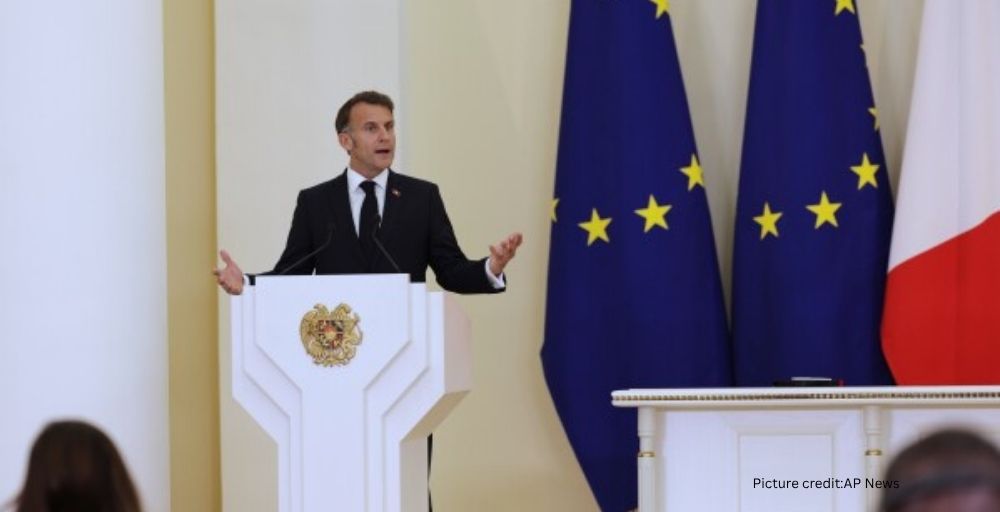
In a televised address, President Macron adopted a firm stance against the violence, stating emphatically, “Nothing justifies it, nothing explains it, nothing excuses it.” Despite the government’s attempts to quell the unrest, protesters have vowed to return to the streets, planning further demonstrations for October 24. In anticipation of these events, the government has deployed approximately 70,000 police officers nationwide, with Interior Minister Laurent Nunez emphasizing a zero-tolerance approach to disorder.
Origins of the Protests
The protests were ignited by student frustrations surrounding deteriorating conditions within the education system, particularly at Lycée Saint-Exupéry in the Parisian suburb of Créteil. On September 17, students initiated a blockade in response to inadequate facilities, including leaking roofs, clogged toilets, and overcrowded classrooms devoid of air-conditioning, which had led to instances of heat stress. The movement quickly gained momentum through social media, resulting in over 600 schools and numerous universities joining the demonstrations in a matter of weeks.
One protest placard read, “Four riot police for one student/One Professor for thirty-five,” highlighting the disparity between the heavy police presence and the lack of educational resources. The ongoing teacher shortage crisis has been largely attributed to low salaries, challenging working conditions, and a lack of career progression, prompting many educators to exit the profession. Notably, the government cut over 4,000 teaching positions in 2026, exacerbating the crisis.
Broader Economic Context
The protests are also deeply rooted in a broader economic context characterized by a growing “cost of living” crisis. This crisis is driven by rising fuel prices, housing shortages, and increasing economic precarity among the working class. Critics contend that these issues stem from neoliberal policies instituted by Macron since his election in 2017, which have prioritized tax cuts for wealthier households and the privatization of public assets.
The consequences of these policies have been significant: France’s public debt has surged to over $4 trillion, nearly 120% of its GDP, while borrowing costs have increased to 5% due to a sell-off in French sovereign bonds. The Macron administration appears to be constrained in its ability to respond meaningfully to public demands, opting instead for a strategy focused on police enforcement and attributing the unrest to far-left provocateurs.
Political Ramifications
In the evolving political landscape, the far-right National Rally (Rassemblement National, RN), led by Marine Le Pen, is leveraging the ongoing unrest to criticize Macron’s perceived inability to maintain public order. Le Pen has accused the left-wing LFI of both encouraging and legitimizing the protests, positioning her party as a potential alternative for voters seeking stability in the face of unrest.
Conversely, Mélenchon’s LFI has actively engaged with the youth, amplifying their concerns and demands. However, significant demographic realities pose challenges for the left; many young protesters are ineligible to vote, and historical turnout among younger voters (aged 18-34) in presidential elections has traditionally been low. This intersection raises questions about the potential for the current unrest to translate into substantial electoral support for leftist candidates in future elections.
Conclusion
The recent developments in France underscore a critical juncture in the nation’s political landscape, as widespread discontent reveals deep-seated issues within the education system and broader economic policies. With the government facing immediate challenges from ongoing protests and long-term ramifications in the electoral arena, the coming months are poised to be pivotal for Macron’s administration and the future of political discourse in France. The intersection of youth activism and broader societal grievances highlights a growing demand for change that could reshape the political landscape ahead of the next presidential election.