
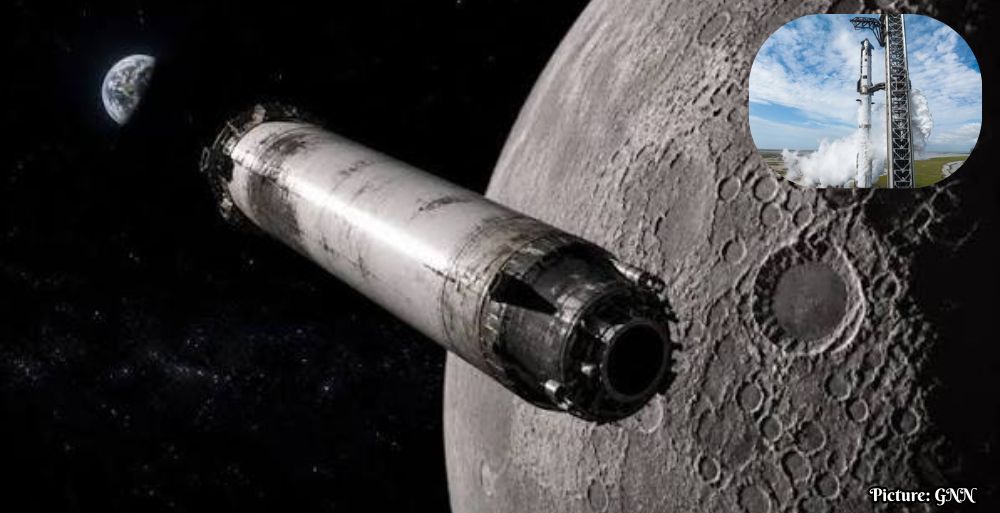
NASA has announced an ambitious initiative to construct a permanent moon base, investing $20 billion over seven years, with astronaut missions commencing in 2028.
WASHINGTON — NASA has revealed an extensive plan to establish a permanent moon base, committing $20 billion over the next seven years to facilitate this ambitious endeavor. This announcement was made on Tuesday during the agency’s ‘Ignition’ event, held at its headquarters in Washington, D.C. The plan includes sending astronauts to the lunar surface biannually starting after the Artemis V mission, which is set to launch in 2028.
NASA Administrator Jared Isaacman articulated the urgency and significance of this initiative, stating, “NASA is committed to achieving the near-impossible once again, to return to the Moon before the end of President Trump’s term, build a Moon base, establish an enduring presence, and do the other things needed to ensure American leadership in space.” Isaacman’s comments reflect a broader geopolitical context, highlighting the competitive nature of space exploration, particularly with respect to advancements by China.
During the ‘Ignition’ event, Isaacman reiterated the pressing nature of this competition, declaring, “The clock is running in this great power competition, and success or failure will be measured in months, not years.” His remarks underscore the perception that the U.S. must act decisively to maintain its leadership role in space exploration amidst increased competition from other nations.
Strategic Context and Funding Allocation
The Artemis program is central to NASA’s strategic goals, aiming to facilitate a new era of lunar exploration. The Artemis IV and Artemis V missions are now scheduled to launch in 2028, a timeline Isaacman emphasized as critical for countering potential advances made by China. He remarked, “They might be early, and recent history says we might be late. But this time, the goal is not flags and footprints. This time, the goal is to stay.” This statement reflects a shift in focus from simply reaching the Moon to establishing a sustained human presence there.
The projected $20 billion investment will be allocated over a seven-year period and is intended to create the necessary infrastructure for long-term habitation on the Moon. NASA is keen to collaborate with commercial space enterprises, which will play a vital role in this initiative. Isaacman stated, “If we concentrate NASA’s extraordinary resources on the objectives of the National Space Policy, clear away needless obstacles that impede progress, and unleash the workforce and industrial might of our nation and partners, then returning to the Moon and building a base will seem pale in comparison to what we will be capable of accomplishing in the years ahead.” This perspective highlights the potential for public-private partnerships to drive innovation and expedite progress in space exploration.
Phased Approach to Moon Base Construction
The construction of the moon base will be executed in three distinct phases. The first phase, referred to as “build, test, learn,” will involve sending rovers, instruments, and various technologies to the lunar surface to assess operational capabilities, including power, mobility, communications, scientific tools, and navigation systems. This initial groundwork is critical for ensuring that subsequent phases can build effectively on the knowledge and data gathered during these preliminary missions.
Following this initial phase, the second phase will focus on establishing semi-habitable structures for astronauts, allowing for more consistent operations on the lunar surface. These structures will provide essential support for astronauts as they conduct experiments and carry out missions on the Moon.
In the final phase, NASA and its partners will work to deliver larger habitats and vehicles, solidifying the infrastructure required for a permanent human presence. Carlos Garcia-Galan, NASA’s Moon Base program executive, indicated that the agency is pivoting from its previous plans for the Gateway program, which proposed a lunar orbital space station, to concentrating exclusively on the construction of the moon base. He noted, “Gateway’s systems and hardware will be repurposed to accelerate progress on the moon base.” This strategic shift underscores NASA’s commitment to prioritizing a tangible human presence on the Moon over orbital operations, which may have longer-term implications for the agency’s goals in space exploration.
Broader Implications for Space Exploration
The establishment of a permanent moon base is envisioned not only as a step in lunar exploration but also as a potential launchpad for future missions to Mars and beyond. By developing infrastructure on the Moon, NASA aims to create a sustainable environment for human activity that could support deeper space exploration. As Isaacman noted, the ultimate goal extends beyond the Moon itself, potentially paving the way for manned missions to Mars and other celestial bodies.
Furthermore, this initiative could foster international collaboration, as NASA has expressed intentions to work with various countries and private sector partners in developing the moon base. This collaborative approach stands to enhance the technological capabilities of participating nations and could serve to build alliances in the increasingly competitive realm of space exploration.
As NASA embarks on this significant project, the agency is poised to redefine the landscape of human exploration beyond Earth. The commitment to a permanent moon base reflects both an ambitious vision for the future and a strategic response to the evolving dynamics of global space competition.