Democracy does not survive on elections alone. It depends on informed citizens, transparent institutions, and mechanisms that hold the powerful accountable. Among these mechanisms, the media occupies a unique and indispensable position. Often described as the “Fourth Estate,” the media serves as society’s watchdog, exposing wrongdoing, amplifying marginalized voices, and ensuring that governments, corporations, and institutions remain answerable to the public.
Yet today, this vital democratic pillar faces unprecedented threats from misinformation, political pressure, economic instability, and the rapid transformation of the digital age. As journalism confronts these challenges, the stakes extend far beyond the survival of news organizations. The future of democracy itself hangs in the balance.
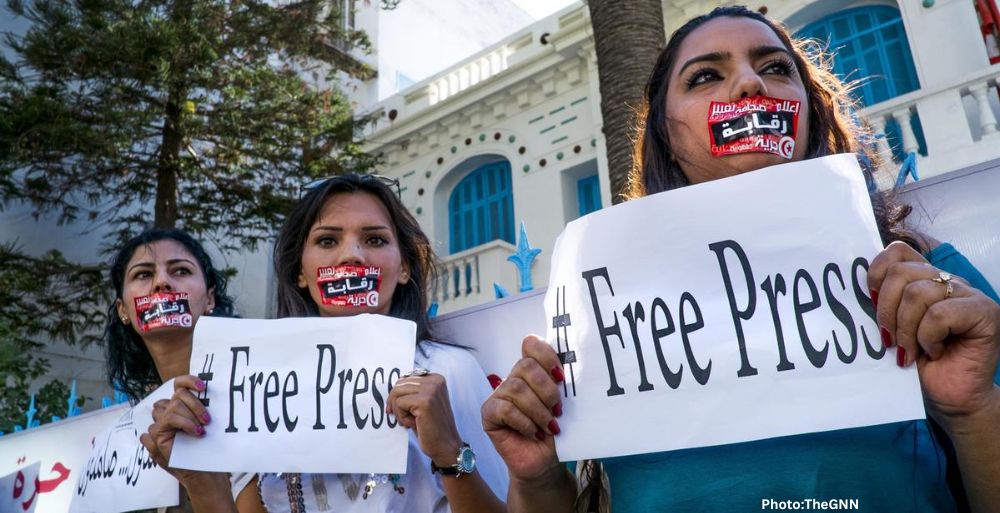
Every day, we hear reports of journalists being targeted, imprisoned, intimidated, assaulted, or even killed simply for doing their jobs. Across the world, the fundamental right to gather and disseminate information remains under threat.

According to international press freedom organizations, hundreds of journalists are detained globally each year, while dozens lose their lives covering conflicts, investigating corruption, exposing human rights abuses, or reporting on organized crime. In an age when access to reliable information has never been more important, the dangers faced by journalists have become increasingly severe.
In the United States, long regarded as a champion of free expression, journalists have generally operated within strong constitutional protections under the First Amendment. Yet concerns persist. Reporters covering protests, political events, and sensitive investigations have reported harassment, threats, and online abuse.
The rise of misinformation, polarization, and hostility toward the media has created new challenges for news professionals seeking to maintain public trust and uphold factual reporting. Despite these pressures, American journalism continues to play a critical role in exposing wrongdoing, informing citizens, and safeguarding democratic institutions.
India, the world’s largest democracy and home to one of the largest and most diverse media landscapes, presents a complex picture. With more than 1.4 billion people speaking hundreds of languages and consuming news through thousands of newspapers, television channels, and digital platforms, India’s media serves as a vital link between government and citizens.
Indian journalists often work under challenging conditions, particularly when covering corruption, communal tensions, environmental issues, organized crime, and rural poverty. Several high-profile attacks on journalists over the years have drawn international attention, highlighting the risks faced by reporters at the local and regional levels. Yet despite these challenges, India’s press remains vibrant, resilient, and indispensable to democratic accountability.
When reflecting on the importance of media, one need not look only at major national scandals or international investigations. Journalism often creates change through seemingly ordinary acts of reporting.
It’s not uncommon for a local newspaper to highlight unsafe conditions in a neighborhood and prompt public officials to address the issue, leading to infrastructure improvements and safer living conditions for residents.
This simple yet powerful example illustrates journalism at its best: informing citizens, compelling action, and improving lives. One is certain that meaningful changes often occur “one story at a time, one community at a time, one verified fact at a time.”
History offers countless examples of journalism shaping societies. The Watergate investigation by Bob Woodward and Carl Bernstein in the United States exposed abuses of political power and ultimately contributed to the resignation of President Richard Nixon.
The publication of the Pentagon Papers revealed government deception during the Vietnam War. More recently, investigative reporting by global media organizations uncovered hidden financial networks through the Panama Papers, leading to resignations, criminal investigations, and reforms across multiple countries.
Most recently, the ongoing youth-led movements across India demanding electoral transparency and accountability are the result of investigative journalism by the esteemed publication The Indian Express.
These examples demonstrate that journalism does more than report events; it strengthens accountability and protects democratic institutions.
Statistics reinforce journalism’s significance. According to the Reuters Institute for the Study of Journalism, trust in news remains closely linked to citizens’ confidence in democratic institutions.
At the same time, global concerns about disinformation continue to rise as millions increasingly obtain news through social media platforms.
The challenge is profound: false information often spreads faster than verified reporting, creating confusion and polarization. In an era of instant communication, misinformation can reach millions before professional journalists have had an opportunity to fact-check and verify claims.
The consequences of this information disorder are evident worldwide. Social media has democratized communication, allowing individuals unprecedented opportunities to share ideas and perspectives.
This development has many benefits, including greater participation and access to diverse viewpoints. However, the same technologies that empower citizens can also enable the rapid spread of falsehoods, conspiracy theories, and propaganda. The distinction between journalism, opinion, advertising, and manipulation is becoming increasingly blurred.
When truth becomes uncertain, democracy becomes vulnerable. This observation captures one of the defining challenges of our age. Democracy relies on a shared understanding of facts.
Citizens may disagree on policies or political ideologies, but democratic debate becomes impossible when basic facts themselves are disputed. Without trusted sources of information, public discourse deteriorates, extremism flourishes, and accountability weakens.
A powerful analogy compares democracy to a house supported by multiple pillars. Elections form one pillar, courts another, and civil society a third. Journalism functions as the pillar that helps support and monitor all the others.
The United States and India share a deep commitment to democratic values, pluralism, and freedom of expression. As strategic partners and the world’s two largest democracies, both nations have a common interest in strengthening institutions that support independent journalism.
Protecting reporters, ensuring access to information, combating misinformation, and fostering public trust in credible media are essential steps toward preserving democratic resilience.
Ultimately, when a journalist is threatened, the public’s right to know is threatened as well. An attack on a reporter is not merely an attack on an individual; it is an attack on transparency, accountability, and democracy itself.
The courage displayed daily by journalists in India, the United States, and around the world serves as a powerful reminder that a free press remains one of humanity’s strongest defenses against ignorance, injustice, and authoritarianism. In honoring and protecting journalists, societies safeguard not only a profession but also the very foundations of democratic freedom.
When journalism weakens, the entire democratic structure becomes less stable. Reporters serve as independent observers, attending public meetings, scrutinizing government decisions, and informing citizens about issues that affect their lives. Without them, critical decisions may occur in darkness rather than under public scrutiny.
Unfortunately, journalism today faces significant economic pressures as well. For much of the twentieth century, newspapers and broadcasters relied heavily on advertising revenue to fund reporting. In recent decades, however, much of that revenue has migrated to digital platforms. Traditional news organizations have struggled to adapt, resulting in layoffs, newsroom closures, and reductions in investigative reporting capacity.
This shift has led to the emergence of what media scholars call “news deserts.” These are communities lacking reliable local journalism. The absence of local reporting has serious consequences. If no journalist attends school board meetings, city council sessions, or public hearings, citizens lose visibility into decisions that directly affect their daily lives.
Research suggests that communities with strong local journalism experience greater civic engagement, higher voter participation, and stronger governmental accountability. Conversely, communities without local news are often characterized by lower civic participation and reduced public oversight.
The challenges become even more pronounced for ethnic and community media. Such outlets play an essential role in multicultural societies by covering stories often overlooked by mainstream organizations. They document cultural events, celebrate local achievements, provide language-specific information, and connect immigrant communities to civic life. Yet many operate with limited financial resources.
The essay’s author recalls a conversation with a community publisher who remarked, “Everybody wants the newspaper to survive, but very few ask what it takes to keep the doors open.” This statement highlights a harsh reality. Society often takes journalism for granted, expecting coverage and visibility while overlooking the financial resources required to sustain reporting.
Community journalists frequently work long hours, travel at personal expense, and invest their own resources to serve the public interest. Their dedication represents an extraordinary commitment to democratic values.
Despite these challenges, there are reasons for optimism. Journalism has repeatedly demonstrated resilience throughout history. It adapted to the emergence of radio, television, and the internet.
Today, innovative models continue to emerge. Digital subscriptions, nonprofit journalism, community-supported news organizations, podcasts, newsletters, and membership-driven platforms are creating new pathways for sustainability. Many younger journalists are embracing multimedia storytelling and reaching audiences through formats that did not exist a decade ago.
Perhaps the greatest reason for hope is that people continue to value truth. Technologies may evolve, and media platforms may change, but the public’s need for reliable information remains constant. Citizens still seek credible reporting during elections, natural disasters, public health crises, and periods of social unrest. Trustworthy journalism remains essential because informed decision-making is impossible without accurate information.
However, protecting journalism cannot be the responsibility of journalists alone. Governments must uphold press freedom and safeguard reporters from censorship and intimidation. Businesses must recognize the value of supporting credible media through ethical advertising and partnerships.
Educational institutions should promote media literacy, helping citizens distinguish between verified reporting and misinformation. Community organizations must appreciate the importance of independent journalism, and citizens themselves must support trustworthy news sources through subscriptions, donations, and engagement.
Every generation faces defining challenges. One of the defining challenges of our era is safeguarding truth amid unprecedented volumes of information and misinformation. The decisions made today will determine whether future generations inherit societies guided by facts, transparency, and accountability or overwhelmed by confusion and distrust.
Journalism is more than an industry. It is a public service and a democratic necessity. When journalists investigate corruption, expose injustice, and give voice to the unheard, they strengthen the foundations of democracy. When communities support journalism, they invest in accountability. And when societies defend press freedom, they defend the right of citizens to know the truth.
In an age of instant information, artificial intelligence, and social media-driven narratives, the role of journalism has never been more critical, nor more vulnerable. Ultimately, protecting journalism means protecting democracy itself. For when the watchdog is silenced, power operates unchecked. But when journalism thrives, citizens are informed, institutions are accountable, and democracy remains strong enough to meet the challenges of the future.