
This June 28, Mars will align closely with the Pleiades star cluster, marking the last easily visible encounter until 2034, offering stargazers a unique opportunity.
On June 28, 2023, the red planet Mars will reach a significant alignment with the Pleiades star cluster, commonly referred to as the “Seven Sisters.” This celestial event marks the last time these two astronomical bodies will be easily observable in such proximity until 2034, making it a noteworthy occasion for both avid astronomers and casual stargazers alike.
The Pleiades is an open star cluster located in the constellation Taurus, consisting of several bright blue-white stars. While the cluster is home to approximately 1,000 individual stars, only six or seven of its most luminous members can typically be distinguished by the naked eye. This visibility is attributed to the stars’ relative brightness and proximity, as they were all formed from the same primordial cloud of gas and dust around 100 million years ago, according to NASA.
The Celestial Encounter
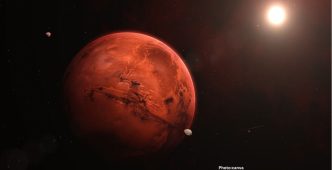
The alignment of Mars with the Pleiades will be observable from June 23 through July 2, with the most impressive views expected in the early mornings of late June. Specifically, on June 28, Mars will be positioned about 4.3 degrees away from the Pleiades cluster, allowing observers to view both celestial bodies in the same field of view, particularly with the aid of binoculars. As detailed by the astronomical resource When The Curves Line Up, Mars will initially appear to the right of the Pleiades and will progressively move beneath the cluster in the days following.
This alignment is significant not only for its aesthetic appeal but also because it provides an opportunity for educational engagement with astronomy. Observers will need to find a location with an unobstructed view of the eastern horizon to fully appreciate the display, which will be best viewed shortly before sunrise. In the northern hemisphere, this may require positioning oneself in an area that offers a wide-open view toward the east.
Viewing Recommendations
For optimal viewing of this celestial phenomenon, it is recommended that stargazers venture outside approximately one hour before sunrise. During this time, Mars will present as a steady reddish-orange point of light, while the Pleiades will take on the shape of a small, hazy dipper formed by closely located stars. Binoculars are highly suggested, as they will enhance visibility and allow viewers to take in both Mars and the Pleiades in a single glance. Additionally, stargazing applications can aid in identifying the Taurus constellation and confirming the visibility of the Pleiades cluster.
Cultural and Historical Significance of the Pleiades
The Pleiades star cluster holds a rich cultural and historical significance across various civilizations. In Greek mythology, the cluster is said to represent the seven daughters of Atlas and Pleione, which is the origin of its nickname, the “Seven Sisters.” This mythology has contributed to the recognition of the Pleiades in different cultures around the world, often associating the stars with agricultural calendars and navigational tools. Such cultural connections illustrate humanity’s long-standing fascination with celestial patterns and their impact on societal development.
In modern astronomy, the Pleiades have been the subject of extensive study, providing valuable insights into stellar formation and the dynamics of star clusters. The cluster serves as a benchmark for researchers examining the life cycles of stars. Events like the upcoming Mars-Pleiades alignment not only capture public interest but also contribute to ongoing scientific inquiry into the nature of our universe.
Future Opportunities
The upcoming close encounter between Mars and the Pleiades is particularly significant as it will not be easily observable again until 2034. This substantial interval underscores the rarity of such celestial events, making this occasion a compelling opportunity for those interested in astronomy. As technology progresses, the capability to engage with and understand these phenomena continues to expand, allowing a broader audience to experience and appreciate the wonders of the cosmos.
In conclusion, the alignment of Mars and the Pleiades star cluster on June 28 represents a unique opportunity for stargazers to connect with the cosmos. As anticipation builds for this rare event, it serves as a reminder of the beauty, complexity, and cyclical nature of celestial occurrences. Whether through casual observation or scientific study, the mysteries of the night sky continue to inspire and unite people across the globe.