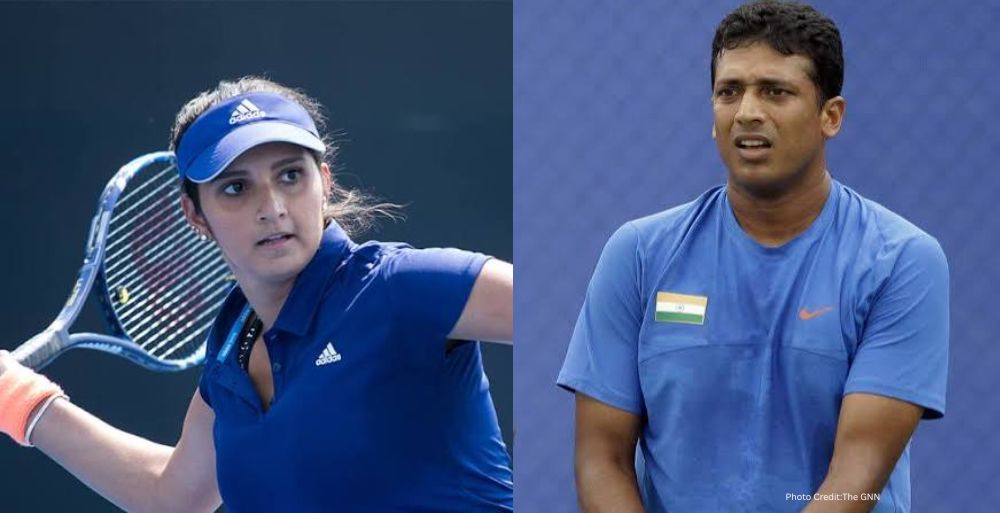
Indian tennis legends Mahesh Bhupathi and Sania Mirza have been elected to the Executive Committee of the All India Tennis Association, reflecting a significant shift towards increased representation of former athletes in sports governance and a commitment to improving the support system for emerging talent.
In a notable development for Indian tennis, former stars Mahesh Bhupathi and Sania Mirza have been elected to the Executive Committee of the All India Tennis Association (AITA). This historic election signifies a crucial step towards enhancing the representation of former athletes within the governance structures of Indian sports, specifically tennis.
Both Bhupathi and Mirza secured their positions in the 15-member Executive Committee after being elected as Sportspersons of Outstanding Merit (SOM) representatives to the AITA General Body. In the election, Bhupathi received 23 votes, the highest among all candidates, while Mirza garnered 18 votes, affirming their popularity and the trust placed in them to lead. Their election reflects a broader trend in sports governance, focusing on increasing the involvement of former athletes in decision-making processes.
Context of the Elections
The recent elections fall under a series of governance reforms initiated by AITA, which aim to provide accomplished sportspersons with a stronger voice in the administration of national sports federations. The amended AITA Constitution now stipulates that the Executive Committee must include two SOM representatives—one male and one female. This change is seen as a strategic move to ensure that the insights and experiences of former athletes directly inform the policies and direction of the organization.
Prior to their election to the Executive Committee, Bhupathi and Mirza had already established their credentials by winning seats as SOM representatives in the AITA General Body elections, where Bhupathi received 19 votes and Mirza 18. Other elected candidates included Ashutosh Singh and Shalini Thakur Chawla. The upcoming AITA elections, scheduled for November 27, 2023, will further shape the landscape of Indian tennis governance.
Vision for the Future of Indian Tennis
In her post-election remarks, Sania Mirza articulated a compelling vision for the future of Indian tennis, emphasizing the importance of leveraging their professional experiences to address the needs of current players. “I think that we are just trying to use our experience to try and understand what the players need more. I think that it’s too early to answer the question exactly what, because there are still a lot of things to be put into place with the president, vice president, EC. There are many things still to be done,” she stated in an interview with ANI.
Mirza highlighted the necessity of developing a comprehensive support system for upcoming players, which would include quality coaching, ample tournament exposure, fitness support, and access to physiotherapists and trainers. Her focus on player development resonates with a growing acknowledgment of the need to nurture young talent in Indian tennis, particularly given the challenges many emerging players face in a highly competitive sporting environment.
Bhupathi’s Contributions and Experience
Mahesh Bhupathi’s extensive experience in international tennis and sports administration further enriches the Executive Committee. A former doubles world No. 1, he boasts an impressive record of 12 Grand Slam titles, including four in men’s doubles and eight in mixed doubles. His dual perspective as both a successful player and an administrator positions him uniquely to influence the strategic direction of Indian tennis.
Bhupathi’s contributions to the sport extend beyond his playing career; he has been involved in various initiatives aimed at promoting tennis in India. His election signifies an opportunity to implement changes that could enhance the developmental pathways for future generations of players.
Historical Significance and Implications
The election of Bhupathi and Mirza to the AITA Executive Committee is not merely a personal achievement; it embodies a significant shift in the governance of Indian sports. The inclusion of former athletes in leadership roles signals a potential transformation in how Indian tennis is managed and developed. Their participation is expected to lead to more informed and athlete-centered decision-making processes.
As they assume their new roles, Bhupathi and Mirza confront the pressing challenge of addressing immediate concerns within the sport while simultaneously laying the groundwork for long-term growth. Their leadership will likely be scrutinized by various stakeholders in the tennis community, including players, coaches, and fans, all of whom have a vested interest in the future of Indian tennis.
Moreover, their presence in the AITA is expected to inspire a new generation of tennis players, demonstrating that success on the international stage can lead to meaningful contributions off the court as well. The hope is that their combined efforts will foster an environment where young talent can flourish and realize their potential.
Conclusion
In conclusion, the election of Mahesh Bhupathi and Sania Mirza to the Executive Committee of the All India Tennis Association marks a transformative moment for Indian tennis. Their extensive experience, coupled with a shared vision for the sport’s development, positions them to make significant contributions to the future of tennis in India. As they embark on this new chapter in their careers, the impact of their leadership will be closely watched, with the potential to reshape the landscape of Indian tennis for years to come.