This study from King’s College London elucidates the role of long-term inflammation in cognitive decline, particularly in conditions like Alzheimer’s disease, and highlights potential therapeutic avenues.
A recent study conducted by researchers at King’s College London, published in the journal Nature Communications, reveals significant insights into the relationship between long-term inflammation and cognitive decline. This research could have major implications for understanding disorders such as Alzheimer’s disease, aging, and the lingering neurological effects of viral infections.
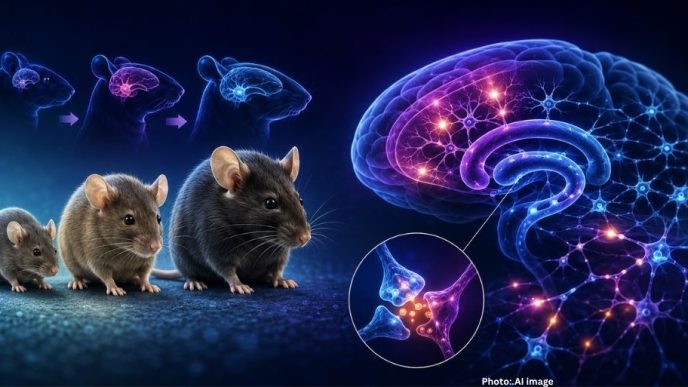
The focal point of the study was the impact of cytokines, which are signaling molecules released by the body in response to threats like viral infections. Chronic inflammation, marked by elevated levels of cytokines, has been implicated in various neurodegenerative disorders. The researchers specifically examined the effects of a cytokine known as tumor necrosis factor-alpha (TNF-α) on hippocampal stem cells, which are critical for neurogenesis—the formation of new neurons in the hippocampus, a region essential for learning, memory, and mood regulation.
Understanding Neurogenesis and Inflammation
The hippocampus is unique in the adult human brain as it continues to generate new neurons, a process known as hippocampal neurogenesis. However, this process can be adversely affected by aging, neurodegeneration, and mental health disorders such as depression. In this study, the researchers found that the introduction of TNF-α to human hippocampal stem cells inhibited their development into new neurons. Instead, the stem cells entered an “immune alert” state, characterized by the release of signals that attract immune cells known as T cells, which contribute to inflammation.
Dr. Tinne A. D. Nissen, the first author of the study and a PhD candidate at King’s College London, emphasized the unexpected nature of these findings: “What surprised us most was that the stem cells were not simply impaired by inflammation; they actively adopted behaviors that could potentially sustain immune responses in the brain.” This suggests that inflammation does more than hinder neuronal development; it actively alters the functional role of hippocampal stem cells.
Signaling Pathways and Therapeutic Implications
The study also identified an unexpected signaling pathway involving type I interferons, molecules typically associated with the body’s antiviral responses. By blocking this interferon signaling using an existing therapeutic antibody, the researchers were able to reverse some of the inflammatory effects, restoring the production of new neurons and reducing the recruitment of T cells. This discovery indicates a potential therapeutic target for mitigating the damaging effects of chronic inflammation on brain health.
Professor Linda S. Klavinskis, a co-corresponding author and Professor of Viral Immunology at King’s College London, remarked on the significance of the findings: “Our work uncovers a new mechanism that may help explain why ongoing inflammation is so damaging to brain health. Importantly, it also points to possible treatments to protect or restore the brain’s regenerative capacity.” This statement underscores the potential for future interventions aimed at counteracting the adverse effects of chronic inflammation.
Broader Implications and Future Research
The implications of this research extend beyond the immediate findings. Chronic inflammation has long been associated with various health issues, including neurodegenerative diseases, mood disorders, and cognitive decline. Understanding the mechanisms through which inflammation impacts neurogenesis could pave the way for new therapeutic strategies to address these conditions.
In the context of public health, the study highlights the importance of managing inflammation as a means of potentially reducing the risk of cognitive decline in aging populations. With an estimated 50 million individuals worldwide living with dementia, according to the World Health Organization, understanding the underlying factors contributing to cognitive deterioration is crucial.
This research was a collaborative effort between the Department of Infectious Diseases and the Department of Basic and Clinical Neuroscience at the Institute of Psychiatry, Psychology & Neuroscience, King’s College London. Funding for the study came from several prominent organizations, including the Wellcome Trust, the Medical Research Council UK, and the National Institute for Health Research (NIHR) Biomedical Research Centre based at Guy’s and St Thomas’ NHS Foundation Trust and King’s College London.
As the understanding of the interplay between inflammation and brain health continues to evolve, further research will be essential in developing effective treatments for those affected by the cognitive decline associated with various neurological disorders. Future studies may aim to explore additional cytokines and their specific roles in neurogenesis, as well as the potential for pharmacological interventions targeting these pathways.
In conclusion, the findings of this study represent a significant advancement in the field of neuroscience, shedding light on the complex relationship between inflammation and cognitive health. As researchers continue to unravel these intricate connections, the potential for new therapeutic approaches to address cognitive decline becomes increasingly promising.