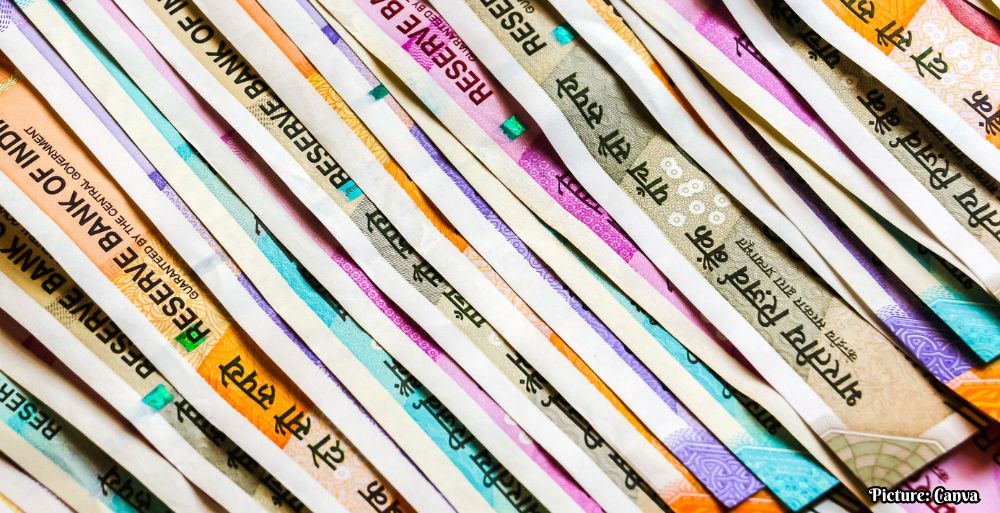
The Indian rupee fell 0.5% against the U.S. dollar on Thursday, nearly eradicating the entire corrective rally sparked by the Reserve Bank of India’s aggressive capital-inflow incentives announced less than a week prior. The domestic currency opened at 95.52 and closed at 95.76 per dollar, pressured by a combination of persistent dollar demand from domestic oil marketing companies and an escalation in the military conflict between the United States and Iran. Overnight American airstrikes targeting Iranian infrastructure led Tehran to announce a closure of the critical Strait of Hormuz, prompting an immediate intraday spike in global energy benchmarks and triggering heavy corporate dollar-buying on Mumbai’s spot FX desks. Despite a brief cooling of global market anxieties following U.S. consumer price index data, macroeconomic pressures from foreign portfolio outflows and structural trade imbalances continue to test the central bank’s defense of the local unit.
Volatility In Spot Trading Desks and Corporate Inflows
MUMBAI — Intense demand for the greenback from public-sector oil refining companies combined with regional market weakness to push the Indian rupee down to a near-record low on Thursday. Opening at 95.52 per U.S. dollar, the local unit experienced steady downward pressure throughout the trading session before closing at 95.76, marking a 0.5% depreciation on the day.
The drop effectively erases a substantial portion of the equity and currency recovery observed on Friday, June 5, when the Reserve Bank of India (RBI) deployed a comprehensive suite of emergency measures to stimulate dollar inflows. Trading desks across Mumbai confirmed that institutional mid-month dollar demand, typical for commercial settlements, heavily outpaced the residual speculative long positions held by domestic banks.
Interbank forex dealers observed that the rupee’s inability to maintain its momentum above the 95.20 threshold represents a return to a broader, structurally defensive trading band. While state-run banking institutions actively sold dollars earlier in the week—widely understood to be automated or direct interventions ordered by the central bank—these administrative blocks proved insufficient against the heavy commercial volume generated by oil firms hedging against volatile crude oil supply disruptions.
Middle East Conflict and the Strait of Hormuz Blockade
The primary catalyst for the market’s risk-averse posture was an overnight military escalation in West Asia. United States Central Command forces executed a series of targeted retaliatory strikes inside Iranian territory, characterizing the actions as a response to the downing of an American Apache helicopter near international waters earlier in the week.
In a direct counter-response, Iran’s Islamic Revolutionary Guard Corps announced a full closure of the strategic Strait of Hormuz—a crucial maritime checkpoint through which roughly 20% of global petroleum shipments pass. This announcement reversed a multi-week period during which Tehran had permitted restricted transit to select shipping fleets. Additionally, localized drone and long-range missile strikes were reported targeting American installations in Kuwait and Bahrain, bringing regional security risks to the absolute forefront of institutional asset management.
Global commodity markets reacted immediately, with benchmark Brent crude spiking over 2% to touch an intraday peak of $95.50 per barrel before trimming gains to settle marginally lower. Because India relies on foreign energy imports to satisfy more than 85% of its domestic petroleum requirements, any sustained increase in international oil prices directly broadens the national trade deficit, increasing structural downward pressure on the currency.
“The dollar had weakened post the release of yesterday’s U.S. inflation data, but reversed its weakness after news of escalation of conflict between U.S. and Iran,” observed Dhaval Shah, founder and managing director of De-Risk Forex Consultancy, during a briefing from his Mumbai trading room. “Despite such strikes and a lapse of the ceasefire, we assess the war to be on a de-escalatory path as indicated by neutral reaction of many financial assets, mainly oil.”
Central Bank Mandates and Corporate Backlash
The currency’s sharp reversal comes amid a major policy effort by the RBI to build a defensive buffer around the rupee. On June 5, 2026, the central bank unveiled external structural changes aimed at attracting up to $40 billion in emergency foreign capital.
These policies included fully subsidizing foreign exchange hedging costs for commercial banks raising fresh three- to five-year Foreign Currency Non-Resident (Banks) deposits, alongside establishing a concessional foreign exchange swap facility tailored to incentivize External Commercial Borrowings (ECBs) by large state-owned enterprises. Concurrently, the federal government retrospectively removed capital gains and interest taxes on government securities for qualifying foreign institutional funds.
Despite these aggressive policy adjustments, the broader capital account remains under stress. Foreign portfolio investors (FPIs) have remained consistent net sellers in Indian capital markets, with equity and debt outflows exceeding $6 billion in the first ten days of June alone—surpassing the total volume liquidated during the entire preceding month.
Technical currency strategists suggest the USD/INR pair faces critical overhead resistance between 95.60 and 95.80. Financial analysts indicate that a sustained break above 96.00 could prompt a rapid descent toward the record lows of 97.00 recorded during the heavy global sell-off in May. Conversely, a drop below the 95.00 level would be required to shift short-term momentum toward a corrective target of 93.50.
Global Inflation Framework and Federal Reserve Policy
On the macroeconomic front, international consumer price index (CPI) updates did little to offer relief to emerging market currencies. The latest data out of Washington revealed that headline U.S. inflation accelerated to an annualized rate of 4.2%, its highest performance level in over three consecutive years, primarily driven by underlying global energy and shipping spikes.
However, a softer-than-expected month-on-month core inflation print managed to anchor near-term interest rate expectations. Analysts widely anticipate that the Federal Reserve will maintain its current target policy rate unchanged at its upcoming June meeting. The persistence of elevated nominal U.S. yields continues to limit the yield-differential advantage of emerging market sovereign debt, keeping international capital concentrated in safe-haven dollar denominations.
The RBI’s substantial stockpile of foreign exchange reserves, which currently sits at approximately $689 billion, provides India with roughly 10 months of total import cover. While this substantial liquidity buffer reduces the probability of a speculative run on the rupee, the structural demands of domestic oil refiners and shifting geopolitical alliances indicate that the central bank will have to continually deploy its resources to manage the currency’s depreciation.