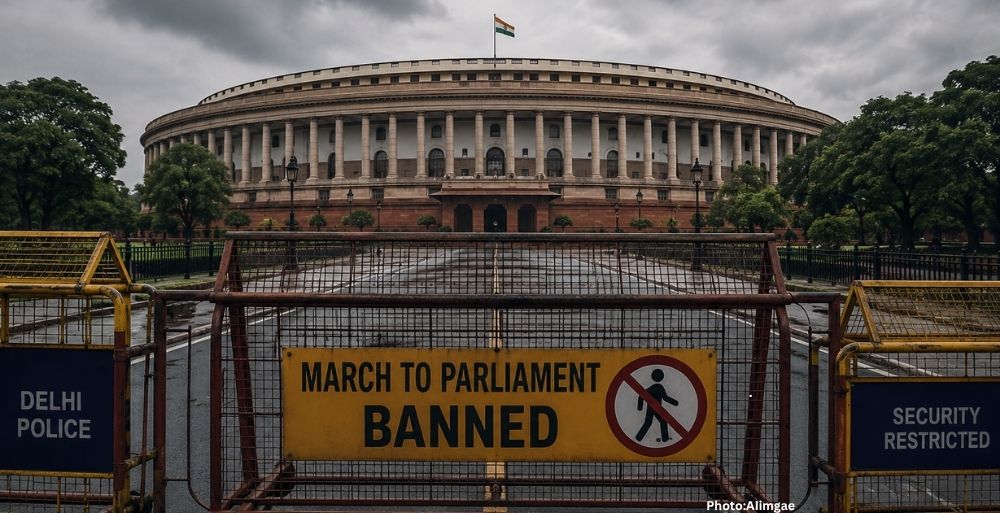
The Indian government has prohibited a planned march by activist groups known as ‘Cockroach’ activists, intending to highlight issues of accountability and social justice, prompting fears of a standoff between civil society and state authorities.
New Delhi – The Indian government has officially banned a scheduled march on Parliament organized by a coalition of activist groups known as ‘Cockroach’ activists. This decision, announced by the Ministry of Home Affairs on Monday, underscores the escalating tensions between state authorities and civil society organizations as they push for greater accountability and policy reforms.
The planned march, set to take place later this week, aimed to draw attention to critical issues including environmental degradation, human rights violations, and the need for governmental accountability. The ‘Cockroach’ group has gained notable traction among younger demographics, particularly those concerned with climate change and social justice, reflecting a growing segment of the population increasingly vocal about these pressing concerns.
Understanding the ‘Cockroach’ Movement
The moniker ‘Cockroach’ symbolizes resilience and survival against oppressive societal structures, drawing inspiration from various global social movements. According to the group’s spokesperson, the name represents the tenacity necessary to confront systemic injustices that they believe plague Indian society. They argue that their activism is a vital response to what they view as an authoritarian trend in the Indian political landscape.
In recent years, India has witnessed a surge in protests and civil disobedience as activists challenge government policies perceived to undermine democracy and environmental protections. The prohibition of the march has led to accusations from activists that the government is attempting to quash dissent and silence opposition voices. Such claims are not unfounded, as critics of the current administration frequently highlight a pattern of curbing civil liberties and restricting freedom of expression.
Government’s Justification for the Ban
The Indian government has justified the ban on the march by citing concerns over public safety and the potential for unrest. A statement from the Ministry of Home Affairs emphasized, “We must maintain public order and safety in our capital. The authorities will not allow gatherings that could lead to violence or disrupt the functioning of Parliament.” This rationale has raised eyebrows among observers, with many questioning whether the motives are truly about public safety or part of a wider strategy to suppress dissent.
Critics argue that the government’s actions reflect a broader authoritarian trend under Prime Minister Narendra Modi’s administration. The government has previously enacted laws that limit the right to assemble, often couched in the language of national security. Such measures have drawn scrutiny from human rights organizations and civil society activists, who contend that these actions undermine democratic principles.
Public Reaction to the March Ban
The ban has elicited mixed reactions from the public. Some support the government’s measures, prioritizing stability and order, while a growing segment of the population, particularly among youth and urban middle classes, expresses outrage at what they perceive as an infringement on their democratic rights. Social media platforms have become a battleground for these sentiments, with calls for solidarity and alternative forms of protest gaining traction.
The implications of this standoff could be significant. Should the activists choose to defy the ban, it could result in clashes between police and protestors, reminiscent of previous protests that escalated into violence. Such outcomes may further polarize the political landscape in India, potentially drawing increased scrutiny from international observers regarding the country’s commitment to human rights and democratic norms.
Strategizing for Continued Advocacy
In light of the government’s ban, activists are exploring alternative avenues for resistance, including online campaigns and smaller, decentralized gatherings. They maintain that despite the prohibition, the issues they raise are too crucial to ignore and that public mobilization remains essential for effecting change. Activists are also considering legal avenues to challenge the ban, reflecting their commitment to contesting governmental authority.
As the protest date approaches, the situation remains fluid, with both the government and activists poised to respond to developments. Observers will be closely monitoring how the government handles potential dissent and how activists adapt their strategies in light of the ban. The outcome of this confrontation could significantly influence the future of civil rights and environmental advocacy in India.
Historical Context and Implications
This current standoff is emblematic of the broader struggles faced by civil society in India, particularly under Modi’s government, which has been criticized for its increasingly authoritarian approach. Historical parallels can be drawn to previous protests in India, where government crackdowns on dissent have often led to violent confrontations and heightened tensions between the state and civil society.
Moreover, as global attention increasingly focuses on issues of democracy and human rights, the way India manages this situation may resonate beyond its borders. International observers, including foreign governments and human rights organizations, are likely to scrutinize the outcome of this conflict, which could have implications for India’s global standing and diplomatic relations.
In conclusion, as civil society confronts governmental restrictions, the resilience of movements like the ‘Cockroach’ activists will be tested. The unfolding events in New Delhi could serve as a bellwether for the future of civic engagement and activism in India.