India has articulated a strong position on the reform of the UN Security Council, insisting that any expansion of permanent membership must include equal veto rights for all members to avoid creating a tiered system of influence.
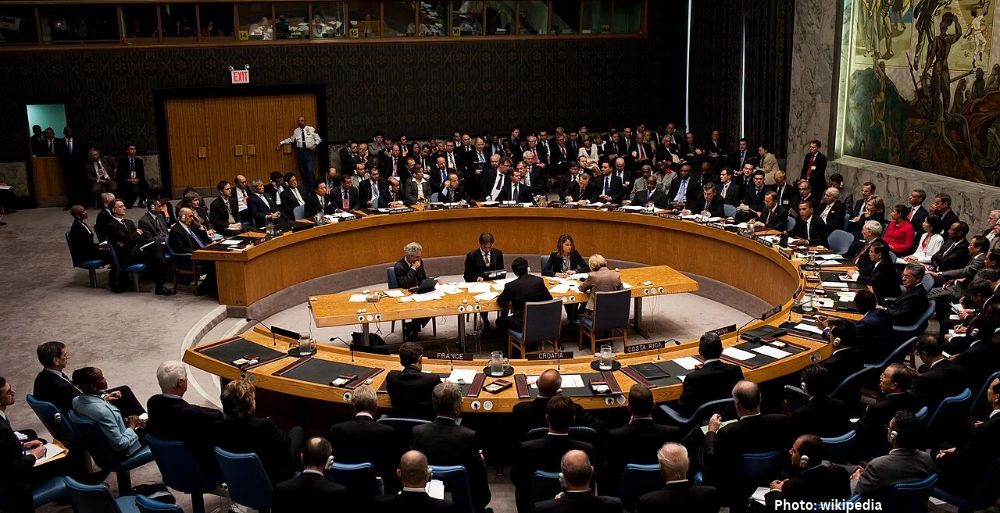
UNITED NATIONS: In a significant address at the United Nations, India reaffirmed its longstanding position regarding the reform of the UN Security Council, emphasizing the necessity for equal veto rights among all permanent members. Ambassador Harish Parvathaneni, India’s Permanent Representative to the UN, made these remarks during the Inter-Governmental Negotiations (IGN) plenary session focused on the question of the veto, held on Monday.
Ambassador Parvathaneni argued that any reform aimed at introducing a new category of permanent members without veto rights would essentially render these nations as “second-class” members. This assertion highlights a key concern that such changes would merely entrench the decision-making authority of the existing five permanent members—China, France, Russia, the United Kingdom, and the United States. These five nations have maintained veto power since the inception of the Security Council in 1945, a privilege that India contends must be equitably shared in any reformed Council.
The Case for Equal Veto Rights
During his address, Parvathaneni stated, “India’s position on the veto is principled and well known… We reiterate that as long as the veto exists, it must be held by all permanent members of a reformed Council.” This declaration underscores India’s demand not only for the expansion of the Council’s permanent membership but also for the inclusion of equal rights—including the veto power—for any new members.
The current UN Security Council consists of 15 member states, with five permanent members endowed with veto rights and ten non-permanent members elected for two-year terms. India has consistently warned that focusing solely on increasing the number of non-permanent members could lead to ineffective reforms, which Parvathaneni described as potentially bordering on “failure.”
Historical Context and India’s Role
India’s advocacy for reforming the Security Council is deeply rooted in its belief that the Council no longer reflects the geopolitical realities of the 21st century. Established in the aftermath of World War II, the Council’s structure is viewed by many as obsolete in addressing contemporary global challenges. India’s argument for a permanent seat at the Council is bolstered by its growing influence on the world stage, especially in economic and diplomatic arenas.
India’s bid for a permanent seat is part of a broader narrative that aims to secure a more significant role in international governance and security. The country has played a vital role in UN peacekeeping missions and has sought to position itself as a leader in addressing pressing global issues, including climate change and terrorism. These efforts reflect India’s ambition to be recognized as a key player in global governance.
Upcoming Elections and Future Aspirations
In addition to its pursuit of permanent membership, India is also campaigning for a non-permanent seat on the Security Council for the 2028-2029 term. Elections for this term are scheduled for June 2024, where India will compete against Tajikistan for the sole seat allocated to the Asia-Pacific Group. This campaign follows India’s previous terms on the Council, including its most recent tenure from 2021 to 2022, which marked its eighth term since first serving in 1950-51.
India’s historical engagement with the Security Council highlights a consistent pattern of commitment to multilateralism and the pursuit of a more equitable global governance framework. The nation has held non-permanent seats during several terms, including those in 1950-51, 1967-68, 1972-73, 1977-78, 1984-85, 1991-92, and 2011-12. Each term has reinforced India’s dedication to fostering international cooperation and addressing global challenges collaboratively.
Implications of Reform
The implications of the proposed reforms to the UN Security Council are far-reaching. As the geopolitical landscape evolves, the need for a more representative and equitable decision-making body becomes increasingly urgent. India’s insistence on equal veto rights highlights the tension between maintaining the current power dynamics within the Council and accommodating the aspirations of emerging powers.
Moreover, the discussion around the veto power remains a contentious issue among member states. While some nations advocate for the expansion of permanent membership to include countries like India, Brazil, Germany, and Japan, others are cautious about diluting the power of the existing permanent members. This ongoing debate raises questions about the future effectiveness of the Security Council and its ability to respond to global crises.
Conclusion
As discussions regarding the reform of the UN Security Council continue, India’s emphasis on equal veto rights reflects its broader ambitions on the international stage. The country maintains that any changes to the Council must ensure that all permanent members, regardless of when they join, have equal rights and responsibilities, thereby preventing the perpetuation of a hierarchical power structure. India’s active involvement in these negotiations is likely to influence the future of the Security Council, shaping its capacity to effectively address the pressing challenges of the modern world.