Heritage Park Becomes Pilgrimage Site as Piyush Goyal Pays Homage to Bapu and Vivekananda: Truth and Non-Violence — “My Life Is My Message”
Asian Media USA ©
Chicago, IL: Under a clear October sky that felt almost deliberately gifted after the previous day’s cleansing rains, the 12-foot bronze statue of Mahatma Gandhi in Heritage Park, Skokie, Illinois, became the living heart of the Indian American community on the morning of October 2, 2026, at Heritage Park, Skokie, Illinois. What began as the annual Gandhi Jayanti observance organized by the Gandhi Memorial Foundation of Chicago swiftly transformed into a profound gathering of memory, gratitude, and renewed purpose when India’s longest-serving Commerce and Industry Minister, Piyush Goyal, arrived to headline the 157th birth anniversary celebrations of the Father of the Nation.
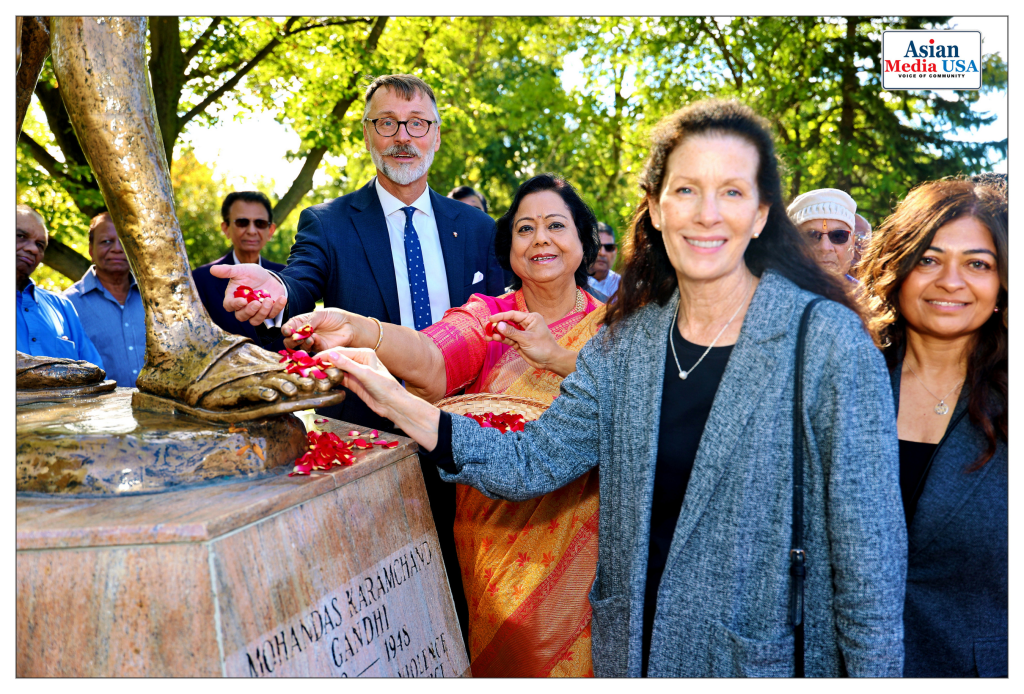
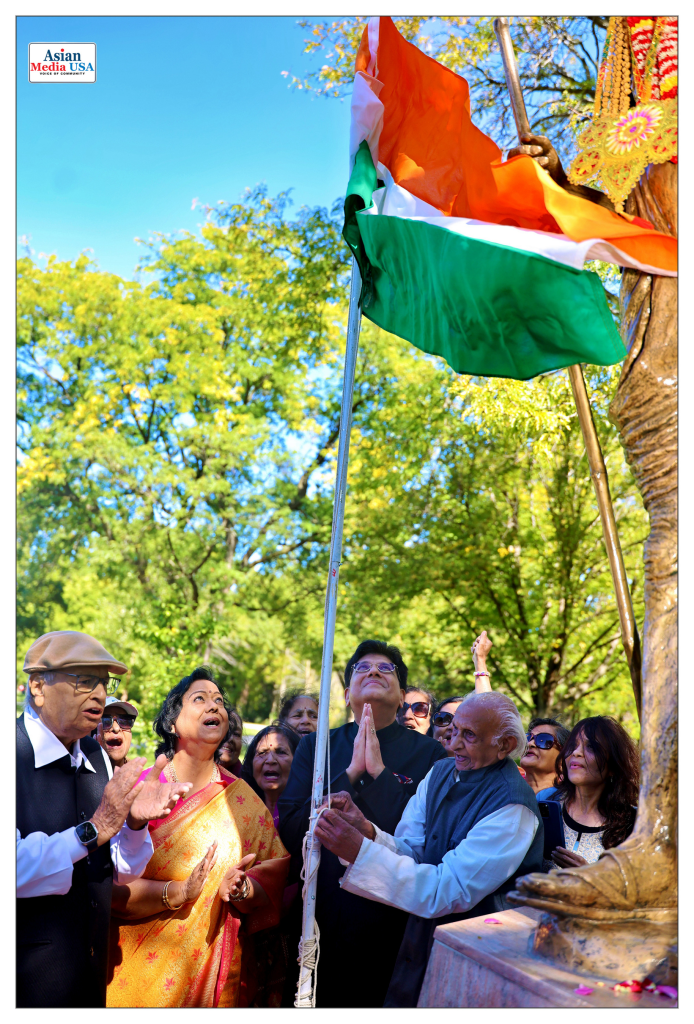
The morning air still carried the freshness of yesterday’s rain, which community members half-jokingly declared had come to give Bapu a ceremonial bath. By the time the first notes of “Raghupati Raghav Raja Ram” rose, led by Pramod Joshi of the Gandhi Memorial Foundation Board and a member of the Skokie Fine Arts Commission, the park had filled with elders from Metropolitan Asian Family Services, young families, community leaders, and media. Minister Goyal unfurled the Indian national flag, offered floral tributes at the base of the statue, and stood in respectful silence as the bhajan, Gandhiji’s own favorite, echoed across the grounds.
Dr. Vijay G. Prabhakar, Vice President of the Gandhi Memorial Foundation and the day’s graceful moderator, set the tone with characteristic warmth and precision. He welcomed Skokie Mayor Ann Tennes, Trustee Jim Iverson, and Village Clerk Minal Desai, whose steady support for the statue and the community has remained constant for years. Dr. Santosh Kumar, President of the Gandhi Memorial Foundation and the legendary Founder-Executive Director of Metropolitan Asian Family Services, stood at the center of the gathering. For more than three decades, she has built the largest senior-service network in Chicagoland, with sixteen offices, embodying the very service that Gandhi called the highest form of worship.
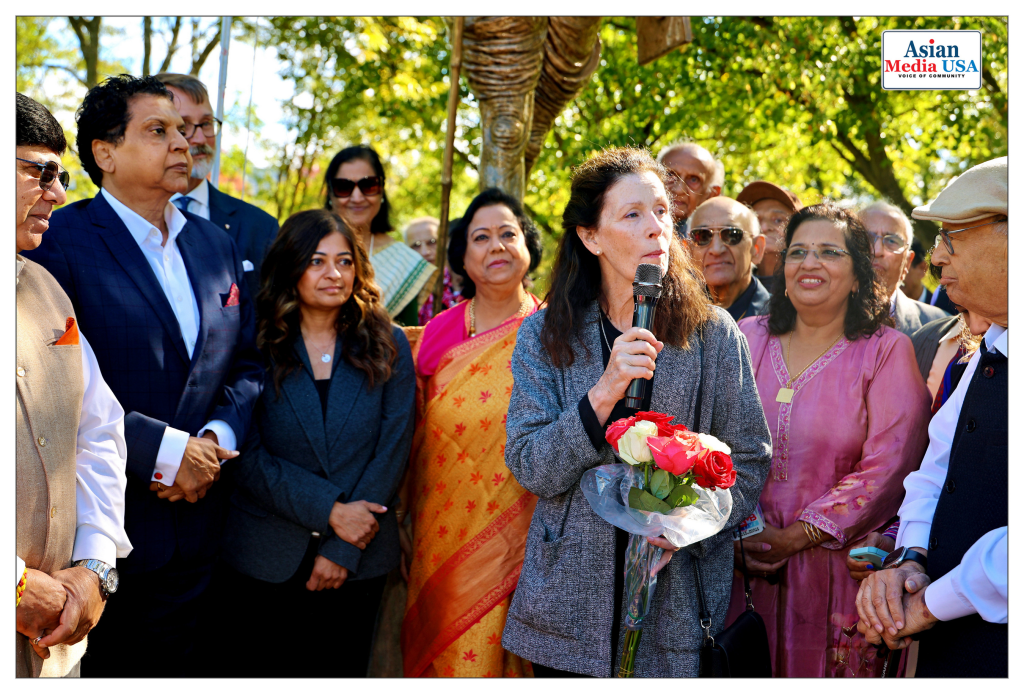
Around them stood the living architecture of the Foundation itself: Secretary Shree Gurusamy, Treasurer Dipti Shah, Trustee Suresh Bodiwala, Directors Sohan Joshi and Pramod Joshi, founding secretary Babu Verma, former Federation of Indian Associations president Anil Pillai, Indian Diaspora president Rakesh Malhotra, Indo-US Tribune editor Avi Verma, New India Abroad editor Lalit K. Jha, and Hiten Bhuta, the Florida-based entrepreneur and community leader who flew in specially to honor Dr. Santosh Kumar’s work. Each name carried a chapter of the story that began twenty-two years earlier, when a small group of visionaries, including Babu Verma and Anil Pillai, signed the agreement that brought the statue to Skokie.
The program unfolded like a living tapestry of remembrance. Elders and youth joined in bhajans. One-minute silences were observed. Floral bouquets changed hands. Speakers rose one after another, each adding a distinct thread. Pramod Joshi recalled his family’s freedom-fighter roots in Kheda district, where Gandhi himself had walked. Ranjita spoke of the privilege of connecting the next generation to India’s roots. Ashraf Hashim of the Deewan community reminded the gathering that leadership is measured by service. Dr. Vasanthi Chakka, a proud granddaughter of a freedom fighter, spoke of keeping the path clean for those yet to walk it. Babu Varma urged the audience to adopt truth, non-violence, and service as daily practices rather than ceremonial ideals.
When Minister Piyush Goyal finally took the microphone, the park fell into a rare, collective stillness. For fifteen measured minutes, he spoke not as a politician but as a pilgrim returning to first principles. He reminded the gathering that October 2 also marks the birth anniversary of Lal Bahadur Shastri, the humble disciple who gave India the immortal call “Jai Jawan, Jai Kisan.” He spoke of Gandhi’s insistence that the weakest and most marginalized must never be left behind, of women’s right to vote secured at independence, and of the painting of Bapu that hangs in his own Delhi office and before which every foreign visitor is invited to pause. Then he turned to Chicago’s own sacred geography: the Art Institute’s Fullerton Hall, where, in 1893, a young Swami Vivekananda had thundered the message of India’s spiritual unity to the World Parliament of Religions. That morning, the Minister had stood in the same hall, feeling the vibration of history.
“Each one of you,” he told the diaspora, “is a living bridge between the United States and India. Be loyal to the nation that has given you opportunity, but keep always in your heart a little place for the motherland that gave you roots.” He closed with a quiet assurance that wherever Indians face crisis—Yemen, Ukraine, Kuwait, or anywhere else—India stands ready. The applause that followed was not polite; it was grateful.
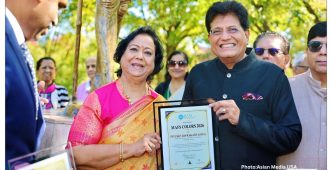
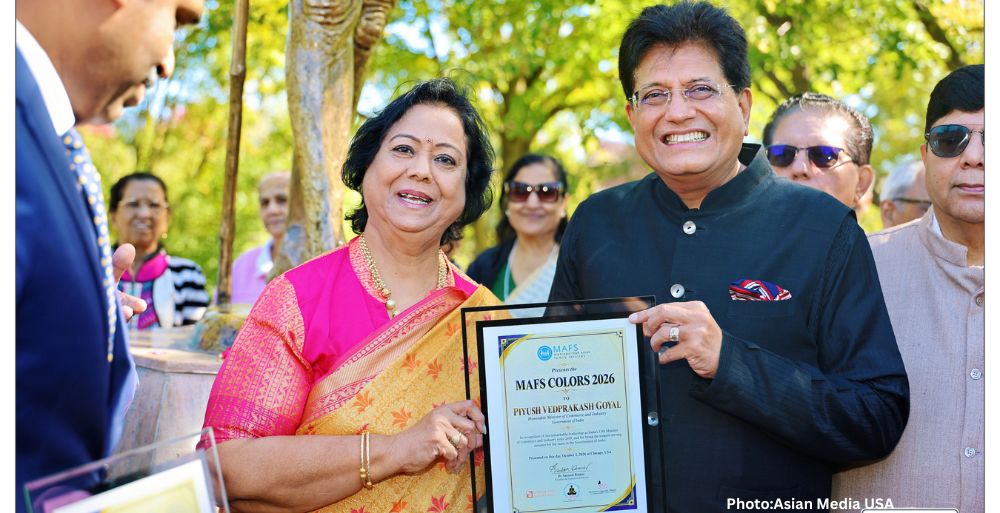
Dr. Santosh Kumar then presented the MAFS Colors 2026 to Minister Goyal and to the newly arrived Consul General of India in Chicago, Dr. Anand Prakash, whose inclusive energy in just a few short days has already endeared him to every community organization in the Midwest. In her brief remarks, she spoke of hard work, sincerity, and the love the diaspora carries for both Prime Minister Narendra Modi and the ministers who serve the nation with quiet dedication.
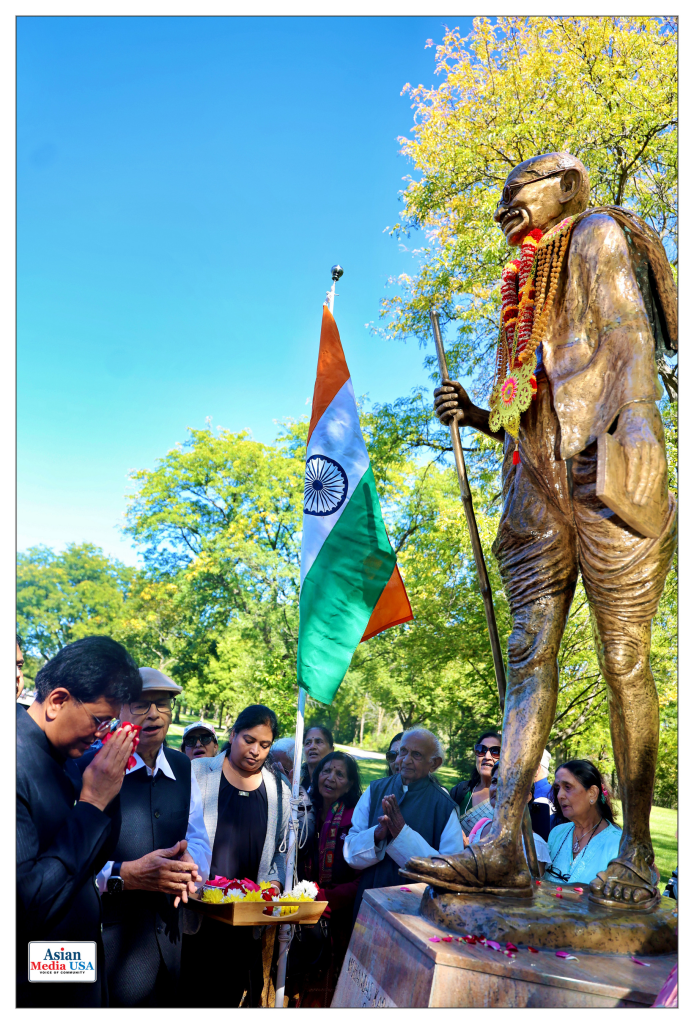
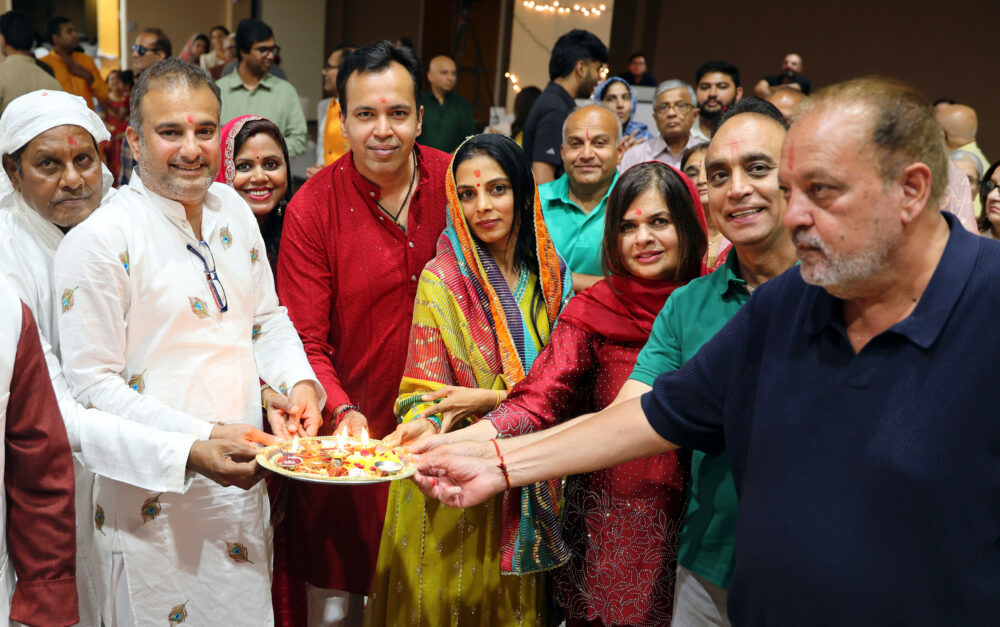
As the formal program eased into conversation, tea, and boxed refreshments, the deeper meaning of the morning settled over the park. Twenty-two years after the statue was installed through the determined efforts of a handful of dreamers, it remains the only such memorial of its kind in the planned stretch of cultural landmarks once imagined. It has become a place where seniors find belonging, where children learn the power of non-violence, and where, on a bright October morning in 2026, a Union Minister of India could stand and feel completely at home.
The rains of the previous day had washed the bronze clean. The sun of Gandhi Jayanti dried it with gentle warmth. Between the two, a community reaffirmed that the path Bapu walked—truth, non-violence, and service without discrimination—still leads somewhere worth going.
“Standing once again at the base of the Gandhi statue I helped safeguard as a trustee, I felt the quiet power of continuity. Events like this are not mere commemorations; they are living reminders that values outlast governments and generations. Minister Goyal’s presence, Dr. Santosh Kumar’s lifelong seva, and the steadfast support of Skokie’s leadership prove that the Indian American story in the Midwest is still being written with dignity and heart. May we keep walking the path, ever steadfast, until the destination of peace becomes the everyday reality Bapu dreamed,” said Mr. Suresh Bodiwala, Chairman and Founder of Asian Media USA.