Flower-inspired architecture has captivated designers for centuries, reflecting nature’s beauty while serving practical purposes. This article explores notable buildings worldwide that embody floral motifs, showcasing how architects integrate natural forms into functional designs.
Architecture has historically drawn inspiration from nature, with flowers serving as a particularly rich source of creativity. From ancient Egyptian temples adorned with lotus blossoms to the intricate marble arabesques of Islamic mosques, the connection between nature and built forms is profound. Notably, the revival of floral motifs during the Art Nouveau movement redefined architectural aesthetics by incorporating organic patterns into structures. This trend continues today, with modern architects creating innovative buildings that celebrate the beauty and functionality of flowers.
Burj Khalifa, Dubai, UAE
Standing at 828 meters, the Burj Khalifa is recognized as the tallest structure in the world. Its design is subtly influenced by the spider lily (Hymenocallis), evident in its Y-shaped footprint and hexagonal core. The architectural strategy employed by Adrian Smith and engineer Bill Baker allows for a tapering form that not only enhances aesthetic appeal but also ensures structural integrity against wind loads. The building’s elegant façade and terraces are a testament to the successful melding of artistry and engineering, drawing inspiration from a flower native to the region.
Wujin Lotus Conference Center, Wujin, China
Located on an artificial lake, the Wujin Lotus Conference Center designed by Studio505 resembles a lotus blossom, symbolizing civic architecture as a form of inhabitable art. This structure features three petal-like volumes that house various exhibition spaces and meeting rooms. Visitors enter a cathedral-like interior, where a carefully curated color palette enhances the uplifting atmosphere. Sustainability is prioritized through geothermal technology, providing an efficient thermal management system. The building’s design transforms throughout the day, appearing to bloom during daylight and glowing at night through programmed lighting.
National Museum of Qatar, Doha, Qatar
The National Museum of Qatar, designed by Jean Nouvel, showcases a collection of interlocking disks that evoke the desert rose, a mineral formation resembling rose petals. This architectural marvel integrates the historical palace of Sheikh Abdullah bin Jassim Al Thani, allowing visitors to engage with Qatar’s rich heritage and rapid modernization. Spanning approximately 40,000 square meters, the museum provides immersive exhibits that narrate the nation’s geological and cultural history.
Colombo Lotus Tower, Colombo, Sri Lanka
Inaugurated on September 15, 2022, the Colombo Lotus Tower rises 356 meters above Beira Lake, embodying the symbol of purity and renewal in Sri Lankan culture. The structure features a design that mimics a blooming lotus, integrating hospitality spaces, a revolving restaurant, and an observation deck. The tower’s green stem and magenta bloom serve functional purposes, housing essential radio and television transmission equipment while enhancing the skyline of Colombo.
La Tulipe, Geneva, Switzerland
Contrasting Geneva’s modernist architecture, La Tulipe, designed by Jack Vicajee Bertoli, resembles a whimsical flower crafted from concrete and colored glass. Nestled between a children’s hospital and a micro-forest, this research facility features a distinctive stem that opens like a flower. The vivid glass panels create a play of light and color, while the building’s design serves both functional and metaphorical purposes, encapsulating the spirit of scientific exploration within a floral framework.
Sheikh Zayed Grand Mosque, Abu Dhabi, UAE
Commonly referred to as the Flower Mosque, the Sheikh Zayed Grand Mosque is renowned for its intricate floral ornamentation. The 17,500-square-meter courtyard is adorned with a stunning marble mosaic of native flowers, while the interior features the world’s largest hand-knotted carpet depicting floral patterns. Inspired by Qur’anic descriptions of paradise, the mosque embodies a vision of beauty, tranquility, and reverence, effectively translating the essence of a garden into architectural form.
ArtScience Museum, Singapore
The ArtScience Museum, designed by Moshe Safdie, symbolizes the intersection of art and science through a lotus flower motif. The museum comprises a base surrounded by water and a structure with ten petal-like elements that rise above a lily pond. Each petal is designed to capture natural light, ensuring that the interior spaces are illuminated sustainably. The architectural design emphasizes environmental considerations, with features such as a rainwater drainage system that enhances the building’s ecological footprint.
Qizhong Forest Sports City Arena, Shanghai, China
Constructed for the ATP World Tour Finals in 2005, the Qizhong Forest Sports City Arena features a dynamic design that mimics a blooming magnolia. The arena’s roof consists of eight sliding petal-shaped panels that open and close, adapting to indoor or outdoor conditions. This innovative approach not only enhances the venue’s functionality but also provides natural ventilation and shade, demonstrating a harmonious integration of architectural form and environmental consideration.
Lotus Temple, New Delhi, India
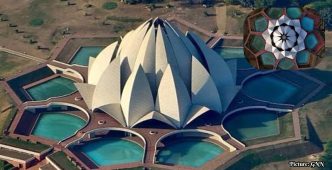
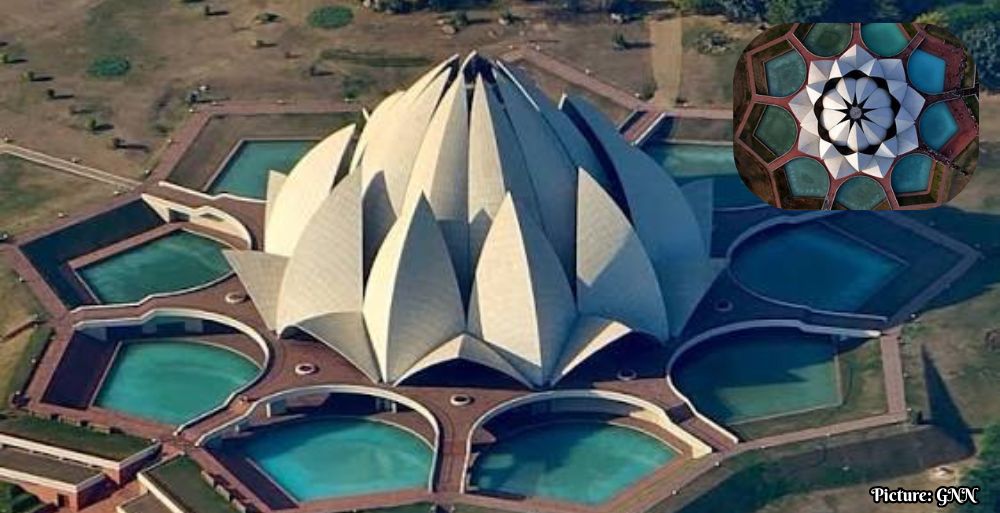
Completed in 1986, the Lotus Temple is a prominent symbol of flower-inspired architecture in India. Designed by Fariborz Sahba, the structure features 27 marble petals arranged in clusters to form a symmetrical bloom. This design not only creates a visually striking structure but also accommodates up to 2,500 worshippers within its central hall. The building’s reflective marble and surrounding pools enhance passive cooling, making it an exemplary model of sustainable design.
Okan Tower, Miami, USA
Set to rise 70 stories in Miami’s Arts & Entertainment District, Okan Tower pays tribute to the national flower of its Turkish developer. The building’s tulip-shaped silhouette and glass façade will incorporate mixed-use spaces, including a hotel, residences, and offices. The design aims to enhance Miami’s skyline while reflecting the cultural heritage of its developer through its floral-inspired form.
Ceramic Museum and Mosaic Park, Jinzhou, China
In Jinzhou, the Ceramic Museum and Mosaic Park merge architecture, art, and landscape into a vibrant mosaic. Designed by Casanova + Hernández Architects, the museum draws inspiration from Chinese porcelain glaze and Roman mosaic traditions. The park features floral motifs combined with local pottery, creating a colorful and interactive space that blurs the lines between natural and built environments. This project exemplifies how flowers and ceramics can harmoniously coexist within a community setting.