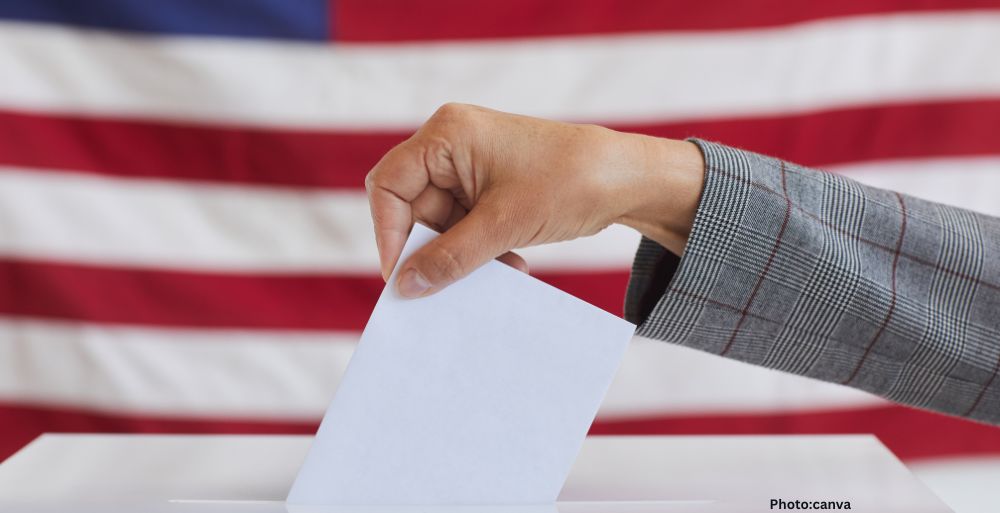
As the U.S. midterm elections approach, more than 43 million Americans have already participated in early voting, indicating a significant increase in voter engagement compared to past election cycles.
With less than a week remaining until the U.S. midterm elections on November 3, 2022, which will determine control of Congress for the next two years, over 43 million ballots have already been cast, according to data compiled by the University of Florida’s Election Lab. This surge in early voting suggests a heightened political engagement among American voters, with implications that could significantly influence the electoral landscape.
Record Early Voting Participation
The Election Lab reports that early voting has reached daily turnout rates of four to five million ballots, a figure that notably exceeds the early voting rates observed in previous election cycles. Professor Mike McDonald, who oversees the Election Lab database, noted that Texas is experiencing the most significant increase in voter turnout, particularly among Hispanic communities, which are showing higher participation rates than in past elections.
Current trends indicate that overall voter turnout may surpass the levels seen in the 2020 elections and could even eclipse the record set during the 2018 midterm elections. These midterms were notable for achieving the highest voter turnout in over a century, with approximately 50% of eligible voters participating. In Texas alone, early voting has already exceeded 2022 participation numbers by approximately 1.75 million voters, with over 5.8 million ballots cast. This increase positions Texas as a pivotal battleground state that could influence Senate control through the remainder of Donald Trump’s presidency.
Party Affiliation Trends Among Early Voters
Data from states requiring voters to register with a political affiliation indicates a noticeable shift in early voting. Democrats have accounted for 44% of early ballots cast, compared to 31.2% for Republicans, with 24.7% attributed to voters without a party affiliation. These figures reflect early voting patterns in roughly half of the states that mandate voter affiliation disclosures, suggesting a stronger mobilization among Democratic voters compared to their Republican counterparts.
Demographic Insights and Community Engagement
In three states—North Carolina, Georgia, and Florida—where voter registration includes racial demographics, data indicates an uptick in participation from Hispanic and Black communities. In contrast, white voter turnout appears consistent with early voting figures from 2022. Professor McDonald remarked, “That makes sense because communities of color are more frequently part of the Democratic coalition, and whites are more frequently part of the Republican coalition.” This demographic shift underscores the ongoing political realignment in the United States, particularly in the context of midterm elections.
While Texas does not require voters to disclose their party affiliation or race, there has been a notable increase in voting from counties along the Texas-Mexico border, where over 90% of residents are Hispanic. McDonald observed that some of these counties are projected to surpass their 2022 turnout figures based solely on early voting, indicating an important trend in voter mobilization efforts targeting Hispanic communities.
Impact of the COVID-19 Pandemic on Voting Behaviors
The rise in early voting can be partially attributed to changes initiated during the COVID-19 pandemic, which prompted many states to adopt early voting options, including in-person and mail-in ballots. In the 2020 election cycle, more than two-thirds of all ballots were cast early, with half of those being mail-in votes. Recent trends indicate that voters increasingly prefer to vote in-person, even during early voting periods, and they are returning their ballots earlier than in past elections.
Professor McDonald speculated that concerns about postal voting may have influenced this preference, suggesting that voters might be wary of potential complications with mail-in ballots. He noted that postal votes are more susceptible to disqualification due to errors, which could lead to a reluctance to rely on mail-in voting. This shift in voting behavior reflects broader societal concerns regarding the integrity and security of the electoral process.
Local Records and Shifting Voting Periods
Some local officials have confirmed that records are being set for early voting. On Thursday, the city of Minneapolis announced it had established an early voting record for a non-presidential election, highlighting the enthusiasm for participation in the upcoming elections. This trend is indicative of a broader national movement towards increased voter engagement and participation across various demographics.
As Election Day approaches, states will begin to limit early voting options, with many jurisdictions cutting off early voting in the days leading up to the election. This trend suggests that while early voting has surged, the final turnout will be closely monitored as ballots are cast in the final hours leading up to the midterms. The data emerging from this election cycle will provide valuable insights into voter behavior, preferences, and the evolving political landscape in the United States.