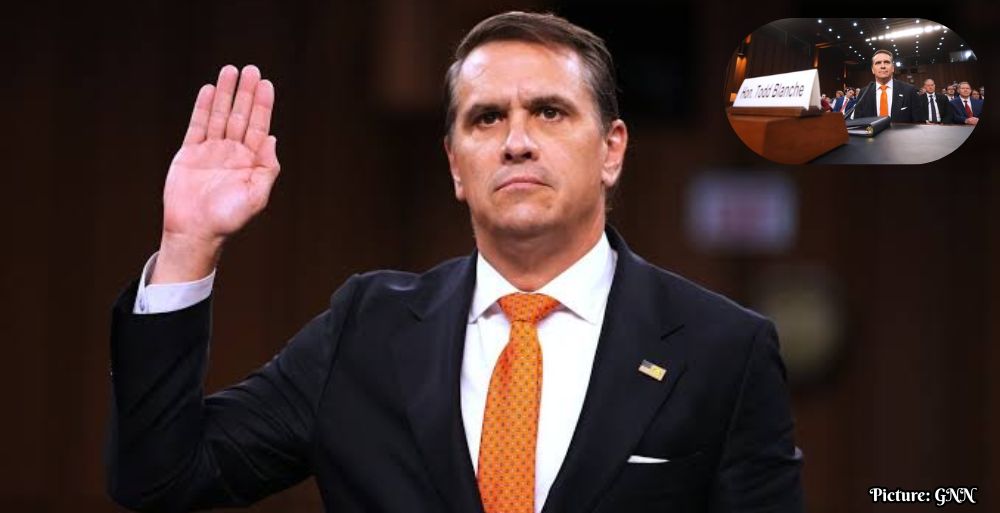
Attorney General Todd Blanche has indicated that the Department of Justice could hypothetically intervene in state election certification processes, although he emphasized the department’s commitment to upholding election integrity without improper interference.
In a recent press briefing, Attorney General Todd Blanche of the Department of Justice (DOJ) addressed the contentious topic of election integrity, particularly as the midterm elections approach. Blanche’s comments have raised questions about the potential for federal intervention in state election certification processes, a topic that is increasingly under scrutiny in the current political climate.
During the briefing, Blanche stated, “Yes, of course there’s scenarios that we can all come up with hypothetically, you know, some doomsday scenario for example, right?” This remark reflects a nuanced understanding of the complexities surrounding election procedures at a time when many are concerned about the integrity of the electoral process. He was careful to clarify that the DOJ has no intention of “improperly interfere[ing] with elections or the state confirmation process or certification process.” He further asserted, “There’s no circumstances that we would ever do that,” while also noting that he does not intend to “plan my days around the election to be somewhere to not certify.”
Deployment of Election Monitors
Earlier this month, Blanche announced that the DOJ intends to deploy approximately 1,000 election monitors across polling places nationwide on Election Day. This initiative is part of a long-standing commitment by the DOJ to ensure compliance with federal election laws, a responsibility that has been emphasized since the 1960s. In an interview with Fox News anchor Shannon Bream, Blanche defended the DOJ’s monitoring initiatives against allegations of intimidation, asserting that Democrats were engaging in “fearmongering” regarding the department’s presence at polling locations.
The backdrop to Blanche’s comments includes a recent lawsuit filed by several Democratic leaders and election advocacy groups. This lawsuit accuses President Trump and the DOJ of creating an environment of “threats and intimidation” that could undermine the electoral process. Central to the claims are the administration’s efforts to compel states to identify and potentially remove individuals deemed non-U.S. citizens from voter rolls, alongside threats of criminal prosecution against election officials who do not comply with these directives.
Legal Actions and Implications
The lawsuit specifically cites the DOJ’s demand directed at California officials, requiring them to set aside ballots from more than 20,000 registered voters identified by the Department of Homeland Security (DHS) as noncitizens. This action raises significant questions regarding voter eligibility and the broader implications for election law enforcement. California Governor Gavin Newsom responded strongly, asserting, “California’s elections are NOT Donald Trump’s to control.”
In a move that underscores ongoing concerns about election integrity, the DOJ announced on Monday that it had charged 28 individuals in California with illegal voting. Deputy Attorney General Trent McCotter confirmed that all the defendants were included on the list of more than 20,000 individuals identified as potential noncitizen registrants provided to California election officials last week. This ongoing legal scrutiny highlights the administration’s proactive stance on what it perceives as threats to electoral integrity, yet it also raises alarms regarding voter suppression and the politicization of the electoral process.
The Broader Context of Election Integrity
The issues surrounding voting rights and election integrity remain deeply polarized in American politics, particularly in the context of the Trump administration’s repeated assertions regarding noncitizen voting. President Trump has frequently claimed that such practices contribute significantly to voter fraud, particularly in states that lean Democratic. However, these assertions have faced considerable scrutiny and lack substantial empirical backing, leading to widespread debate over their validity.
The DOJ’s current actions, particularly in relation to election monitoring and enforcement, reflect a broader national discourse on balancing election security with the imperative of ensuring voter access. Historically, the federal government’s involvement in state election processes has varied greatly, with significant legal battles often arising around issues of voter suppression, electoral integrity, and the rights of citizens to participate in the democratic process. The Voting Rights Act of 1965, for instance, was a landmark piece of legislation aimed at addressing systemic barriers to voting, especially for marginalized communities.
As the midterm elections draw nearer, the implications of the DOJ’s strategies and actions will likely be scrutinized closely by political analysts, civil rights organizations, and the general public. The current legal challenges and the ongoing public discourse surrounding election integrity serve to underscore the contentious nature of the electoral process in the United States. Voter confidence in the election system remains paramount, and how the DOJ navigates these complexities could have lasting impacts on public perception and electoral outcomes.
In summary, while Attorney General Todd Blanche has left the door open for hypothetical scenarios regarding federal intervention in state election processes, he has also emphasized the DOJ’s commitment to maintaining the integrity of elections without overstepping its bounds. As legal and political challenges unfold, the balance between enforcing election laws and protecting voter rights will continue to be a focal point in the upcoming electoral cycle.