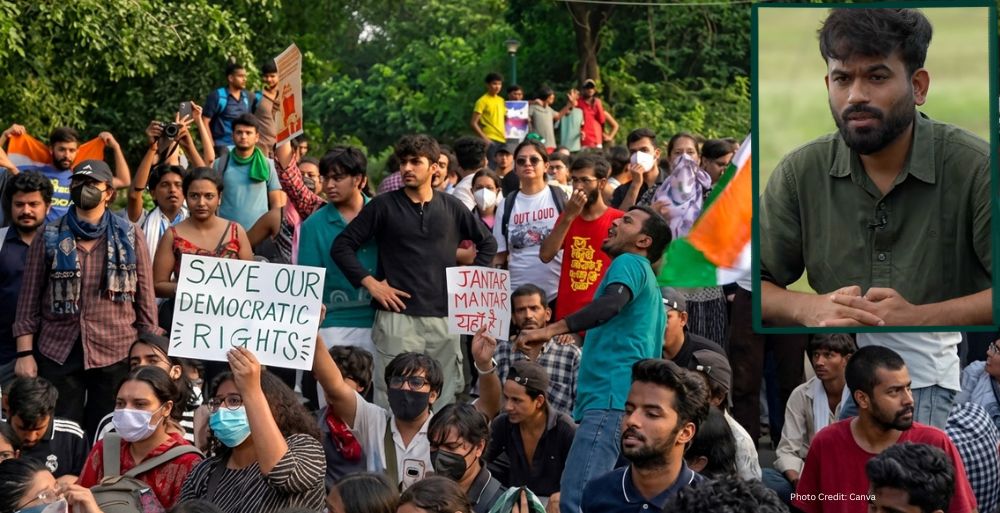
Abhijeet Dipke, founder of the Cockroach Janta Party, has urged supporters to gather in Delhi on October 16 to protest the recent detention of two party co-convenors, asserting their imprisonment constitutes a violation of the right to display the national flag.
NEW DELHI — On October 14, 2026, Abhijeet Dipke, the founder of the Cockroach Janta Party (CJP), announced a planned gathering at Central Park in Connaught Place, New Delhi, scheduled for October 16. This call to action is a direct response to the recent detention of two party co-convenors, Saurav Das and Ashutosh Ranka, who have been placed in judicial custody for allegedly violating peace bonds and trespassing at Jantar Mantar, a location that has been officially designated as off-limits for protests.
Dipke characterized the detainment of Das and Ranka as unjust, arguing that they were incarcerated merely for unfurling the tricolour, or national flag. In a post on X (formerly Twitter), he stated, “We will show that waving a tiranga is not a crime,” and encouraged supporters who could not attend the Delhi protest to organize ‘tiranga marches’ in their own cities to symbolize national pride.
Context of the Arrests
The events leading to the arrests began on October 10, when CJP members attempted to conduct a protest against Chief Election Commissioner Gyanesh Kumar at Jantar Mantar. The police intervened, leading to the detention of several individuals, including Dipke, Das, and Ranka, at Indira Gandhi International Airport. They were released after nearly 24 hours but were reportedly informed that their release came with conditions prohibiting them from engaging in activities perceived as disruptive for a period of one year.
On October 13, 2026, police arrested Das and Ranka again after they allegedly raised slogans against the Chief Election Commissioner and attempted to reclaim Jantar Mantar as a site for protest. Following these events, both were sent to five-day judicial custody, as authorities expressed concerns they could continue to violate the law if released.
According to police reports, two first information reports (FIRs) have been filed against the group of 14 CJP members for charges that include trespassing and disobeying official orders. Some members, like Ajinkya Shinde, were released after agreeing to maintain peace and providing a personal bond. In contrast, Das and Ranka remain in custody pending further legal proceedings.
Implications for Civil Liberties
Dipke’s call for a mass gathering in Delhi signifies a broader concern regarding civil liberties and the right to protest in India. The CJP has positioned itself as a prominent voice against what it perceives as the government’s increasing repression of dissent. Dipke’s remarks reflect a commitment to standing against these perceived injustices, stating, “I also may be jailed after this, but I am not worried. Tricolour is my pride and I will raise it.”
The backdrop of this event is critical; historically, protests in India have been an essential mechanism for citizens to express grievances and seek accountability from the state. However, the increasing tension between government authorities and opposition groups raises questions about the limits of free speech and assembly, particularly in light of recent detentions and state actions that restrict public demonstrations.
Future of Protests and Political Dynamics
The CJP’s upcoming protest is expected to attract significant attention from both supporters and law enforcement. The ability of the CJP to mobilize citizens across India will likely influence future demonstrations and the broader discourse surrounding civil rights and governmental authority in the current political climate.
This situation is emblematic of the ongoing challenges faced by political groups in India that seek to question the actions of the state. The implications of the CJP’s actions, particularly concerning civil liberties, will be closely monitored as the date of the protest approaches. Observers are particularly interested in how authorities will respond to the anticipated gathering in Delhi and similar marches across the country.
As the CJP seeks to rally support, the political landscape remains fraught with tension. The outcome of this protest could set a precedent for how dissent is treated in India moving forward, as well as impact the CJP’s standing within the political arena. The dialogue surrounding citizens’ rights to assemble peacefully and express dissent is likely to intensify, especially if the protest on October 16 garners significant participation.
Legal Ramifications and the Way Forward
As the events unfold, the legal ramifications for both the detained CJP members and those who participate in the upcoming protests may be profound. Should the authorities pursue further actions against Dipke or other CJP members, it could intensify scrutiny on the government’s approach to managing dissent and the public’s right to protest.
The CJP’s planned actions underscore a critical moment in India’s ongoing struggle for civil rights and the collective memory of protests that have shaped the nation’s democratic fabric. The outcome of the upcoming protest could have lasting effects on the political discourse surrounding civil liberties and the role of government in regulating public demonstrations.