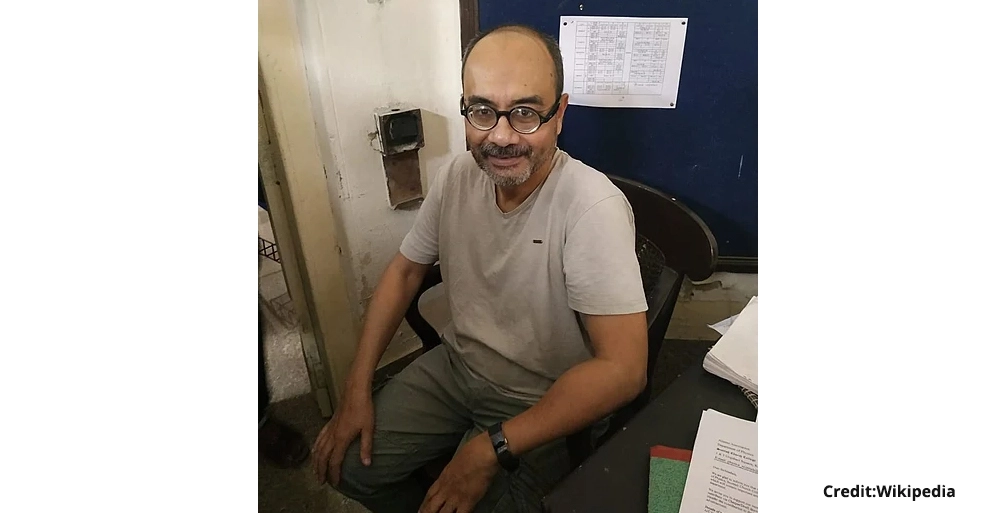
Professor Ashoke Sen has been awarded the prestigious Oskar Klein Medal for 2026, marking him as the first Indian physicist to receive this honor, reflecting his significant contributions to the field of theoretical physics.
On October 24, 2026, the International Centre for Theoretical Sciences (ICTS) announced that Professor Ashoke Sen has been awarded the Oskar Klein Medal for 2026. This accolade recognizes exceptional achievements in the field of physics, and Professor Sen’s receipt of the medal is a historic milestone, as he is the first Indian physicist to be honored in this way.
Academic and Research Background
Professor Ashoke Sen holds the position of ICTS-Infosys Madhava Chair Professor and is globally recognized for his pioneering research in theoretical physics. His work has focused primarily on S-duality, black hole entropy, and string field theory, all of which are critical components in the evolving framework of string theory. String theory itself attempts to unify the fundamental forces of physics, offering insights into the relationship between quantum mechanics and general relativity.
On October 22, just two days before the announcement of his award, Professor Sen delivered the 2026 Oskar Klein Memorial Lecture at Stockholm University’s AlbaNova Centre. His presentation, titled ‘Gravity from Strings and Strings from Gravity,’ explored the intricate connections between gravitational theories and string theory, illustrating the ongoing relevance of his research in contemporary theoretical discussions.
Distinguished Honors and Awards
Professor Sen’s academic journey is marked by a series of prestigious awards and recognitions that underscore his influence in the scientific community. He was awarded the Breakthrough Prize in Fundamental Physics in 2012 for his vital contributions to establishing the unifying structure of string theory. Additionally, his receipt of the Dirac Medal in 2014 further highlights his significant impact in the field of physics.
His accolades extend beyond these recognitions. In 2009, he received the Infosys Prize in Mathematical Sciences, and in earlier years, he was honored with the Shanti Swarup Bhatnagar Prize in 1994 and the ICTP Prize in 1989. Among India’s highest civilian honors, he was awarded the Padma Shri in 2001 and the Padma Bhushan in 2013, reflecting his substantial contributions to science and society. In 1998, he was elected a Fellow of the Royal Society, further solidifying his standing as a leading figure in the global scientific community.
The Oskar Klein Medal: A Legacy of Excellence
The Oskar Klein Medal, named after the esteemed Swedish theoretical physicist Oskar Klein, has been awarded annually since 1988 to recognize distinguished contributions to physics. This prestigious award is jointly presented by Stockholm University and the Nobel Committee for Physics of the Royal Swedish Academy of Sciences. Over the years, several Nobel laureates have been honored with this medal, including prominent figures such as Chen-Ning Yang, Steven Weinberg, and Hans Bethe, who were among the first recipients in the award’s inception years.
In congratulating Professor Sen on this illustrious achievement, ICTS Director Rajesh Gopakumar remarked, “On behalf of all of us, very warm congratulations to Ashoke. It has been no less than wonderful having Ashoke with us and setting the tone for excellence here at ICTS.” This statement reflects the high esteem in which Professor Sen is held among his peers and the academic community at large.
Implications of the Award
Professor Sen’s recognition as the first Indian recipient of the Oskar Klein Medal not only highlights his individual contributions to the field of theoretical physics but also serves to elevate the global profile of Indian scientists. His achievements underscore the growing importance and influence of Indian research on the international stage, particularly in fundamental physics and cosmology. This recognition may inspire a new generation of physicists in India and could lead to increased investment and interest in scientific research within the country.
The significance of this award transcends individual recognition, as it symbolizes the broader advancements in theoretical physics and promotes the visibility of Indian contributions to the global scientific discourse. As physics continues to grapple with fundamental questions about the universe, the work of scientists like Professor Sen will be pivotal in shaping future inquiries and enhancing our comprehension of the cosmos.
Conclusion
In summary, Professor Ashoke Sen’s receipt of the Oskar Klein Medal is not only a personal milestone but also a landmark achievement for Indian science. It reflects a legacy of innovation and excellence that has characterized his career and sets a precedent for future generations of physicists. As the international scientific community continues to evolve, the contributions of scholars like Professor Sen will undoubtedly play a crucial role in shaping our understanding of the universe.