Democracies are not usually tested on election day. Their greatest tests often come much earlier, when citizens begin to question whether the institutions responsible for safeguarding their vote still deserve their trust. That is the dilemma confronting India today.
Across India, the world’s largest democracy, conversations that once centered on inflation, jobs, and cricket have increasingly turned toward a more fundamental concern: can the country’s electoral system still command broad public confidence?
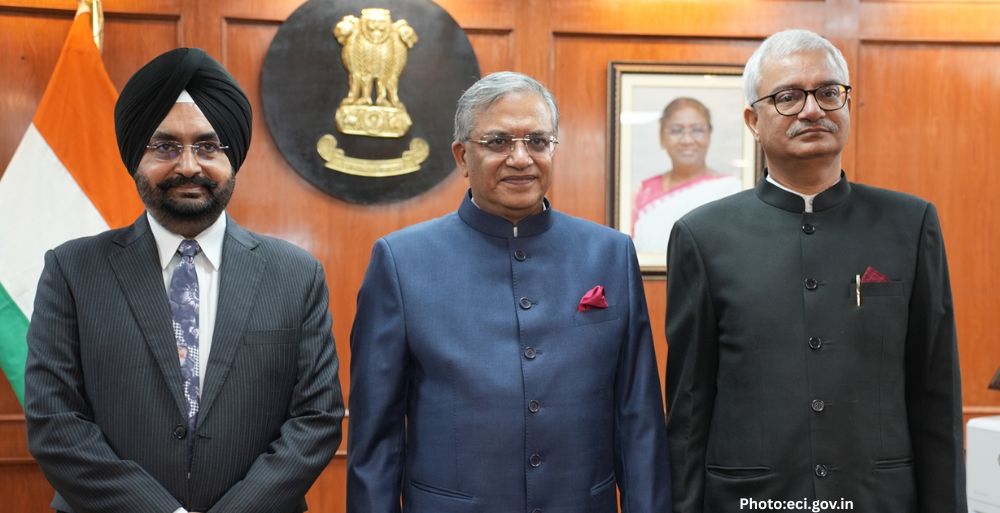
At the center of the debate is the Special Intensive Revision (SIR) of electoral rolls conducted by the Election Commission of India under the leadership of Gyanesh Kumar, the Chief Election Commissioner of India. What began in June 2025 as an effort to update voter rolls has evolved into a contentious electoral controversy, producing institutional disagreements, allegations of mass disenfranchisement, court challenges, and calls for protests.
The controversy raises a question that extends far beyond voter lists: when does an effort to improve electoral integrity begin to undermine public faith in democracy itself?
The Numbers That Triggered Alarm
The SIR exercise was introduced with a straightforward objective. The Election Commission stated that it sought to identify duplicate, deceased, shifted, and otherwise ineligible names while improving the accuracy of electoral rolls. Such revisions are not unusual. The scale of this exercise, however, has attracted significant attention.
According to an investigation by The Indian Express, the revision process resulted in more than 13 crore names being struck from draft electoral rolls across 30 states and Union Territories. Other analyses have arrived at similar estimates, while opposition leaders have cited figures as high as 13.8 crore voters.
The state-by-state figures have also drawn scrutiny. Bihar recorded a net reduction of roughly 47 lakh voters after revisions and restorations. Uttar Pradesh experienced a reduction of about 2.04 crore electors, while Delhi’s draft rolls excluded approximately 47.7 lakh voters. Maharashtra reportedly saw more than 2 crore names excluded from draft lists, while Karnataka recorded exclusions exceeding one crore voters.
A report by OneIndia stated that during the SIR process, more than 90.83 lakh voter names were ultimately deleted from West Bengal’s electoral rolls. The report said the state initially had about 7.66 crore voters, with 58.2 lakh names removed in the draft list, rising to 63.66 lakh in the final list, and subsequent reviews taking the total number of deletions above 90.83 lakh.
For critics, these figures are evidence of a process operating at an unprecedented scale. For the Election Commission, they reflect an effort to correct inaccuracies accumulated over years.
The Internal Dissent That Changed the Debate
The controversy gained another dimension in September 2026 when The Indian Express reported that Sukhbir Singh Sandhu and Vivek Joshi, two of the three Election Commissioners, had formally registered objections at least fourteen times over ten months regarding decisions involving voter registration, voter deletions, data management, and electoral procedures.
The reported objections touched the core of electoral administration. According to published accounts, the commissioners questioned alterations to voter-registration procedures, raised concerns about centralization of electoral databases, and objected to decisions they believed had been made without adequate institutional consultation. Some recorded notes reportedly described certain measures as “unauthorized” and “illegal.”
The Election Commission has disputed suggestions that these disagreements indicate wrongdoing. Officials have maintained that differences of opinion are common in collegiate institutions and that final decisions were taken through established procedures and reflected Commission consensus.
The Burden of Proving Eligibility
Another source of concern has been the burden placed on voters themselves. Under aspects of the revised system, some electors were reportedly required to establish links to earlier electoral rolls, including historical voter lists dating back to previous intensive revisions.
Critics argued that such requirements could disproportionately affect migrants, poorer citizens, elderly voters, and people lacking access to older records.
In Delhi alone, more than 3.16 million voters reportedly received notices citing “logical discrepancies” involving names, age differences, family relationships, or documentation issues.
For many citizens, however, the debate is less about technical procedures than democratic inclusion. The right to vote may be constitutionally protected, but in practice it begins with something much simpler: having one’s name on the electoral roll.
Protests Move Into the Streets
The issue moved from institutional controversy to public agitation when Abhijeet Dipke, founder of the Cockroach Janta Party (CJP), called for nationwide protests and demanded the resignation of Gyanesh Kumar.
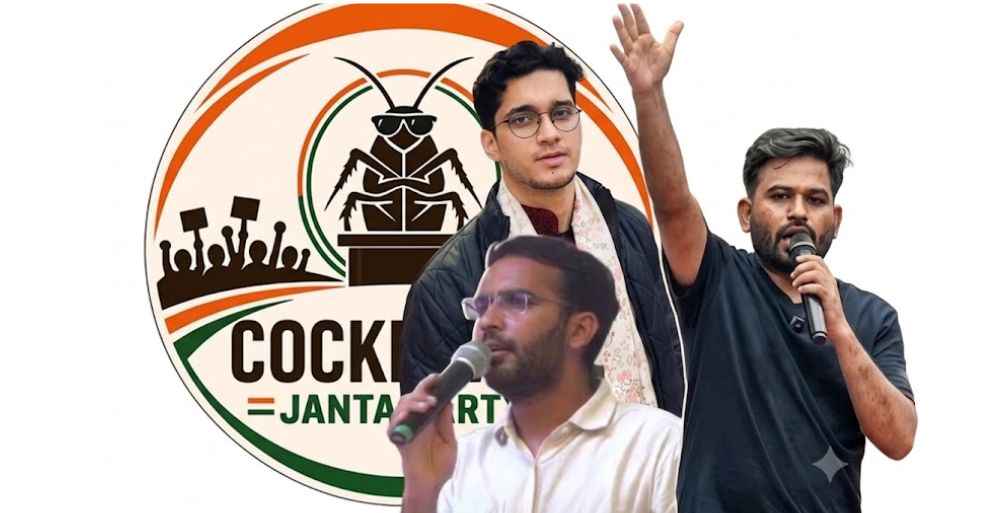
In a statement that circulated across national media and social platforms, Dipke said: “If Gyanesh Kumar does not resign by tomorrow, CJP will begin its nationwide protest from Mumbai on 2 October, and take it to cities across India. This Gandhi Jayanti let’s pledge to save democracy.”
When the deadline passed without a resignation, the party escalated its campaign, declaring: “Time’s Up! Our nationwide agitation starts from Mumbai on 2nd October.”
Support also emerged from opposition figures, including Aaditya Thackeray, who publicly endorsed the proposed protests and said: “If Gyanesh doesn’t go, Mumbai will step out against Vote Chori from 2nd October, in huge numbers!!”
These statements transformed the dispute from a technical debate into a broader political confrontation.
The Opposition’s Case
Opposition leaders have framed the SIR as more than a voter-list revision. Jairam Ramesh of the Congress Party has argued that deletion rates are unusually high and disproportionately affect disadvantaged communities. He described the process as a “Shah Instigated Removal” and claimed that millions of voters had already been deleted or placed at risk of deletion.
Critics have pointed to deletion and verification rates reported in states such as Delhi, Maharashtra, Telangana, Karnataka, and Jharkhand as evidence that the process extends beyond routine electoral-roll maintenance. They argue that requiring large numbers of citizens to repeatedly establish eligibility risks creating barriers to participation.
Civil-society organizations and legal observers have similarly raised concerns about the potential effects on migrants, minorities, urban poor populations, and citizens lacking documentation.
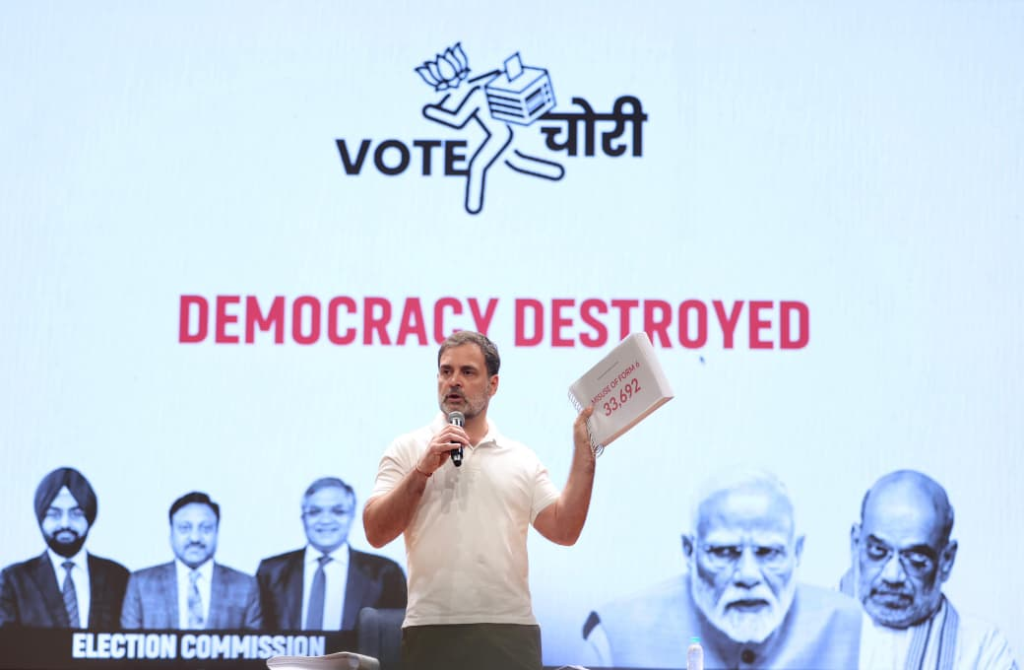
Rahul Gandhi, the Leader of the Opposition, has demanded Gyanesh Kumar’s resignation. He has repeatedly alleged “vote chori” in India’s elections and described the SIR process and other election-related decisions using that term.
Gandhi has also pointed to the reported objections from the two Election Commissioners as evidence that concerns are not limited to opposition parties. These remain political allegations and interpretations rather than established findings of wrongdoing.
Has the BJP Benefited?
One of the most politically consequential questions concerns whether voter-roll changes have had an identifiable electoral effect.
A OneIndia analysis of the 2026 West Bengal election found that constituencies experiencing larger reductions in voter rolls often showed stronger BJP performance. According to the analysis, among 147 constituencies where more than 25,000 voters were deleted, the BJP reportedly won 95 seats while the Trinamool Congress won 51.
However, a correlation between voter-roll reductions and electoral results does not by itself establish causation. No court, independent inquiry, or official investigation has concluded that voter deletions were intentionally engineered to benefit the BJP. Nor has an authoritative body determined that BJP victories resulted directly from the SIR process.
The Election Commission maintains that the exercise was designed to improve electoral accuracy by removing ineligible entries.
Trust Is the Real Issue
Ultimately, the significance of this episode extends beyond statistics, procedures, and political accusations.
Democratic systems depend not only on legal rules but also on public confidence in the institutions responsible for administering those rules.
Presented with reports of millions of deleted names, internal objections by Election Commissioners, allegations from opposition leaders, and assurances from election officials, many voters are left wondering whom to believe. That uncertainty may be one of the most consequential outcomes of the controversy.
Whether the SIR ultimately proves to be a necessary modernization of India’s electoral system or a process requiring substantial reform will depend on further evidence, institutional review, legal scrutiny, and the ability of eligible voters to challenge and correct errors.
The issue facing India is therefore not merely who remains on the voter list. It is whether citizens continue to trust the institutions responsible for deciding who belongs there. In the world’s largest democracy, that question has become central to the debate over electoral integrity.