As a person of Indian origin, I have long taken pride in speaking about India to my friends, colleagues, and fellow citizens around the world. I have spoken about its ancient civilization, rich cultural heritage, extraordinary diversity, and remarkable democratic experiment. I have often described how a nation that emerged from colonial rule in 1947 amidst crushing poverty, widespread illiteracy, and immense social challenges transformed itself into the world’s most populous democracy and one of the fastest-growing major economies.
India’s story has been one of resilience and hope. Over nearly eight decades, it has built strong institutions, held regular elections, expanded educational opportunities, lifted millions out of poverty, developed a thriving middle class, and emerged as an influential global power representing more than 1.4 billion people.
Yet democracy is measured not only by economic growth or electoral participation. It is equally defined by the strength of constitutional values: freedom of expression, equality before the law, institutional independence, protection of minorities, and the right of citizens to question power without fear. These are the principles enshrined in India’s Constitution and envisioned by its founding fathers.
It is against this backdrop that the latest findings from the Sweden-based Varieties of Democracy (V-Dem) Institute have generated widespread discussion and concern.
A Troubling Milestone
The V-Dem Institute’s latest report places India’s Electoral Democracy Index (EDI) score at 0.38 in 2025, the country’s lowest rating since 1975, the year then Prime Minister Indira Gandhi imposed the Emergency. The report ranks India 106th among 179 countries and categorizes it as an “electoral autocracy,” arguing that democratic institutions have experienced a gradual decline over the past fifteen years.
For many Indians, the comparison with 1975 immediately evokes one of the darkest chapters in modern Indian history.
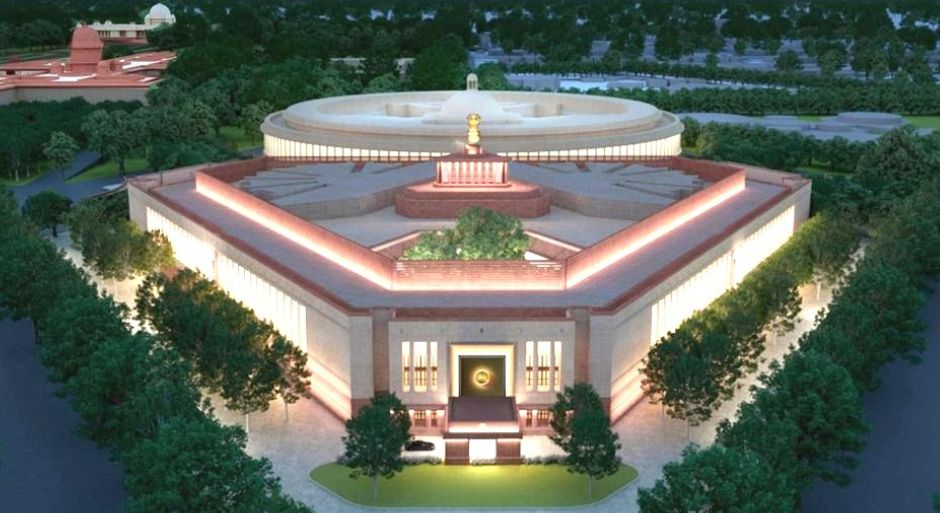
Remembering the Emergency
On June 25, 1975, India entered a period that would fundamentally test its democratic foundations. The Emergency, which lasted 21 months, suspended fundamental rights, imposed strict press censorship, curtailed judicial independence, and led to the imprisonment of thousands of political opponents.
Veteran journalist Kuldip Nayar, who himself was jailed during the Emergency, later recounted how fear became a defining feature of public life. Newspapers were required to submit content for approval before publication. Several publications famously left editorial spaces blank to signal government censorship. Opposition voices were silenced, and dissent became dangerous.
For an entire generation, the Emergency became a reminder that democratic freedoms, no matter how deeply cherished, can never be taken for granted.
The V-Dem report does not suggest that present-day India is identical to Emergency-era India. Elections continue to be held regularly, voter participation remains among the highest in the world, and political engagement is vibrant. Nevertheless, the report’s central warning is that democracy can weaken gradually through erosion of institutions rather than through dramatic constitutional crises.
Why the V-Dem Report Matters
The V-Dem Institute, headquartered at Sweden’s University of Gothenburg, is widely regarded as one of the world’s leading democracy-monitoring organizations. Unlike rankings that focus primarily on elections, V-Dem evaluates hundreds of variables that collectively determine democratic quality.
These include:
- Media freedom
- Judicial independence
- Protection of civil liberties
- Freedom of expression
- Academic freedom
- Political participation
- Institutional accountability
- Electoral integrity
- Civil society autonomy
The organization’s reports are extensively referenced by academics, policymakers, journalists, and international institutions seeking to understand democratic trends worldwide.
While democracy rankings are often debated and criticized, they nevertheless provide a framework for measuring how democratic institutions function beyond election day.
India’s Declining Democratic Indicators
According to V-Dem, India’s democratic indicators have experienced a steady decline since 2009.
The report identifies several areas of concern:
Media Independence
The report highlights growing concerns regarding press freedom and the shrinking space for independent journalism. Critics point to increasing pressure on media organizations, legal challenges faced by journalists, and the concentration of ownership within sections of the media landscape.
Freedom of Expression
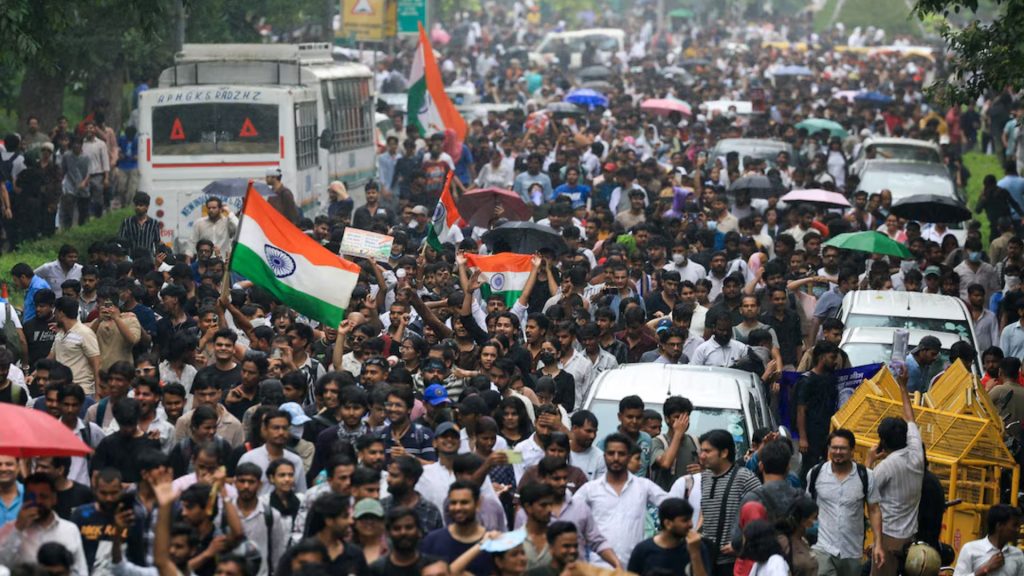
V-Dem notes concerns regarding constraints on free speech and expression. Civil rights advocates argue that journalists, activists, academics, and public intellectuals have increasingly faced legal and administrative pressures for views critical of authorities. The recent youth led movements across India, and the draconian resistance by the government are testimony to this fact.
Civil Society and Public Participation
The report also raises concerns about restrictions affecting non-governmental organizations and civil society groups, which traditionally play a crucial role in democratic accountability.
Institutional Autonomy
Questions regarding the independence of key democratic institutions, including oversight bodies and investigative agencies, have increasingly become part of India’s political discourse.
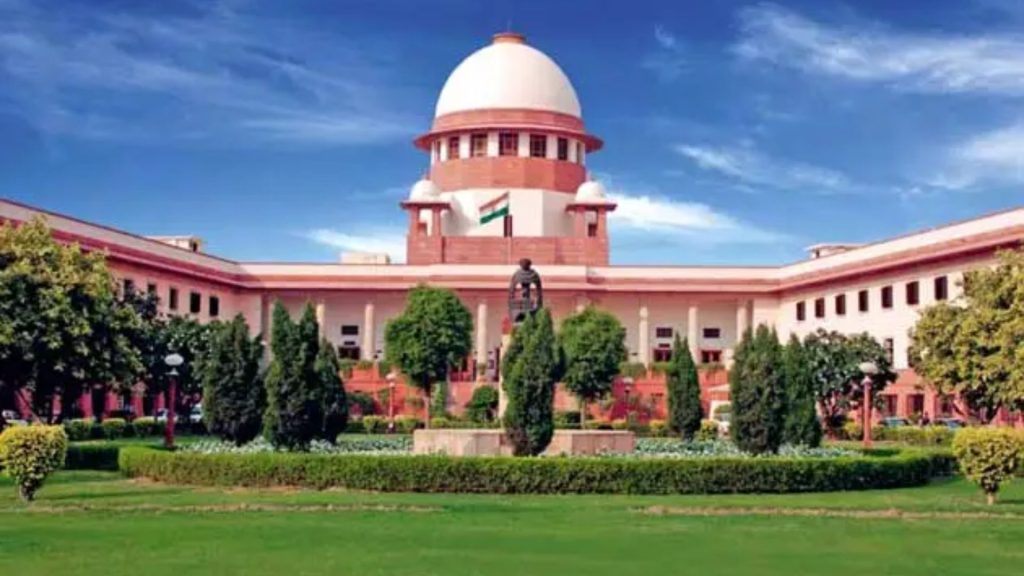
Opposition Participation
V-Dem further points to challenges faced by opposition parties in political competition, arguing that a healthy democracy requires not merely elections but a level playing field among political actors.
Together, these indicators contributed to India’s classification as an “electoral autocracy” in the V-Dem framework.
The Debate Over Democratic Decline
Unsurprisingly, the report has triggered sharp political reactions.
Senior Congress leader P. Chidambaram highlighted the findings by noting that India’s democracy score had reached its lowest level since 1975. Opposition leaders have cited the report as evidence of weakening institutional independence and shrinking democratic space.
Government supporters, however, strongly contest such assessments. They argue that India’s democracy remains robust, pointing to repeated national and state elections involving hundreds of millions of voters, peaceful transfers of power at various levels of government, an active judiciary, and vigorous public debate.
They contend that international democracy indices often fail to appreciate India’s unique political complexity, cultural diversity, federal structure, and the enormous scale at which democratic processes operate.
This disagreement highlights a fundamental question:
Should democracy be judged primarily by elections, or by the broader ecosystem of freedoms and institutions that surround them?
Democracy Beyond the Ballot Box
One of V-Dem’s central arguments is that democracy cannot be reduced simply to voting.
A healthy democracy, according to the institute, depends upon:
- Independent judiciary
- A free and pluralistic media
- Protection of minority rights
- Freedom of assembly and speech
- Strong civil society organizations
- Genuine competition among political parties
Constitutional experts have long argued that elections are a necessary condition for democracy, but not a sufficient one.
This principle was understood by India’s architects long before independence.
When drafting the Constitution, Dr. B.R. Ambedkar repeatedly warned that democratic institutions would survive only if citizens remained committed to democratic values.
His famous observation remains especially relevant today:
“However good a Constitution may be, if those who are implementing it are not good, it will prove to be bad. However bad a Constitution may be, if those who are implementing it are good, it will prove to be good.”
Part of a Larger Global Trend
India’s ranking comes at a time when democratic backsliding is being observed in many parts of the world.
V-Dem’s broader report argues that autocratic tendencies are increasing globally and that millions of people now live in countries experiencing declines in democratic freedoms. Political polarization, digital misinformation, concentration of power, and attacks on independent institutions have become challenges confronting democracies across continents.
India’s case, therefore, must be understood within a larger global conversation about democratic resilience in the twenty-first century.
At the same time, India’s sheer size magnifies the significance of these concerns. When democratic conditions change in a nation of more than 1.4 billion people, the implications extend far beyond its borders.
Lessons From History
History offers important lessons about the fragility of freedom.
The 1975 Emergency demonstrated that even established democracies can experience periods during which constitutional safeguards are weakened. Yet history also demonstrated India’s remarkable capacity for self-correction. In 1977, voters peacefully exercised their democratic rights and restored political accountability through the ballot box.
That remains one of the most powerful examples of democratic resilience anywhere in the world.
As American statesman Thomas Jefferson famously observed: “The price of liberty is eternal vigilance.”
The lesson is neither despair nor complacency. Rather, it is a reminder that democracy requires constant nurturing by citizens, institutions, journalists, judges, educators, and political leaders alike.
A Moment for Reflection
Whether one agrees entirely with V-Dem’s conclusions or challenges its methodology, the report raises questions that deserve thoughtful consideration.
India today remains a nation of extraordinary achievements. It is a technological powerhouse, a major economic force, a leader in innovation, and home to one of the most politically engaged populations in the world. Its democratic journey has survived wars, economic crises, social upheavals, and political turbulence.
Yet democratic success cannot be measured solely by GDP growth, infrastructure projects, or electoral victories. It must also be measured by the health of institutions, the freedom of citizens, the independence of the press, and the protection of constitutional values.
The significance of the V-Dem report lies not merely in India’s ranking but in the conversation it has rekindled. It challenges Indians, both at home and across the global diaspora, to reflect on the kind of democracy they wish to preserve for future generations.
Democracy, after all, is not a destination reached once and forever. It is a continuous project, sustained by vigilance, accountability, debate, participation, and an unwavering commitment to freedom.
As India approaches eight decades of independence, that commitment remains as important today as it was when the Constitution first promised liberty, equality, justice, and dignity to all its citizens.