In a recent address at Columbia University, Indian opposition leader Rahul Gandhi highlighted significant economic challenges facing India, calling for urgent reforms to address unemployment and manufacturing decline.
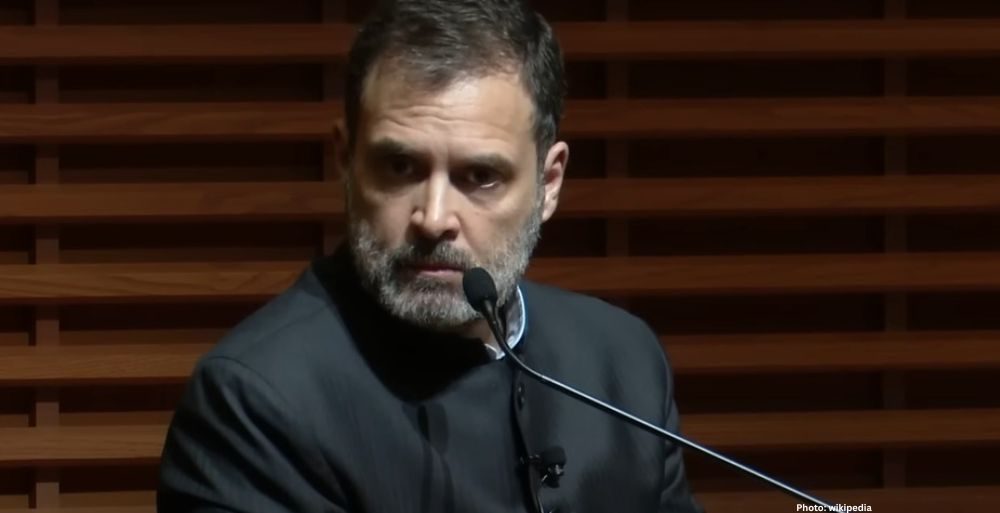
NEW YORK — During a fireside chat at Columbia University on November 17, 2026, Rahul Gandhi, the Leader of the Opposition in India’s Lok Sabha, expressed grave concerns regarding the state of India’s economy, describing it as being on the brink of an ‘economic disaster.’ The conversation, moderated by New York Times journalist Lydia Polgreen, touched on pressing issues such as unemployment, education, and the concentration of wealth in the hands of a few major business groups.
Gandhi stated that India’s current economic model has failed to deliver results for nearly a decade, leading to a deepening employment crisis and a weakened manufacturing sector. He emphasized, ‘The blunt thing is that India is sitting on an economic disaster. That’s the reality of it.’ He criticized the government’s approach, suggesting that it has neglected the needs of small and medium businesses, which he considers crucial for job creation and economic stability.
Unemployment and Education Challenges
Highlighting the plight of small and medium enterprises, Gandhi argued that the backbone of India’s economy lies in these sectors, alongside agriculture. He indicated that the services sector is insufficient to absorb the growing workforce, stating, ‘The spine of the economy is small and medium business, which is the job creation engine, and agriculture. That is fundamental in India and required. The spine of the economy has been broken.’
Furthermore, he pointed out what he sees as a significant problem with unemployment, asserting, ‘India has got a massive unemployment problem. India’s got a massive problem with its education system. And these are things you cannot get away from.’
Concentration of Economic Power
Gandhi raised concerns about the concentration of economic power within a few large business groups, notably mentioning Gautam Adani and Mukesh Ambani. ‘Why is there no private investment in India? Why are the only people who are growing in India, businesses that are growing in India called Adani and Ambani? Why is Tata literally being taken over by Mr. [Gautam] Adani?’ he questioned. This assertion reflects a broader critique of India’s economic landscape, where smaller enterprises are reportedly struggling to compete.
He also linked the current economic challenges to a broader narrative of disenfranchisement among various communities, including Adivasis, Dalits, and farmers. ‘There’s a massive concentration of wealth taking place in India, and huge disenfranchisement of people. Vote is just one element of it,’ Gandhi stated, underscoring the social and political ramifications of economic inequality.
Optimism Amid Challenges
Despite his criticisms, Gandhi expressed optimism about India’s potential, cautioning against complacency. ‘I am very optimistic about India. I worry that we are wasting time. I worry that another 10 years of this, five years of this, we’ll really be in trouble. That’s what I think,’ he remarked. He emphasized that sustainable economic development hinges on rebuilding manufacturing capabilities, stating, ‘We cannot survive successfully without manufacturing, it just cannot be done.’
Electoral Integrity and Global Context
In addition to economic issues, Gandhi addressed the integrity of the electoral process in India, calling for the removal of Chief Election Commissioner Gyanesh Kumar, as he believes electoral reform is essential for restoring democratic practices. He also linked these domestic issues to international dynamics, commenting on the recent U.S. midterm elections and the implications of rising fuel prices. ‘Why did fuel prices in the United States shoot up? Because American power could not keep them down. America could not impose its will on Iran,’ he asserted, suggesting that this illustrates a wider decline of American influence.
On the topic of U.S. immigration policies, Gandhi noted that while they pose challenges for Indian students, the underlying issues of unemployment and economic viability in India are far more pressing. ‘India’s problem is much more basic. How do you make agriculture successful? How do you actually start production in India? How do you build a manufacturing sector? How do you build an education system that is efficient, effective, and not unaffordable?’ he asked, framing these as critical questions for India’s future economic strategy.
As Gandhi concluded his remarks, the urgency for comprehensive reform and a renewed focus on manufacturing and small business development was clear, underscoring the complex challenges that India’s economy faces as it seeks to navigate the 21st century.