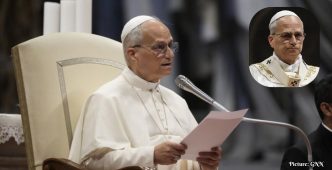
Pope Leo XIV’s recent address in Montevideo emphasizes the urgent need for universal health care access in Uruguay, drawing from his personal health experiences and the country’s unique socio-political landscape.
VATICAN CITY (RNS) — On November 6, 2026, during his inaugural speech in Montevideo, Uruguay, Pope Leo XIV called for universal access to health care, emphasizing the importance of safeguarding the most vulnerable populations. This address marks the first leg of the pope’s 12-day journey through Latin America, which will also include visits to Argentina and Peru, where he previously served as a missionary and bishop.
The 70-year-old pontiff, who recently underwent surgery to remove a portion of his right lung as part of his treatment for cancer, reflected on his own health challenges, expressing gratitude for the medical care he received. He stated, “Recently I experienced firsthand the limitations imposed by illness, and I received care for which I am deeply grateful.” This personal experience has propelled him to advocate for equitable health care access for all individuals, irrespective of their financial circumstances. “Ensuring that health care is accessible to everyone, regardless of their resources, is a duty that confronts every society,” he asserted.
Uruguay’s Health Care Landscape
Uruguay is noted for its secular character, with over 50% of its population identifying as religiously unaffiliated, according to data from the Pew Research Center in 2020. The country’s health care system comprises both public and private providers, which have faced increasing strain due to rising demand and escalating costs. In recent years, Uruguay has taken significant steps toward progressive social policies, including the decriminalization of abortion in 2012 and the enactment of a euthanasia law in 2025.
During his address at the iconic Plaza de Independencia, Pope Leo XIV drew parallels between his message and the legacy of Uruguay’s national hero, José Gervasio Artigas, who was instrumental in the country’s struggle for independence from Spanish rule. Artigas is celebrated for championing social justice, and the pope invoked this historical context to underscore the collective responsibility of society in advocating for health care reforms. He noted that legitimate authority must be derived from and accountable to the communities it serves.
Addressing Contemporary Challenges
In his remarks, Pope Leo XIV highlighted a relief sculpture depicting a woman holding a baby to address the contentious issue of abortion. He stated, “The unborn already belong to the human family and to the future of their people. Their absolute dependence on their mother does not diminish the dignity to which they are entitled or the protection they deserve.” This statement aligns with the Catholic Church’s enduring position on the sanctity of life.
Moreover, he stressed the necessity for familial support for children, asserting that societal structures must facilitate both parents in nurturing their offspring. “The protection of the unborn and the support of those who welcome them are inseparable,” he emphasized, reinforcing the notion that care must extend beyond childbirth to include the well-being of families.
The pope also underscored the importance of addressing the needs of the elderly, calling on society to ensure that all individuals can live with dignity and receive necessary care throughout their lives. “It is everyone’s responsibility to ensure that each person can live with dignity, receive the care they need, and be accompanied until the natural end of his or her life,” he stated, highlighting the ethical obligation to support the vulnerable.
Religion and Public Life
Pope Leo XIV further articulated the need for wealth and investments in Uruguay to translate into tangible opportunities for all citizens. He called for religion to play an active role in public life, asserting that faith should not be relegated solely to the private sphere. This perspective resonates with the church’s broader mission to positively contribute to societal welfare and the public good.
Prior to the pope’s visit, Guzmán Carriquiry, a former official with the Pontifical Commission for Latin America, remarked on Uruguay’s historical respect for diverse ideological and religious beliefs, indicating a societal landscape conducive to dialogue and cooperation.
Regional Cooperation and Future Planning
Montevideo also serves as the administrative center for Mercosur, the South American trade bloc. In his speech, Pope Leo XIV noted this position as an opportunity for Uruguay to promote regional cooperation and multilateralism. He remarked, “In an age when differences can easily become a source of conflict, persevering in respect for the law, negotiation, and the patient search for agreements is a service that Uruguay can continue to offer its neighbors.” His call for collaboration reflects an understanding of the geopolitical challenges facing Latin America.
In closing, the pope urged the Uruguayan government to adopt long-term planning strategies as the nation undergoes significant technological transformations, emphasizing the necessity of safeguarding the environment and workers’ rights. His visit and the messages delivered serve as a reflection of the Vatican’s commitment to engaging with urgent social issues and advocating for a more equitable society.