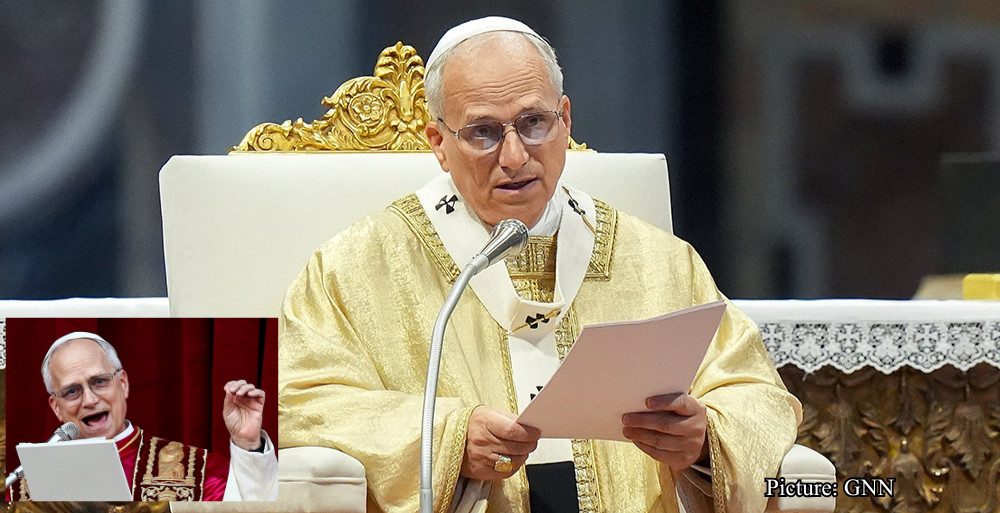
Pope Leo XIV’s inaugural Mass in South America drew an estimated 100,000 attendees in Uruguay, where he emphasized fraternity and the Catholic Church’s role in addressing contemporary challenges.
MONTEVIDEO, Uruguay — Pope Leo XIV celebrated his first Mass in South America on Saturday, November 7, 2026, urging the people of Uruguay to foster bridges of fraternity and faith. This event marked the beginning of a 12-day apostolic tour across South America, reflecting the Pope’s commitment to revitalizing the Catholic Church’s presence in a region where secularism is increasingly prevalent.
His visit commenced in Paysandú, a city located near the border with Argentina, where an estimated 40,000 people gathered despite adverse weather conditions, including morning rain and overcast skies. The Vatican reported that many attendees traveled from neighboring countries, including Argentina and Brazil, to witness this significant occasion.
Upon arriving in Paysandú, Pope Leo was met with enthusiastic cheers as the crowd chanted, “Olé, olé, olé, olé, pope, pope!” The Mass took place in a local park, where the Pope spoke to the congregation in Spanish, emphasizing the historical significance of the Catholic faith in Uruguay. “The Catholic faith has been part of the life of the Uruguayan people since their earliest days, and it must be passed on to future generations with creative courage!” he stated.
Historical and Cultural Context
Pope Leo’s visit comes at a time when the Catholic Church is striving to maintain its influence in a nation that has increasingly adopted secular values, evidenced by the use of secular terms for holy days and the omission of religious references in official oaths. The Pope’s message aims to present the Catholic Church as a resource for addressing the societal challenges facing Uruguay, which has one of the lowest high school graduation rates in Latin America. According to the National Institute for Educational Evaluation, only about half of all Uruguayan students complete high school, with the rate significantly lower among the poorest families.
After his first Mass, Leo visited Casavalle, a neighborhood in Montevideo grappling with serious issues related to drug trafficking and gang violence. There, he highlighted the efforts of local church groups in providing housing and rehabilitation services, showcasing a commitment to social justice and community support. “We cannot turn a blind eye to the fact that there are children in Uruguay who do not go to school for fear of never returning home,” he remarked.
Symbolism of Mate and Unity
During his address, Pope Leo also drew on the cultural significance of mate, a traditional herbal tea that is a staple in Uruguayan culture. He posited that the ritual of sharing mate serves as a metaphor for unity and fraternity, which he believes should be extended within the context of faith. “It teaches us to share and to be together, strengthening the bonds that unite us as brothers and sisters,” he explained. “It is a sign of welcome, integration, and shared values.”
The shared tradition of mate drinking, where the drink is passed among friends and family, resonates deeply with the Uruguayan people, who consume more of the beverage per capita than any other nation. The Pope’s references to mate as a symbol of communal identity and belonging struck a chord, even among those who may not be particularly religious. Jorge Monzón, a 64-year-old resident of Paysandú, expressed his surprise at the Pope’s ability to connect faith with common cultural practices, stating, “He made it appealing, the way he talked about things we all have in common, like mate.”
Continued Engagement with Local Communities
In addition to his public appearances, Pope Leo emphasized the Church’s dedication to addressing pressing social issues in Uruguay. He praised the work of the Our Lady of Guadalupe Parish in Borro, which has been pivotal in aiding individuals recovering from addiction and providing housing solutions. His visit to the parish illustrated the Church’s ongoing efforts to engage with the community amid rising violence and socio-economic challenges.
Later in the evening, Pope Leo led a prayer vigil at Montevideo’s Centenario Stadium, where an estimated 70,000 attendees filled the venue, while an additional 30,000 watched from outside on large screens. During this gathering, he reaffirmed the Church’s presence in a country where the Catholic population is shrinking, reminding attendees that “God chose Bethlehem, and that choice alone is enough to prevent us from equating smallness with insignificance.”
Looking Ahead
Pope Leo XIV’s visit to Uruguay is the first leg of a broader South American journey that will take him to Argentina and Peru, aiming to reinforce the Catholic Church’s influence in the region. Although Uruguay is known for its secular tendencies, the Pope’s message of unity and fraternity resonated with many, including a significant number of pilgrims who crossed the border from Argentina to witness this historic occasion. Luciana Lobato, a 20-year-old Argentine tour agent, noted the strong religious sentiment among Argentines who participated, stating, “There’s this desire to be here to witness something historic.”
As the Pope continues his journey, his messages of faith, community, and resilience hold particular relevance in a region facing numerous socio-economic challenges, echoing the enduring call for compassion and solidarity among all people.