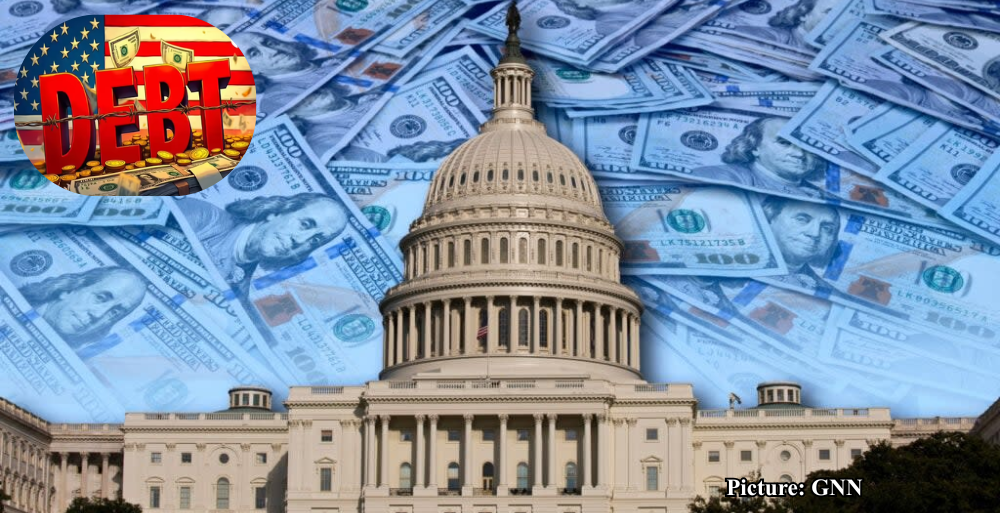
Projections from the Congressional Budget Office indicate that the U.S. Treasury will incur $20.1 trillion in interest payments on the national debt between 2026 and 2036, raising significant concerns about fiscal sustainability as the government grapples with widening budget deficits and rising social benefit costs.
The Congressional Budget Office (CBO) has issued new projections revealing that the U.S. Treasury is set to spend $20.1 trillion on interest payments related to the national debt from 2026 to 2036. This alarming figure translates to nearly $200 billion each month by 2036, underscoring serious concerns about the long-term fiscal health of the United States as it faces ongoing economic challenges.
As the largest economy in the world, the U.S. government has historically been able to borrow substantial amounts without immediate pushback from lenders. However, the CBO’s recent findings highlight a troubling imbalance between federal revenues and expenditures, prompting urgent discussions among lawmakers and the public regarding the sustainability of current fiscal policies.
Current Debt and Spending Landscape
At present, the national debt stands at approximately $40 trillion. According to the CBO’s analysis, the projected interest payments will not only service the existing debt but will also cover anticipated deficits that will accumulate over the next decade. In 2026, the Treasury is expected to allocate around $1.2 trillion for interest payments. By 2036, this figure is expected to rise dramatically to nearly $2.5 trillion annually.
For context, the CBO estimates that the United States will spend about $1.1 trillion on national defense in 2036. The projected interest payments on the national debt would effectively double that amount, illustrating the growing financial burden of servicing debt. Such figures raise critical questions about the government’s fiscal priorities and the implications for future budgetary allocations.
Escalating Budget Deficits
Looking ahead, the fiscal year 2026 is projected to see a deficit of $2 trillion, with estimates suggesting it will swell to over $3 trillion by 2036. Cumulatively, the budget shortfall for the upcoming decade is forecasted to reach an alarming $25.6 trillion. Despite ongoing discussions about strategies to reduce deficits—including proposals to limit budget shortfalls to 3% of Gross Domestic Product (GDP) instead of the current range of 6% to 7%—the CBO anticipates that the gap between revenues and expenditures will continue to grow.
A significant factor contributing to this widening deficit is the rising demand for social benefits. Like many industrialized nations, the U.S. is experiencing an aging population, with an increasing number of individuals transitioning from the workforce into retirement. This demographic shift is expected to lead to a greater reliance on state-sponsored social and health services. In 2026, spending on these programs is projected to be approximately $3.7 trillion, a figure which is expected to escalate to around $6.1 trillion by 2036, according to the CBO.
Policy Responses and Future Implications
In response to these troubling projections, policymakers are actively considering a range of strategies to address budgetary concerns. The current administration has floated several proposals, including the implementation of tariffs, which officials believe could potentially help to rebalance the budget. These discussions are taking place at a pivotal moment as the government confronts significant financial obligations while aiming to ensure long-term fiscal sustainability.
The implications of rising debt and increasing interest payments will likely shape political discourse and policymaking in the years to come. With the solvency of critical programs such as Social Security and Medicare at stake, the urgency for a comprehensive approach to fiscal policy is becoming increasingly apparent. Stakeholders from various sectors, including economists, government officials, and the public, are calling for transparency and accountability in fiscal governance as the nation approaches these crucial financial junctions.
As the CBO’s projections serve as a stark reminder of the challenges ahead, they highlight the need for a balanced approach to future budgeting. The path forward will require careful deliberation among policymakers, as they work to address the underlying factors contributing to the national debt while balancing the needs of an aging population that increasingly depends on government support.
The upcoming decade presents a critical juncture for U.S. fiscal policy, demanding strong leadership and innovative solutions to navigate the multifaceted challenges associated with rising debt and the corresponding need for sustainable financial management. Without proactive measures, the consequences of escalating interest payments and budget deficits may have far-reaching implications for the economy and future generations.