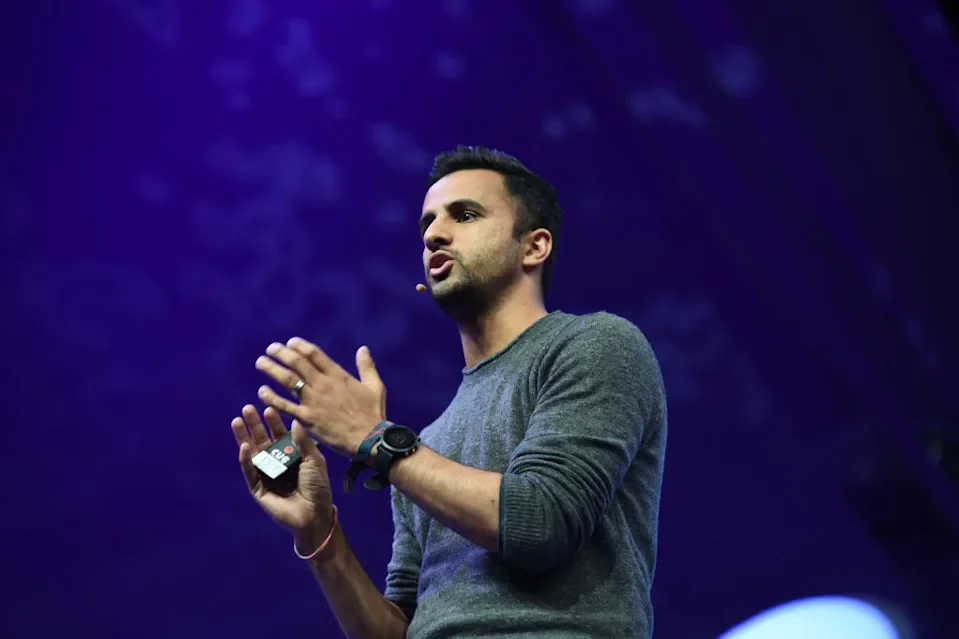

Ohio’s upcoming gubernatorial election could see either Amy Acton, the state’s first Jewish and female governor, or Vivek Ramaswamy, the first Hindu governor in U.S. history, marking a significant moment in the state’s political landscape.
COLUMBUS, Ohio — The Ohio gubernatorial race is poised to be historic, with the potential for either candidate to break significant religious barriers. If Dr. Amy Acton, the Democratic candidate, prevails, she will become Ohio’s first female and first Jewish governor. Alternatively, if Republican Vivek Ramaswamy wins, he will make history as the first Hindu governor in the United States. This election season, which culminates on November 8, 2026, has not only captured national attention due to its potential firsts but has also been marked by intense and often vitriolic campaigning.
According to data from the Pew Research Center, approximately 65% of Ohio adults identify as Christian, while around 30% are religiously unaffiliated. The presence of both candidates, who are part of the minority 5% practicing religions outside the dominant Christian faith, is a notable development in Ohio’s political history.
Campaign Tactics and Controversies
The race has gained notoriety for its aggressive tactics. Acton’s campaign has accused Ramaswamy of promoting fraudulent medical treatments during his career as a biotech entrepreneur, a claim he has denied. In a particularly controversial move, Ramaswamy’s campaign released an advertisement featuring Acton’s estranged mother, who labeled her daughter a liar. This ad has drawn condemnation, including from current Ohio Governor Mike DeWine, leading Ramaswamy to withdraw the advertisement shortly thereafter.
As of the latest reports, Acton holds a narrow lead in polls, despite the state’s recent trend of supporting Republican candidates, including Donald Trump in the last three presidential elections. In her campaign, Acton has highlighted her Jewish identity and progressive values, addressing issues such as antisemitism and advocating for social justice.
Faith and Background
Acton, 60, has characterized her upbringing as one marked by hardship, including poverty and trauma. Raised in Youngstown by a Baptist mother and a Jewish father who separated early, Acton faced significant challenges, including homelessness and abuse. She has spoken about her spiritual journey, which began to flourish as she sought solace in her Jewish heritage later in life. Acton has actively participated in Jewish community initiatives and has served on the board of her synagogue, Congregation Beth Tikvah.
“I’ve spent my whole life talking about spirituality as another component in people’s holistic well-being and health,” Acton stated, emphasizing her belief in the importance of faith in public health policy.
On the other hand, Vivek Ramaswamy, 41, has a background deeply rooted in Hinduism, shaped by his parents who immigrated from India. He has described his upbringing in a devout Hindu household, which included regular visits to temples, as influential in his life. However, his religious path has not been linear; he attended a Jesuit high school, where he studied Christian teachings, and later identified as agnostic in his twenties. He ultimately returned to his Hindu roots, adhering to the Advaita Vedanta tradition.
Ramaswamy has framed his identity as a source of pride, stating, “I’m Hindu, and I’m proud of that.” His campaign has emphasized themes of patriotism and traditional values, seeking to connect with voters who resonate with Christian nationalist sentiments.
The Role of Religion in Campaigning
Both candidates have engaged with their religious communities, but the political climate has complicated their messages. Ramaswamy has received support from some Christian voters despite being a religious minority. During a recent campaign event, he drew applause when he shared his family’s immigrant story, framing it within the context of the American dream.
However, skepticism remains among certain voters regarding his alignment with Trump-era immigration policies, which have disproportionately affected immigrant communities, including those from South Asia. Some members of the Hindu Temple of Dayton expressed concerns over Ramaswamy’s loyalty to a political agenda that has historically marginalized immigrants.
Similarly, Acton’s candidacy has been met with both support and resistance. Rabbi Rick Kellner of Congregation Beth Tikvah has noted the rising antisemitism that Acton has faced, particularly during her tenure as Ohio’s health director during the COVID-19 pandemic. As a prominent public figure, she received threats and was subjected to hate-fueled protests, which intensified following her leadership decisions during the health crisis.
Implications for the Future
As Election Day approaches, both Acton and Ramaswamy are leveraging their backgrounds and faiths to appeal to a diverse electorate. Acton has emphasized unity, stating, “My opponent is Hindu. I am Jewish. There should be welcome for all.” In contrast, Ramaswamy’s campaign has focused on reinforcing traditional conservative values while attempting to transcend racial and religious divides.
This election not only reflects the changing demographics of Ohio but also raises broader questions about the role of religion in politics and the acceptance of candidates from diverse backgrounds within the Republican Party and beyond. As the candidates continue to navigate a charged political environment, their campaigns will likely leave a lasting impact on Ohio’s political landscape, regardless of the election outcome.