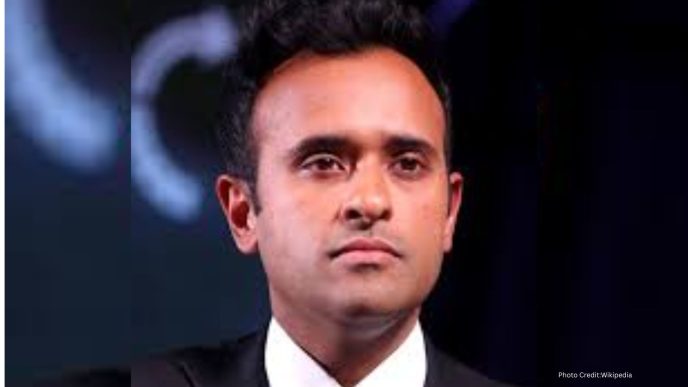
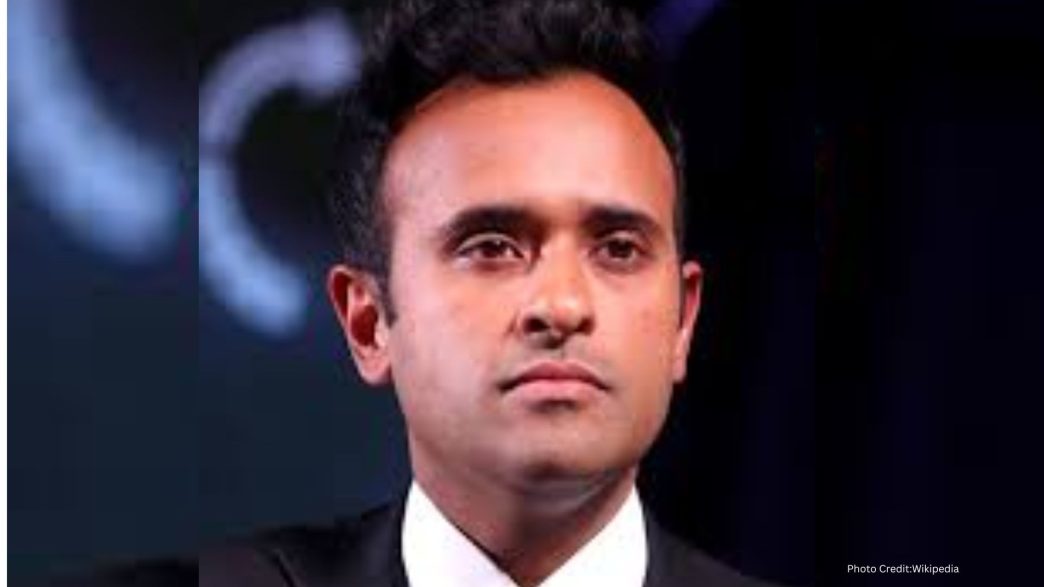
A Republican candidate for Ohio governor, Vivek Ramaswamy, has discontinued an attack advertisement featuring the estranged mother of his Democratic opponent, Amy Acton, following widespread backlash.
Vandalia, Ohio – Vivek Ramaswamy, the Republican nominee for governor of Ohio, announced on Thursday that his campaign has ceased airing a contentious attack advertisement that showcased the estranged mother of his opponent, Amy Acton. This decision comes in the wake of significant criticism from both Democratic and Republican circles regarding the ad’s content and the sensitive background it highlighted.
The advertisement featured Donna Arthur, the mother of Acton, who lost custody of her daughter in 1978. At that time, her second husband, Cledith Arthur, was charged with raping Acton from the ages of 10 to 12. The ad has been described as distasteful by many, leading to a public outcry against Ramaswamy’s campaign tactics.
When questioned by a reporter in Vandalia about the ad’s discontinuation, Ramaswamy stated, “It ran to completion and we put up four other ads.” He expressed a desire for the campaign to focus on policy issues, rather than personal attacks, saying, “For all of the discussion around 30-second ads, I would love, even for this final close, for this campaign to really be about policy.” Ramaswamy also criticized Acton for not engaging in debates with him.
Financial Commitment and Backlash
Ramaswamy’s campaign had previously committed $4 million to broadcast this particular ad, despite the backlash that followed its release. Reports indicated that the ad was highly controversial, especially after it was revealed that Donna Arthur had fled the state with her husband after Acton accused him of rape. In a 2020 interview with the anti-abortion group Operation Rescue, Arthur made statements that cast doubt on her daughter’s allegations, calling her a liar and acknowledging her husband’s prior accusations of sexual misconduct against his own daughter.
The ad was initially produced in a 60-second format but was later edited down to 30 seconds, removing a specific allegation made by Arthur about Acton’s childhood. Court records confirm that Cledith Arthur had indeed lived in a tent at the time of his arrest on rape charges, an element that adds further complexity to the narrative surrounding the ad.
Public and Political Reactions
Former President Donald Trump defended Ramaswamy’s ad during a rally with him on Wednesday, though he did not address the serious nature of the allegations made against Acton’s mother. This endorsement from Trump indicates the ad’s strategic importance within Ramaswamy’s campaign, despite the ethical implications it raises.
Reports from NBC News and Zeteo have brought attention to the personal circumstances of Donna Arthur, revealing that she has faced mental health challenges and was found living in her car with numerous cats. This context has further troubled some individuals involved in the production of the ad, raising ethical questions about its content and the motives behind it.
In response to the controversy, Acton’s campaign released a new advertisement, which posed a rhetorical question: “How far will Vivek Ramaswamy go to become governor?” The ad criticized Ramaswamy for exploiting the traumatic experiences of Acton’s childhood, warning Ohio voters about the implications of such tactics. Acton’s campaign emphasized that Ramaswamy’s actions were a desperate attempt to salvage a struggling campaign, which they believe will ultimately fail.
Acton herself addressed the issue during a campaign event on Thursday, stating, “You’ve probably all heard by now, if you didn’t know, a little bit about my childhood. My brother and I experienced a lot of things, a lot of abuse and a lot of neglect. We were frequent flyers in children’s services, and ended up living in a tent in the middle of winter.” She criticized Ramaswamy for exploiting her past, asserting, “He’s doing it in a desperate attempt to save his struggling campaign. But I’ll tell you, Mr. Ramaswamy, it’s not going to work.”
Implications for the Ohio Gubernatorial Race
The decision to halt the ad raises questions about the broader implications of negative advertising in political campaigns, particularly when sensitive personal histories are involved. With the Ohio gubernatorial election approaching, both candidates are likely to continue emphasizing policy differences, but the fallout from this controversy may linger, influencing voter perceptions and campaign strategies moving forward. As the campaign progresses, Ramaswamy’s focus will likely shift towards policy discussions, while Acton may continue to defend her personal history against exploitation.