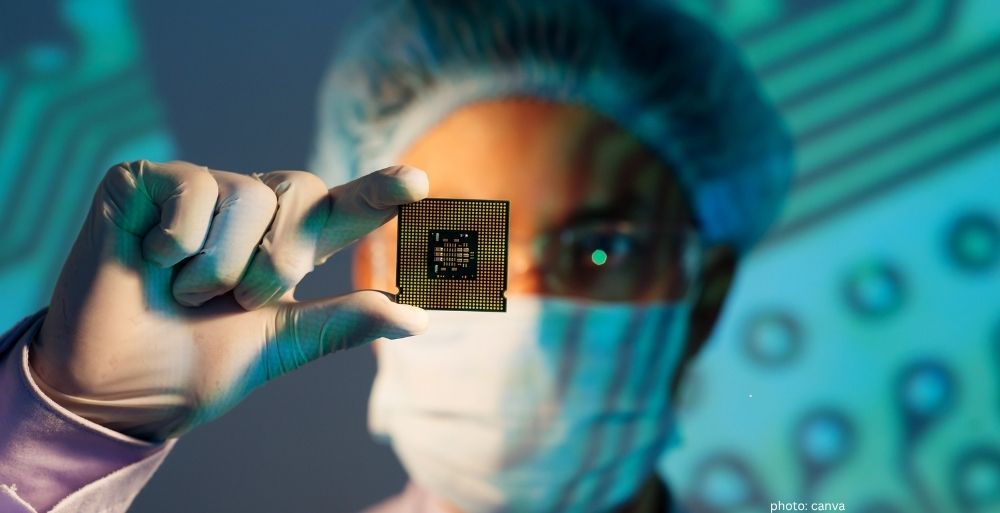
India’s semiconductor industry is projected to require approximately 300,000 skilled professionals by 2030, as highlighted by C. Muthamizhchelvan, Vice-Chancellor of SRM Institute of Science and Technology. This demand underscores the urgent need for a more robust domestic talent pool to support various sectors including fabrication, packaging, testing, and equipment.
India’s semiconductor industry is at a critical juncture, with projections indicating a need for around 300,000 professionals by the year 2030. C. Muthamizhchelvan, Vice-Chancellor of SRM Institute of Science and Technology (SRMIST), articulated this pressing requirement during the inaugural session of the Semiconductor Summit 2026, held in collaboration with The Hindu. The summit served as a platform to discuss the future of semiconductor technology in India, emphasizing the country’s substantial potential in this key area of technology.
Muthamizhchelvan pointed out that while the global semiconductor market is expected to require approximately one million professionals by 2030, India currently produces about 20% of the world’s chip designers. “India’s semiconductor market is already valued at over $50 billion, yet a vast majority of chips consumed are imported,” he noted, highlighting a critical gap in local manufacturing capabilities. He stressed that simply establishing factories will not suffice to bridge this gap, stating, “We need ideas, we need designs, and we need people.”
Challenges in Semiconductor Manufacturing
The semiconductor industry has emerged as a cornerstone of technological advancement, powering everything from smartphones to advanced computing systems. Yet, India finds itself in a precarious position as it remains heavily reliant on imported chips. This dependency raises concerns about the nation’s ability to sustain its technological growth and security. Muthamizhchelvan’s comments echo a growing sentiment among industry experts that India must significantly enhance its domestic semiconductor capabilities.
As the global demand for semiconductors surges, driven by advancements in artificial intelligence, Internet of Things (IoT), and other technologies, India’s ability to meet this demand will depend on its workforce. The Vice-Chancellor emphasized that the current educational framework must adapt to nurture talent across various disciplines, including physics, materials science, and chemical engineering, rather than solely focusing on electronics.
Reforming Educational Focus
During his address, Muthamizhchelvan called for a paradigm shift in how universities assess research and development efforts. “We have been judging our research and development in terms of the publications that are coming out from the research. And we used to forget that. We called this fund and forget,” he remarked. He advocated for an outcome-oriented approach that prioritizes patents, prototypes, and commercially viable products over mere academic publications.
To this end, SRMIST is aligning its research initiatives with national missions that encompass artificial intelligence, semiconductors, and quantum technologies. The university is actively encouraging students to engage with industry-specific challenges and offering academic credits for solutions derived from such collaborative projects. This approach is designed to foster a practical understanding of semiconductor technologies and their applications.
Interdisciplinary Collaboration
Muthamizhchelvan highlighted the interdisciplinary nature of semiconductor development, which requires expertise spanning multiple fields. He cited various projects where SRM students have collaborated with semiconductor companies to demonstrate the efficacy of integrating academic research with industry needs. “The real chip is the human mind. So if our mind is tuned towards making chips, then obviously things will become easier,” he stated, underscoring the importance of cultivating a skilled workforce capable of innovation in semiconductor technology.
Industry Engagement and Collaboration
In a bid to strengthen the semiconductor ecosystem, Muthamizhchelvan called on industry leaders to collaborate more closely with academic institutions. He invited companies to work with SRM on complex technical challenges, establish joint laboratories, co-guide doctoral and postgraduate research, and collaborate on patent filings. “Bring us your hardest problem. We’ll be happy to work on those problems,” he emphasized, advocating for a symbiotic relationship between academia and industry to ensure that research aligns with practical applications that hold commercial value.
Furthermore, he pointed to successful international models, particularly from countries such as Taiwan, South Korea, and Germany, where partnerships among universities, research institutions, and industry have significantly enhanced semiconductor capabilities. Muthamizhchelvan argued that the development of a robust semiconductor ecosystem in India necessitates sustained collaboration rather than isolated investments or initiatives.
The Path Forward for India
As India progresses towards achieving its semiconductor goals, Muthamizhchelvan’s insights serve as a critical reminder of the multifaceted approach required to build a sustainable semiconductor industry. With technological advancements accelerating globally, India’s ability to control its semiconductor production and reduce reliance on imports will be vital for its economic and technological sovereignty.
“Technology that India wants, India controls, India can sell to the world is very, very important,” he concluded, reiterating the necessity for India to build its own technological capabilities. The call for increased collaboration between educational institutions and the semiconductor industry reflects a broader strategy to ensure that India not only participates in the global semiconductor market but also leads in innovation and production.