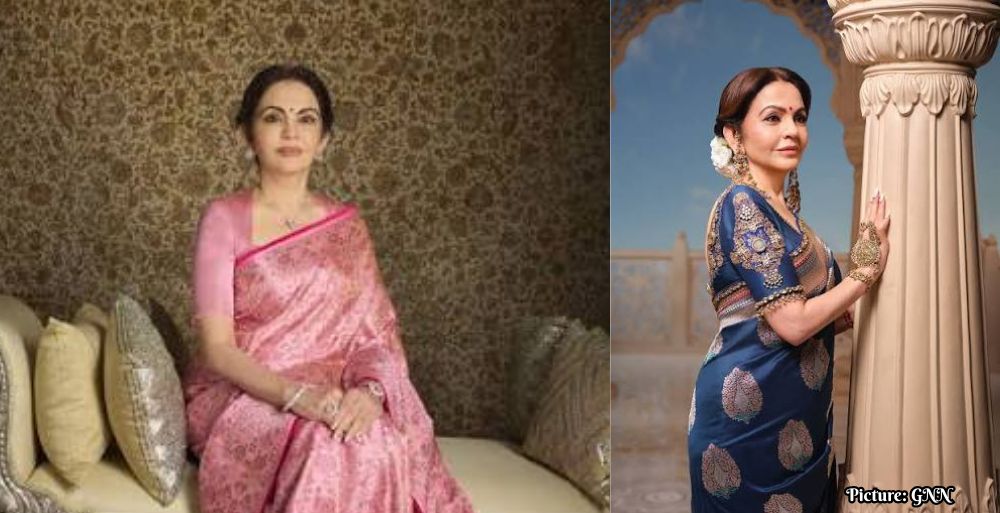
Nita Ambani’s recent public appearance at a Swadesh artisans collective in Mumbai highlighted her commitment to promoting Indian textiles, showcasing a meticulously crafted Kanchipuram sari handwoven with gold and silver zari.
Nita Ambani, a prominent philanthropist and founder of the cultural initiative Swadesh, recently made a notable impact during a public appearance at a Swadesh artisans collective located in Mumbai. On this occasion, Ambani wore a striking pink and silver checkered Kanchipuram sari, a garment that embodies the rich traditions of Indian weaving and pays tribute to the artisans responsible for its creation.
The Kanchipuram sari, renowned for its intricate designs and vibrant colors, was handwoven over a period of four months by master artisan Rajesh Sha. The use of mulberry silk contributes to the sari’s luxurious texture, while the incorporation of zari made from real gold and silver adds an element of opulence, making Kanchipuram saris some of the most sought-after textiles in the fashion industry. Each pattern in the sari features motifs of rudraksha and mayil (peacock), which are characteristic of Kanchipuram weaving, celebrated for its durability and aesthetic appeal.
The Heritage of Kanchipuram Weaving
Originating from the town of Kanchipuram in Tamil Nadu, this type of sari has been a significant part of Indian culture for centuries. The Kanchipuram weaving tradition is not only an art form but also a vital aspect of the local economy, employing numerous artisans who have honed their skills over generations. The use of high-quality mulberry silk, coupled with traditional weaving techniques, preserves the intricate craftsmanship that defines these textiles.
Ambani’s sartorial choices frequently reflect her dedication to highlighting indigenous arts and crafts. By donning saris crafted by local artisans, she brings attention to their skills and underscores the importance of sustaining these traditional crafts, which face challenges from mass production and global fashion trends. Her role in promoting these textiles is crucial in fostering a renewed appreciation for India’s rich cultural heritage.
A Thoughtful Ensemble
In addition to the Kanchipuram sari, Ambani paired her attire with a scooped-neck silver zari blouse that featured a subtle pink accent along the sleeves, enhancing the overall elegance of her look. Her accessories included a multi-strand necklace from Swadesh, inspired by the rich jewelry traditions of Rajasthan, pink glass bangles, and diamond-encrusted earrings that all contributed to her traditional yet sophisticated appearance.
Makeup also played a significant role in her presentation, as she opted for colors that mirrored the pink hues of her sari. This included matching lipstick and eye makeup that emphasized fuller, elongated lashes. Her hair was styled in loose waves cascading down to her waist, completing a polished and refined look.
Contemporary Styling Insights
Commenting on contemporary trends in sari styling, Ashwini Arun Kumar, the fashion features editor at Vogue India, noted that checkered designs in saris offer versatility for various occasions. “Saris with checks, whether woven in silk or cotton, can be styled in many impactful ways. For office-going women or those seeking a modern everyday style, swapping the traditional blouse for a shirt or cropped top, or layering with a jacket can create a contemporary look,” she suggested. “Accessorizing with oversized silver kadas can lend a bohemian flair.”
Ambani’s recent appearance not only highlighted her personal style but also reinforced the critical importance of supporting local artisans and celebrating the diverse tapestry of Indian textile heritage. Her choices serve as a reminder of the ongoing significance of traditional craftsmanship in modern fashion, instilling a deeper appreciation for the skills and artistry that have been passed down through generations.
Implications for Fashion and Culture
This event exemplified how fashion can serve as a powerful platform for cultural expression and preservation. Nita Ambani continues to leverage her influence to advocate for Indian craftsmanship, ensuring that the narratives of artisans are recognized and celebrated within the broader context of fashion. Her commitment to promoting traditional textiles not only supports local economies but also fosters a sense of pride in India’s rich cultural history.
Furthermore, Ambani’s role in the fashion industry raises important questions about the responsibilities of public figures in promoting sustainable practices and ethical consumption. As global fashion trends increasingly gravitate towards sustainability and ethical sourcing, Ambani’s actions serve as a blueprint for how luxury and tradition can coexist, paving the way for a future where craftsmanship is valued alongside modern aesthetics.
Conclusion
Nita Ambani’s recent showcase of a Kanchipuram sari is more than just a fashion statement; it is a celebration of India’s rich textile heritage and a commitment to preserving traditional craftsmanship. By highlighting the artisans behind these exquisite fabrics, Ambani not only enhances her personal brand but also plays a crucial role in advocating for the continued appreciation of India’s cultural legacy in a rapidly changing world.