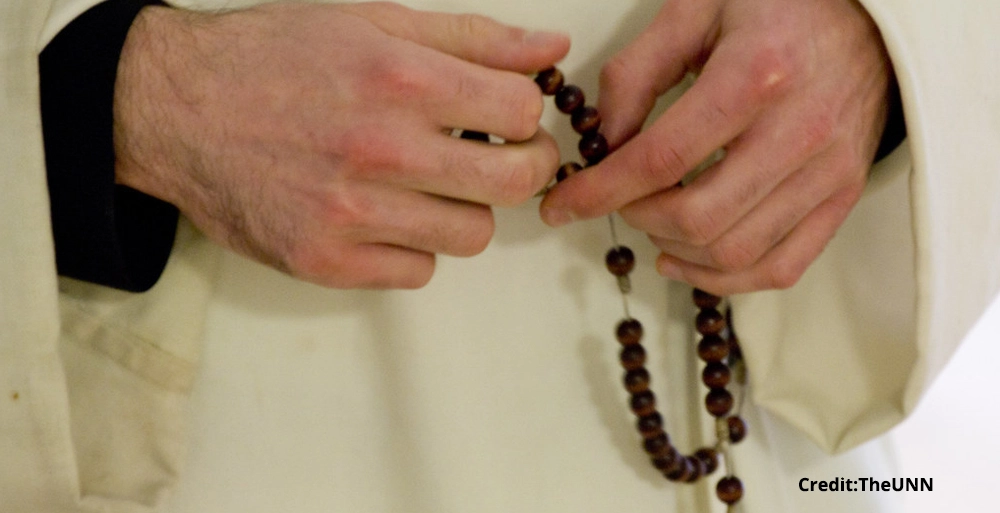
A recent study involving over 3,000 participants from 19 Ibero-American countries suggests that regular Catholic practices, including prayer and Mass attendance, may contribute to enhanced psychological qualities such as happiness, resilience, forgiveness, and gratitude.
ROME, 10.23.2026 – A newly published study indicates that engaging in regular Catholic religious practices could significantly foster spiritual well-being and enhance positive psychological attributes among believers. The research, which involved 3,013 participants across 19 Ibero-American countries, was released in the journal Pastoral Psychology and underscores the complex relationship between religious commitment and personal psychological health.
Research Overview
The study, titled “Influence of Catholic Religious Practices on Spiritual Well-Being,” was conducted by Cecilia Salgado Lévano from Marcelino Champagnat University and Eduardo Manzanares Medina from the Peruvian University of Applied Sciences, both based in Lima, Peru. The researchers focused on four essential practices central to Catholic life: personal prayer, recitation of prayers, attendance at Mass, and participation in Eucharistic adoration.
Participants were surveyed regarding their involvement in these practices and their correlation with spiritual well-being, alongside four key psychological dimensions: happiness, resilience, forgiveness, and gratitude. The researchers concluded that there is a positive association between regular Catholic practices and enhanced spiritual well-being, which, in turn, was linked to the aforementioned psychological qualities.
Implications of Findings
The findings suggest that prayer and worship may extend beyond mere moments of consolation. For practitioners of the Catholic faith, these activities symbolize a deep connection with God and active participation in the Church community. The study posits that such religious engagement may help individuals cultivate critical resources for navigating life’s adversities, sustaining hope, and strengthening relationships with others. This raises broader questions about the role of spiritual life in promoting human flourishing, an area ripe for psychological inquiry.
Furthermore, the implications of this research extend beyond individual religious experiences to encompass societal concerns. Mental health issues such as depression and anxiety incur substantial social and economic costs, including significant losses in productivity. Hence, understanding factors that contribute to psychological well-being is of paramount interest to both researchers and policymakers. In Latin America, where Catholicism has played a pivotal role in shaping cultural identities and community traditions, examining the psychological dimensions of religious practice offers a valuable lens for understanding how faith is integrated into daily life.
Methodological Considerations
Despite the promising associations identified, the researchers exercise caution in interpreting their results as definitive proof that religious practices directly lead to improved mental health outcomes. The study surveyed 3,013 individuals, comprising 22.8% men and 77.2% women, drawn from 19 Ibero-American countries, including Mexico, Colombia, Peru, and Argentina. However, it is important to note that the sample employed a non-probabilistic approach, meaning participants were recruited based on accessibility and consent rather than through random selection. This methodological choice, while practical for data collection, limits the extent to which the findings can be generalized to broader national populations or other demographic groups.
The research specifically focuses on Catholic practices, and thus its conclusions should not automatically extend to other religions or spiritual traditions not examined in the study. Furthermore, the research does not establish that religious observance alone is sufficient to prevent or treat psychological disorders.
Significance of the Results
While these limitations are acknowledged, they do not diminish the relevance of the findings. The study provides evidence of a significant association between Catholic religious life, spiritual well-being, and several attributes linked to personal and social development. The authors characterize religious practices as potential protective factors that could support mental health, albeit within the modest scope of their data.
Additionally, the results invite a reconsideration of the role that prayer and worship play within an increasingly secular public discourse. For believers, the primary aim of these practices is communion with God, rather than psychological enhancement. Nevertheless, if participation in Mass, prayer, and Eucharistic adoration is correlated with greater resilience, gratitude, and forgiveness, such benefits warrant serious consideration rather than dismissal in contemporary discussions about mental health and community well-being.
Broader Implications for Society
The study’s findings resonate with ongoing discussions about mental health in public policy. As mental health issues become increasingly prevalent, particularly in the wake of global crises and societal shifts, understanding the interplay between faith and psychological well-being offers a potential avenue for intervention. Policymakers and mental health professionals may find value in considering religious practices as part of holistic approaches to mental health and community support.
Ultimately, the study does not assert that faith guarantees happiness or provides immunity from suffering. Instead, it suggests that Catholic religious practices may create conditions conducive to a mutually reinforcing relationship between spiritual and psychological well-being. These findings could encourage further exploration into how faith-based practices can complement traditional mental health strategies, particularly in communities where religion plays a central role in everyday life.