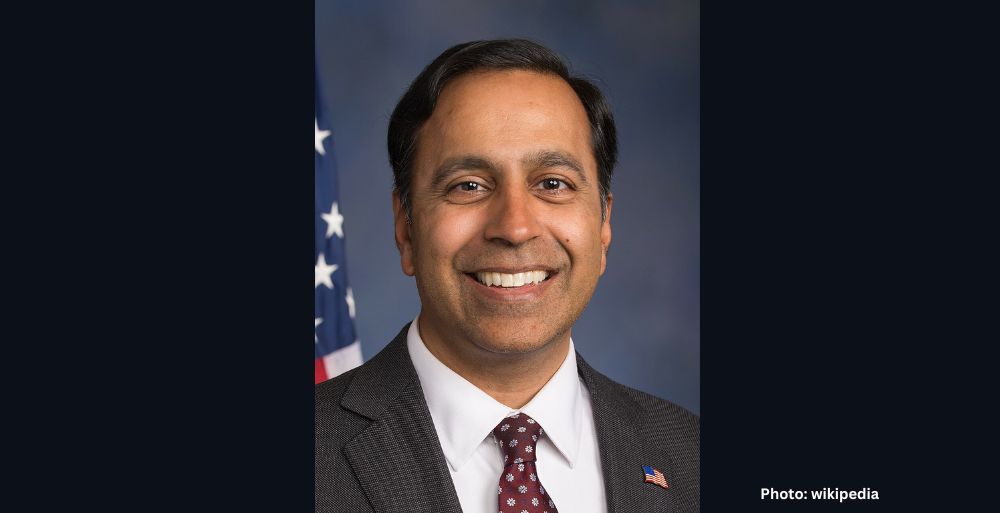
Indian American Congressman Raja Krishnamoorthi has accused major technology companies of profiting from the surge of anti-Indian sentiment online, highlighting the urgent need for congressional oversight following an alleged attack plot targeting a Hindu temple in Illinois.
WASHINGTON — On Wednesday, Congressman Raja Krishnamoorthi, a Democrat from Illinois, publicly denounced major technology companies for purportedly profiting from the proliferation of anti-Indian hatred on social media platforms. His remarks followed a disturbing incident involving a foiled plot to conduct a mass shooting at the Balaji Hindu temple in Aurora, Illinois, which has raised significant concerns regarding the safety of Indian American communities nationwide.
“Anti-Indian hate is exploding on social media, and Big Tech is profiting from it,” Krishnamoorthi stated in a message on X, the platform formerly known as Twitter. He further asserted that these companies lack the incentive to curb the hatred they facilitate, urging Congress to take decisive action to hold them accountable.
While Krishnamoorthi did not specify which technology firms he was targeting nor did he propose specific legislation in his statement, he has been actively pushing for a federal investigation into the recent attack plot. Leading a bipartisan coalition of 105 lawmakers, he sent a letter to FBI Director Kash Patel, advocating for the incident to be classified as a potential hate crime.
Background of the Allegations
The letter, which included all six Indian American members of Congress, alongside U.S. Senators Dick Durbin, Tammy Duckworth, Andy Kim, and Chris Van Hollen, emphasized the necessity for a comprehensive federal response. “The alleged combination of targeted racial hatred, a religious setting, and preparations for mass violence demands a comprehensive federal response,” the lawmakers articulated in their correspondence.
The lawmakers requested a written response from the FBI by October 29, posing several inquiries regarding the investigation. They sought information about whether additional individuals may have been involved in the alleged plot and the role of online platforms in disseminating extremist ideologies and facilitating threats against targeted communities.
In their letter, the lawmakers also raised concerns about how federal authorities differentiate between credible online threats and speech protected under the First Amendment—a challenge that has become increasingly pertinent as the nation grapples with the rise of extremist activity on social media. Furthermore, they criticized communications from federal agencies, including the Department of Homeland Security and the Department of Education, suggesting that certain messaging could inadvertently reinforce harmful stereotypes.
The Incident and Its Implications
The allegations are linked to the recent arrest of 19-year-old Alexandros Paporakis from Palatine, Illinois, who faces state charges for making a terrorist threat and unlawfully possessing a short-barreled rifle. Authorities reported that Paporakis left behind a white supremacist manifesto containing threats against individuals of Indian and South Asian descent. A Cook County judge has ordered him held in custody pending further legal proceedings, with his next court appearance scheduled for October 30, according to local media reports.
Notably, Congressman Krishnamoorthi was reportedly present at the temple during the time of the alleged attack attempt, a context that has heightened alarms among Indian American and Hindu organizations regarding the potential for racially and religiously motivated threats perpetuated through online platforms.
Broader Discussion on Big Tech Responsibility
Krishnamoorthi’s criticism of technology companies reflects a broader national discourse about the responsibilities of social media platforms in monitoring and mitigating hateful content and threats of violence. The rise of anti-Indian sentiment, particularly in the context of recent events, underscores the urgency of addressing how online platforms can inadvertently become breeding grounds for extremist ideologies.
As the congressman continues his advocacy, it remains evident that the safety and security of religious and ethnic communities in the United States are of paramount importance. Krishnamoorthi’s calls for a comprehensive federal response highlight the urgent need to investigate potential extremist networks and prevent similar threats against vulnerable populations.
While the congressman has not yet articulated specific legislative proposals, his remarks suggest a potential future push for greater accountability measures for online platforms. Lawmakers across the political spectrum are increasingly recognizing the need to address the complex interplay between free speech and the responsibility of tech companies to prevent the spread of hate and violence online.
The implications of these discussions extend beyond the immediate concerns of the Indian American community; they resonate with broader societal challenges regarding hate speech, the impact of social media on public discourse, and the responsibilities of technology companies in a rapidly changing digital landscape. As the nation grapples with these issues, the call for accountability from both lawmakers and communities continues to grow.