Hundreds of tribal villagers in India are fiercely protesting the government’s $87 billion river-linking project over inadequate compensation and severe environmental destruction as rising dam waters submerge their ancestral homes and temples.
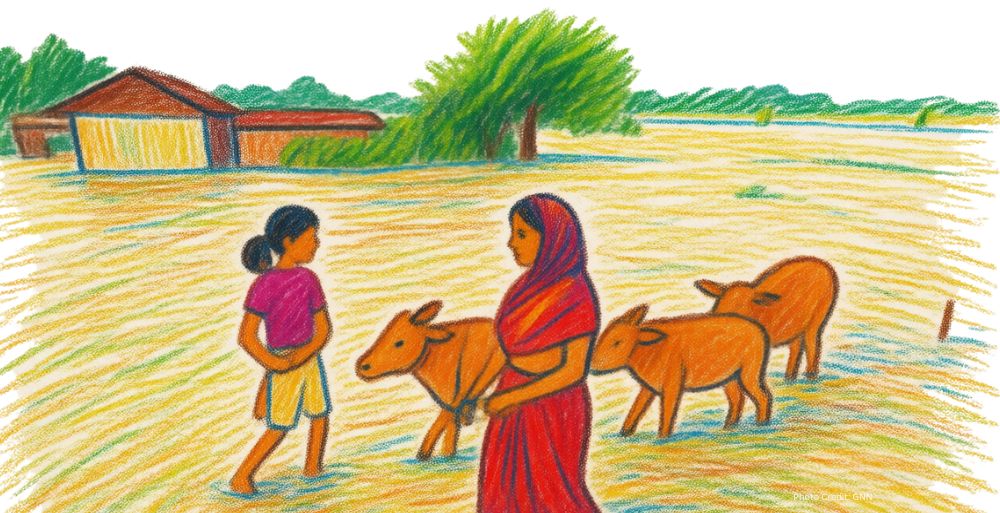
AJAYGARH, India — Standing knee-deep in the muddy Ken River, Bitti Bai Kondar joined hundreds of indigenous villagers staging dramatic demonstrations against India’s mammoth $87 billion national river-linking initiative. Mud smeared across her face to mark over a century of ancestral ties to the land, the mother of four protested alongside her sons as preliminary construction submerged nearby homes, fields, and shrines.
Villagers have gone so far as to lie on mock funeral pyres in defiance, declaring they would rather die than surrender their homeland without fair compensation and relocation support.
“The government is taking our land and water without giving us another place to live,” Kondar said. “They are excavating our soil for their dam while leaving us with too little to rebuild our lives.”
The National Blueprint and Local Fallout
The standoff marks a critical initial test for Prime Minister Narendra Modi’s push to interlink roughly 30 rivers across the country. Decades in the planning, the megaproject seeks to divert water from supposedly surplus basins into chronic drought zones, aiming to reinforce national food security and support tens of millions of farmers.
Phase one—the Ken-Betwa link connecting Madhya Pradesh to Uttar Pradesh—carries an estimated price tag of $4.6 billion. It centers on the construction of the two-kilometer-long Daudhan Dam on the Ken River.
Local authorities maintain that relocation aid has been generous and largely settled. According to district administrator Usha Parmar, more than 90% of affected residents in Panna district have received payouts, with offers revised upward to at least 1.25 million rupees (around $13,000) per hectare—more than double the initial figure.
Displaced residents counter that direct land payouts fail to address their total loss of livelihood. Dhaniram Bhatnagar, a local priest whose place of worship was swallowed by the reservoir, noted that his compensation only covered his residence. “The temple was my only source of income, and now it is gone,” he said.
Conservation Risks and Scientific Scrutiny
Beyond community displacement, the venture faces sharp backlash from ecologists. The dam’s reservoir will submerge roughly 9,000 hectares (22,200 acres), including large swaths of the Panna Tiger Reserve, celebrated as one of India’s premier tiger recovery sanctuaries. While authorities concede environmental disruption is unavoidable, they argue it can be balanced through compensatory afforestation and dedicated wildlife management.
Hydrological experts also question the project’s underlying assumptions. Himanshu Thakkar, coordinator of the South Asia Network on Dams, Rivers and People, warned that the core premise—that the Ken basin holds surplus water while the Betwa faces a deficit—remains unproven.
Government officials declined to comment on the scientific critiques, pointing instead to earlier statements emphasizing that the link will deliver critical drinking water, irrigation, and hydroelectric power to the parched Bundelkhand region.