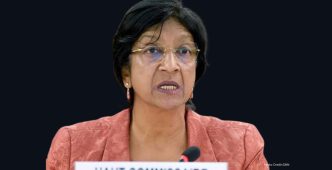
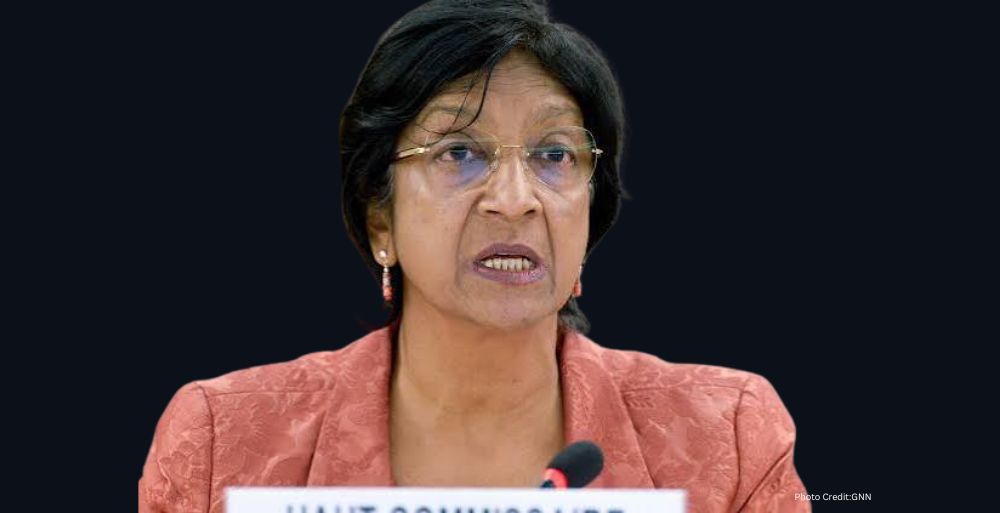
The decision by the Norwegian Nobel Committee to award the 2026 Nobel Peace Prize to South African jurist and former United Nations High Commissioner for Human Rights Navanethem “Navi” Pillay has elicited a polarized international response. While human rights advocates, European leaders, and international bodies celebrated the 85-year-old pioneer’s multi-decade career spent confronting apartheid, prosecuting genocide, and upholding global legal frameworks, high-profile political figures offered scathing rebukes. Israeli Prime Minister Benjamin Netanyahu and U.S. President Donald Trump vehemently criticized the committee’s selection, highlighting an escalating ideological divide over the authority of international law, multilateral institutions, and global accountability mechanisms.
OSLO, Norway — The Norwegian Nobel Committee’s announcement on Friday awarding the 2026 Nobel Peace Prize to 85-year-old South African jurist Navanethem “Navi” Pillay has ignited a intense global debate regarding the role of international law in resolving contemporary global conflicts. Recognized for her lifelong career defending human rights and establishing legal accountability for war crimes, genocide, and systemic oppression, Pillay received widespread commendation from international diplomats, human rights organizations, and national leaders across Europe and the Global South.
However, the award simultaneously drew sharp condemnation from top political figures in Israel and the United States, exposing a deep rift between defenders of multilateral legal frameworks and national leaders who view international bodies with skepticism or outright hostility. The contrast in reactions underscores how the Nobel Peace Prize continues to serve as a lightning rod for broader geopolitical tensions surrounding state sovereignty, international criminal justice, and accountability.
Decades of Groundbreaking Legal Precedent
Pillay’s legal career spans nearly six decades, beginning in South Africa where she broke racial and gender barriers under the harsh framework of apartheid. Born in Durban in 1941 to an Indian Tamil family, Pillay overcame structural segregation to open her own law practice in 1967, dedicating much of her early career to defending anti-apartheid activists, political detainees, and trade unionists, including figures associated with Nelson Mandela’s movement. In 1995, following South Africa’s transition to a multi-racial democracy, President Nelson Mandela appointed her as the first Black woman to serve on the nation’s High Court.
On the international stage, Pillay served as a judge and eventual president of the United Nations International Criminal Tribunal for Rwanda (ICTR). During her tenure, she presided over the landmark 1998 Akayesu case, which established the historic legal precedent that sexual violence and mass rape could constitute acts of genocide under international law. She later served as a judge on the International Criminal Court (ICC) in The Hague and served as the United Nations High Commissioner for Human Rights from 2008 to 2014. Most recently, she chaired the UN Independent International Commission of Inquiry investigating violations in the Occupied Palestinian Territory and Israel, while concurrently serving as an ad hoc judge at the International Court of Justice (ICJ).
Global Praise from Human Rights Bodies and European Allies
Pillay’s recognition was met with enthusiastic applause from global human rights organizations and European government officials, who framed the award as a necessary defense of international law at a moment when global legal norms face severe pressure.
United Nations Secretary-General António Guterres praised the selection, noting that the citation reminded the international community that enduring peace requires principled accountability. “Today’s prize is a tribute to all those working to uphold and defend international law, the rule of law and human rights, and secure peace, justice and human dignity,” Guterres stated in an official release.
In Pillay’s home country, South African President Cyril Ramaphosa lauded her lifelong dedication to principle and human dignity. “Justice Pillay’s crowning as winner of the Nobel Prize allows us to celebrate the progressive contributions she has made to strengthen peace, uphold human dignity and bring hope in South Africa and to peoples globally,” Ramaphosa remarked. “She has served humanity with principle and the belief that the world can and should be a better place.”
European leadership similarly hailed the committee’s decision. European Commission President Ursula von der Leyen highlighted Pillay’s moral clarity when confronting historical atrocities. “Few have devoted their lives to justice, peace and human dignity like she did. From the violence of apartheid in South Africa to the horrors of the Rwandan genocide, she has confronted some of humanity’s darkest chapters,” von der Leyen said, emphasizing her stance in favor of “the rule of law over the right of might.”
Amnesty International Secretary-General Agnès Callamard drew direct attention to the current strain on international judicial bodies, noting, “This could not be a better choice at the time of the attacks against international justice. She is a former ICC judge at a time when the U.S. administration is seeking to destroy the ICC.”
Severe Rebukes from Israeli and U.S. Leadership
In contrast to the widespread praise from human rights advocates, official reactions from Israel and the United States were sharply critical.
Israeli Prime Minister Benjamin Netanyahu released a formal statement condemning the Norwegian Nobel Committee’s choice, pointing specifically to Pillay’s recent tenure heading the UN Commission of Inquiry, which published reports detailing alleged war crimes and genocidal acts in Gaza. “The Nobel Prize committee has lost its moral compass,” Netanyahu stated directly on social media. “It has awarded its highest honor to a bigot who built her career around inventing and propagating blood libels against the one and only Jewish state.”
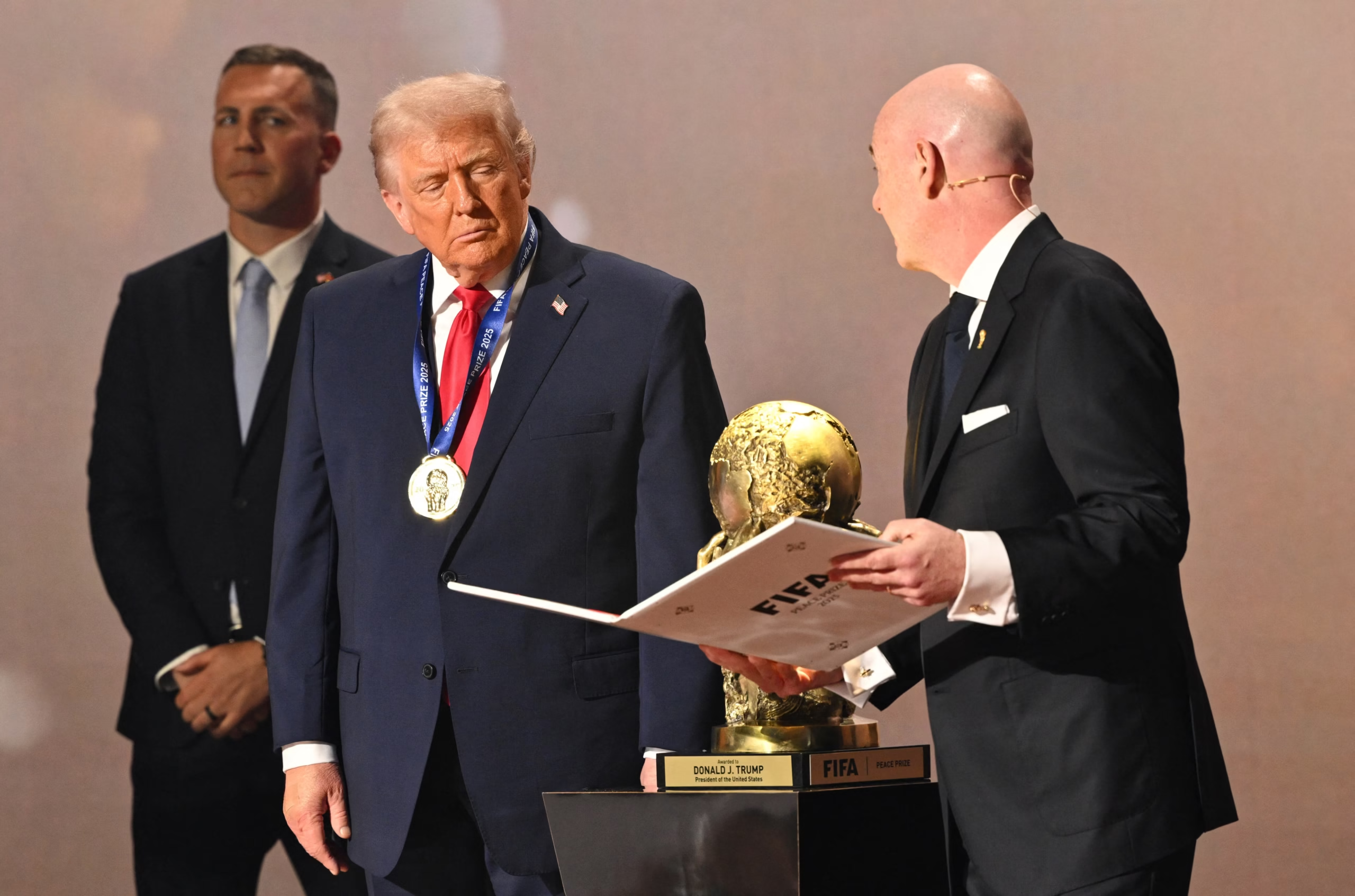
In the United States, President Donald Trump expressed deep frustration regarding the committee’s decision during a public address, dismissing both the recipient and the United Nations while arguing that his own diplomatic engagements warranted the honor.
“The Nobel Prize was given out today to a liberal person who works at the United Nations, who nobody has ever heard of. I’ve never heard of the person,” President Trump stated, adjusting his microphone as he delivered his critique to the audience. “In all of the wars that I’ve settled, I never spoke to the United Nations. They were no help to me. The United States of America, represented by me as your president, should have received the Nobel Peace Prize but didn’t. And this is an indelible stain on the country of Norway and those people that made such a disgraceful and embarrassing decision.”
The Broader Geopolitical Implications
The intense debate surrounding Pillay’s Nobel Prize highlights an escalating systemic rift between nations that champion universal international jurisdiction and those that prioritize national sovereignty and strategic independence. While representatives from the Palestinian Authority and Global South institutions hailed the prize as a victory for victims of historical oppression and state overreach, political friction surrounding the decision underscores the immense challenges facing multilateral institutions in the mid-2020s.
Speaking from the historic courtroom in Nuremberg, Germany—where she was attending an international legal forum when the award was announced—Pillay dedicated the prize to survivors of human rights violations and legal defenders worldwide. She warned that ongoing efforts to delegitimize international courts “endanger the progress painstakingly made since Nuremberg, and risk returning us to a world in which power, rather than law, determines whose suffering matters.”