The White House announced Friday evening that the federal government will distribute approximately $2 billion in direct payments to more than 20 million seniors to help offset rising Medicare Part B premium costs. Funding for the $90 one-time payments will be drawn from the Medicare Improvement Fund, a mechanism originally established by Congress in 2008. The policy roll-out arrives as recent nonpartisan polling indicates widespread public concern over the cost of living and persistent economic pressures, highlighting the central role health care expenses and federal entitlement programs are playing in the lead-up to the upcoming midterm elections.
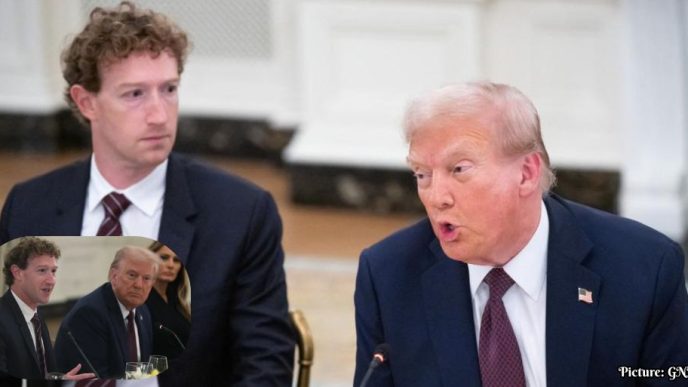
WASHINGTON — In an evening announcement on social media Friday, President Donald Trump revealed that his administration will issue $90 direct deposit payments to more than 20 million senior citizens across the United States, utilizing approximately $2 billion from a federal healthcare trust account to mitigate rising Medicare Part B monthly premiums.
According to an official White House fact sheet released alongside the announcement, the one-time disbursements will begin reaching eligible beneficiaries early this month. The financial relief targets Americans enrolled in Medicare Part B, where the standard monthly premium stands at $202.90 for the 2026 calendar year, according to figures released by the Centers for Medicare & Medicaid Services.
The funds will be drawn directly from the Medicare Improvement Fund, an account established by Congress under the Tax Relief and Health Care Act of 2006 and modified in 2008 to support technical improvements and quality enhancements within the traditional Medicare fee-for-service program.
Executive Statements and Funding Source Analysis
Posting on Truth Social, President Trump described the targeted account as a “pointless ‘Slush Fund'” that had remained underutilized by previous administrations, asserting that the reallocation of these capital reserves fulfills key administration commitments regarding senior care and healthcare affordability.
“We are finally using this Fund, along with my Most Favored Nations Deals, to substantially LOWER costs for our Seniors,” the president wrote in his social media statement. “I pledged to protect and preserve Medicare and Social Security, which were on the verge of RUIN by Joe Biden, who foolishly and maliciously let tens of millions of Illegal Aliens into our Country, and we are doing just that for America’s Seniors.”
The White House press release accompanying the announcement detailed that the $90 payments are intended to provide immediate liquidity to seniors facing persistent inflation in healthcare delivery, prescription drug distribution, and general living costs.
In the same Friday evening statement, President Trump reiterated a broader economic proposal he initially introduced at the Republican National Convention’s midterm kickoff event last month: a contingent $5,000 payment to all adult U.S. citizens, tied directly to legislative outcomes in the upcoming Congressional elections.
“Because I delivered on this very important issue for the American People, they can also rest assured the highly popular $5,000 Trump Dividend will be distributed to every U.S. Citizen if, and when, the Republicans win the Midterm Elections!” the president added.
Economic Public Opinion and Midterm Environment
The timing of the administration’s $2 billion healthcare payout comes as both major political parties navigate a challenging macroeconomic landscape ahead of the midterm elections, where control of both the House of Representatives and the Senate remains sharply contested.
Polling data underscores widespread public dissatisfaction regarding persistent consumer inflation and personal financial stability. A national survey released Thursday by The Associated Press-NORC Center for Public Affairs Research found that 65 percent of respondents attribute rising living costs in the United States to administration policies. Furthermore, 73 percent of those surveyed indicated disapproval with the administration’s overall handling of economic issues.
Health policy experts and political analysts note that entitlement spending, premium adjustments, and direct consumer rebates have historically served as central focal points during midterm campaign cycles.
Statutory Context of the Medicare Improvement Fund
The Medicare Improvement Fund (MIF) was established under Section 1898 of the Social Security Act to provide the Secretary of Health and Human Services with dedicated capital to make adjustments to the Medicare fee-for-service program under Part A and Part B. Over successive legislative sessions, Congress has repeatedly altered the MIF’s available balance, often using the fund as an offset for broader healthcare or tax legislation.
By directing $2 billion from the fund directly to beneficiaries, the administration is bypassing traditional structural healthcare adjustments in favor of direct consumer offsets. Policy experts continue to evaluate the statutory mechanics of utilizing MIF balances for direct beneficiary cash disbursements without explicit, updated authorization from Capitol Hill.
As federal agencies prepare to process the $90 payments early this month, candidates from both parties are expected to feature senior healthcare costs prominently in their final campaign messaging leading up to Election Day.