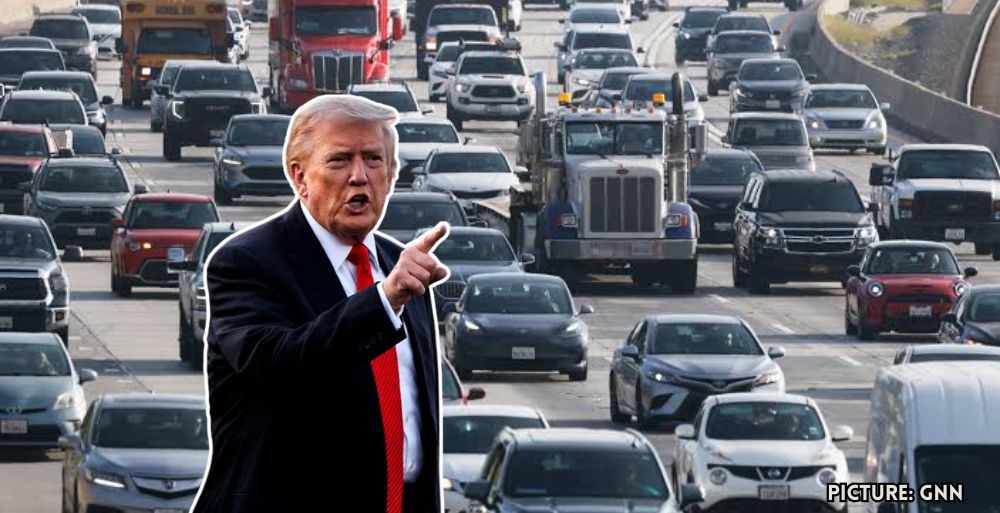
The Trump administration has implemented significant changes to fuel efficiency standards, reducing the average miles per gallon target for new cars and light trucks, igniting debates over environmental impacts and consumer costs.
In a landmark decision on Monday, the Trump administration formally rolled back car fuel efficiency standards, now requiring automakers to achieve an average fuel economy of 34.9 miles per gallon (mpg) by 2026. This new target represents a considerable reduction from the previous Biden-era goal of 50.4 mpg, which aimed to be met by 2031. The announcement has provoked a mixed response from industry stakeholders, environmental advocates, and political commentators, highlighting the complexities of energy policy and its economic ramifications.
Supporters of the rollback, including President Trump, assert that the revised standards will result in significant cost savings for consumers, claiming that new vehicles will be approximately $1,300 cheaper on average. In a post on Truth Social, Trump celebrated the new regulations, declaring it a “BIG DAY FOR AMERICAN AUTO WORKERS AND CAR BUYERS!” He criticized the prior Biden administration’s policies, characterizing them as onerous and detrimental to American manufacturers. Trump contended that previous regulations forced consumers into less desirable vehicles and imposed undue financial burdens on the automotive industry.
Context of the Rollback
The rollback follows the passage of the so-called “Big Beautiful Bill,” which effectively eliminated penalties for failing to meet previous fuel efficiency standards. Critics have pointed out that while the Trump administration’s changes negate stringent requirements from the Biden administration, they do not create new legal obligations for automakers to adhere to the reduced standards. The Biden administration had proposed a gradual increase in fuel economy requirements by 2 percent annually for model years from 2027 to 2031, which was projected to save consumers over $600 in fuel costs over the lifespan of a vehicle.
This regulatory shift is part of a broader ideological battle over climate change and energy independence that has defined American politics in recent years. The Biden administration’s approach sought to align U.S. standards with global trends towards more fuel-efficient and electric vehicles, while the Trump administration’s stance reflects a commitment to deregulation and support for traditional internal combustion engines.
Responses to the Changes
The announcement has generated substantial backlash from environmental advocates and industry experts. They argue that weakening fuel efficiency standards could lead to an increase in greenhouse gas emissions and further exacerbate climate change. Dan Becker, director of the Center for Biological Diversity’s Safe Climate Transport Campaign, criticized the timing of the rollback, stating, “Trump is tanking sensible mileage standards at the worst possible time for consumers, who’re getting hit with sky-high prices at the pump.” On the day of the announcement, the national average gasoline price reached approximately $4.48 per gallon, as reported by the American Automobile Association (AAA).
Environmental groups contend that the administration’s changes could obstruct progress towards cleaner vehicles and sustainable automotive practices. Becker emphasized that consumers are likely to bear the financial burden of these rollbacks, claiming that the move primarily benefits “Trump’s Big Oil and Big Auto buddies” at the expense of public health and environmental integrity.
Debate Over Electric Vehicles
The Trump administration has framed the Biden administration’s fuel efficiency standards as part of a broader electric vehicle (EV) mandate, suggesting that the previous regulations were so stringent that they would have compelled manufacturers to significantly increase their production of electric vehicles. However, the Biden administration has maintained that its rulemaking did not impose an immediate requirement for the adoption of EVs, although it could incentivize manufacturers to expand their EV offerings to meet higher efficiency standards.
Moreover, a separate regulation from the Biden administration aimed at promoting electric vehicle adoption through the Environmental Protection Agency (EPA) was also repealed by the Trump administration. This decision has raised concerns among advocates who view the transition to electric vehicles as crucial for reducing reliance on fossil fuels and achieving long-term environmental sustainability.
Implications of the New Standards
The implications of the Trump administration’s rollback of fuel efficiency standards are extensive and multi-dimensional. While the administration promotes the initiative as a means to enhance consumer affordability and support domestic auto manufacturing, critics warn that long-term consequences may include higher fuel expenditures for consumers and increased pollution levels. Automakers now face a landscape where they are not legally bound to meet the new, less stringent standards, which could stall innovation in fuel efficiency and sustainable vehicle technology.
As automotive manufacturers reevaluate their strategies in light of these new regulations, the broader context of global automotive trends—including the push for electric vehicles and stricter emissions regulations in other countries—will play a critical role in shaping the future of the U.S. auto industry. Industry experts suggest that while the rollback may provide short-term relief for automakers and consumers, it could hinder the United States’ competitive edge in the rapidly evolving global automotive market, particularly as other nations increasingly commit to ambitious climate goals and clean energy initiatives.
In summary, the Trump administration’s decision to lower fuel efficiency standards not only reflects a significant policy shift but also reignites a contentious debate over energy, environmental responsibility, and the future of the automotive industry in the United States. As the nation navigates these complex issues, the balance between economic interests and environmental stewardship remains a pivotal concern for policymakers and citizens alike.