Introduction
For much of the post-Cold War era, the defining feature of international diplomacy was not merely American power but the assumption that most nations would ultimately align with Washington’s preferences. The United States did not simply lead; it set the agenda. Allies might disagree, adversaries might object, but American influence remained the gravitational force around which global politics revolved.
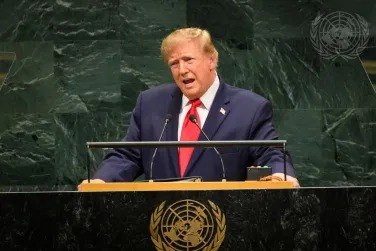
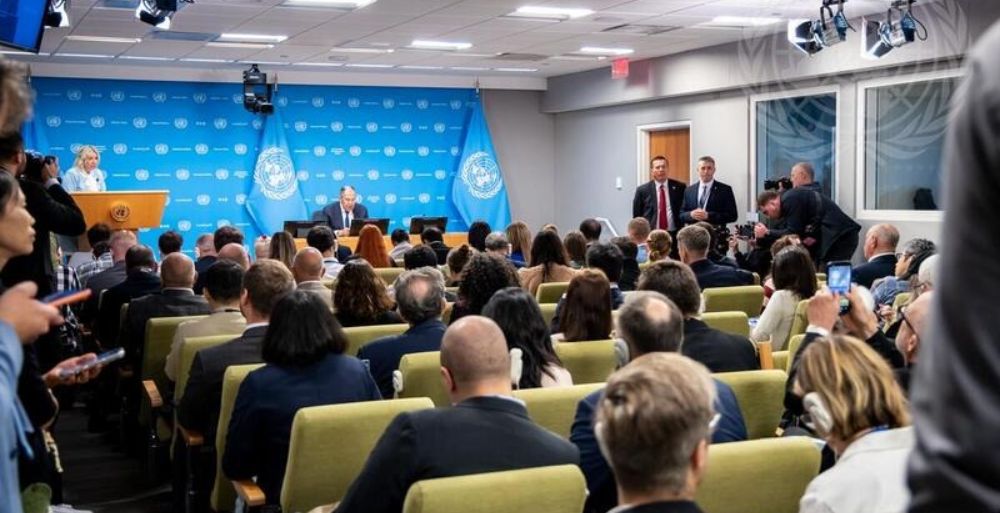
At this year’s United Nations General Assembly, however, there were growing signs that this assumption can no longer be taken for granted. Across the Assembly, countries appeared increasingly willing to pursue their own interests, even when doing so meant openly challenging the United States. The result was not an anti-American revolt, but something potentially more significant: the emergence of a world less inclined to seek Washington’s approval before acting.
The most revealing moments were not necessarily the speeches delivered from the UN’s marble podium. They were the reactions those speeches provoked.
Trump’s Speech and the Walkout That Followed
President Donald Trump’s address reflected a foreign policy rooted in strength, sovereignty, and unilateral action. Defending U.S. military operations abroad, he declared that America was “settling years of unfinished business” and dismissed efforts to create what he described as a “globalist scheme” to regulate artificial intelligence. Yet the most memorable images were not from the speech itself. They came when members of the Cuban and Iranian delegations walked out of the chamber, sending a diplomatic message that resonated far beyond the hall.Those walkouts were more than political theater. They illustrated a broader reality: nations today feel far less constrained about publicly opposing Washington than they did even a decade ago.
A More Assertive China
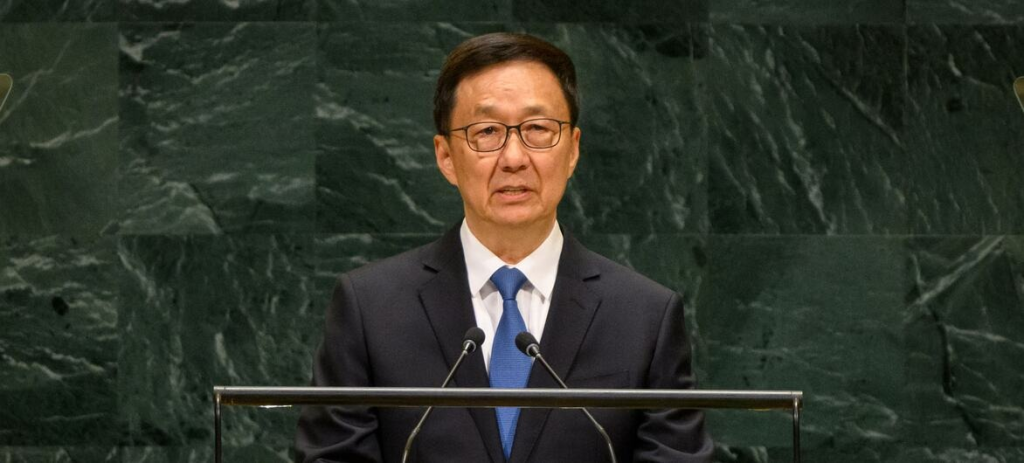
The trend was evident in the remarks of Han Zheng, China’s vice president. Addressing the Assembly, he openly pushed back against U.S. policy toward Iran and Cuba, arguing that “the sovereignty and security of countries in the Middle East, including the Gulf, should be respected.” He further called on the “relevant country” to end threats and sanctions against Cuba. Although he never mentioned the United States by name, the target of his criticism was unmistakable. More importantly, his remarks reflected the confidence with which major powers are now willing to challenge American positions on the world’s foremost diplomatic stage.
A Trend Years in the Making
History offers numerous precedents. In 2003, French President Jacques Chirac famously opposed the Iraq War despite intense pressure from Washington, declaring that “war is always proof of failure.”
At the time, France’s resistance was portrayed as an exception to American leadership. Today, such public disagreement has become commonplace. What was once extraordinary has become routine.
Perhaps even more revealing than the speeches were the reactions of international institutions themselves.
When Institutions Push Back
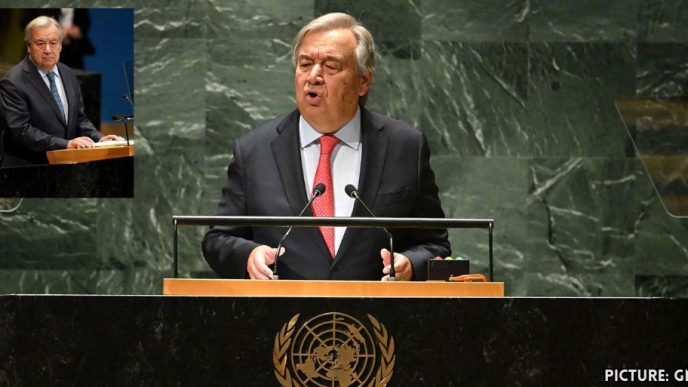
Earlier this year, the Trump administration announced withdrawals from dozens of international organizations and UN-affiliated bodies. Rather than scrambling to accommodate Washington, António Guterres responded with a message of continuity. The United Nations, he said, would continue carrying out its mandates regardless of American participation, emphasizing that the organization has “a responsibility to deliver for those who depend on us.” Such statements would have been nearly unthinkable during the height of post-Cold War American dominance, when many international institutions feared alienating Washington.
Europe’s Search for Strategic Autonomy
Europe offers another telling example. In 2017, German Chancellor Angela Merkel remarked that Europeans must “take our destiny into our own hands.”
At the time, her comment was interpreted as a response to a unique political moment. Nearly a decade later, it sounds more like a description of an enduring international trend. Strategic autonomy has evolved from a temporary necessity into a long-term objective for many governments.
Public opinion appears to be moving in the same direction. A recent Pew Research Center survey found that majorities in many countries believe the United States does not adequately promote global peace and stability or sufficiently consider the interests of other nations. Particularly across Europe, skepticism toward American leadership remains widespread. Political leaders notice these sentiments and increasingly reflect them in their foreign policies.
India’s View: Strategic Autonomy in Practice
India’s position is especially instructive. For decades, New Delhi has navigated global politics through the principle of strategic autonomy, refusing to become fully aligned with any single power bloc.
Notably, India’s approach offers another example of this growing diplomatic independence. Prime Minister Narendra Modi’s declaration that “Today is not an era of war” captured New Delhi’s refusal to be drawn fully into any geopolitical camp. Rather than choosing sides, India has sought to preserve strategic flexibility, reflecting a broader trend among nations that increasingly prioritize autonomy over alignment.
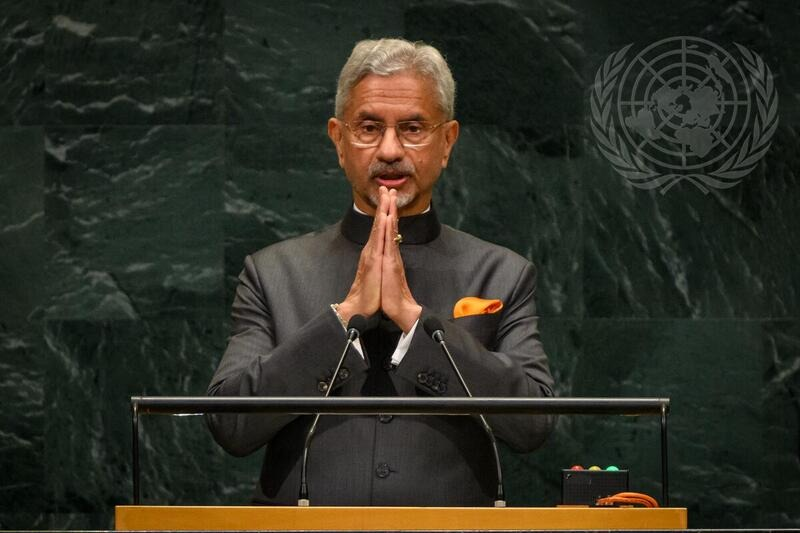
At this year’s United Nations General Assembly, External Affairs Minister S. Jaishankar gave voice to concerns shared by many emerging nations when he observed that “countries far from conflicts are being penalized.” The remark captured growing frustration within the Global South that geopolitical rivalries among major powers often impose economic and security burdens on countries with little influence over the conflicts themselves.
Jaishankar also warned that when states sponsor terrorism across borders, it becomes “a direct affront to the global order.” Whether one agrees with India’s specific concerns or not, the broader message was unmistakable: emerging powers increasingly seek to define international norms on their own terms rather than accept frameworks designed elsewhere.
Influence Is Not the Same as Compliance
Yet it would be a mistake to interpret these developments as evidence of American decline. The United States remains indispensable to the global economy, international security, technological innovation, and diplomacy. Nations continue to seek American investment, military cooperation, and access to U.S. markets. Many governments that criticize Washington still depend upon American power to deter aggression and maintain regional stability.
The question, therefore, is not whether America remains influential. It clearly does.
The more important question is whether American influence still automatically translates into compliance. Increasingly, the answer appears to be no.
The Rise of a Multipolar World
Ironically, Trump’s emphasis on sovereignty may be reinforcing that very tendency abroad. If Washington insists on pursuing its interests unapologetically, other nations are becoming more comfortable doing the same. From Beijing to Brussels, from Brasília to New Delhi, governments are displaying a growing willingness to diverge from American preferences when domestic politics or national interests demand it.
Influence in the twenty-first century is measured not only by power, but by the willingness of others to follow. The lesson emerging from this year’s United Nations gathering is that countries are increasingly listening to Washington while simultaneously making their own calculations.
The world is not rejecting the United States. Nor is it organizing itself into an anti-American coalition. Rather, it is gradually evolving into a more independent and multipolar system in which nations feel empowered to pursue their own priorities and challenge every major power when necessary.
The emerging pushback at the United Nations is not merely about Donald Trump. It reflects a deeper shift in global politics. From New Delhi to Brasília and from Jakarta to Pretoria, countries are increasingly defining foreign policy through the lens of their national interests rather than alliance loyalty.
And as India’s Foreign Minister S. Jaishankar has argued, no region can assume that its priorities automatically become universal priorities. Together, those ideas may best explain why the world appears increasingly willing to challenge Washington, not out of hostility, but out of confidence in its own voice.
The Real Question
For much of the post-Cold War era, American presidents arrived at the United Nations expecting disagreement from adversaries but broad deference from allies. This year felt different.
Across the General Assembly, world leaders increasingly signaled that they were prepared to challenge Washington openly, even while continuing to work alongside it. The result was not an anti-American revolt, but something perhaps more consequential: a growing willingness among nations to pursue their own interests without waiting for American approval.
That is the deeper story unfolding at the United Nations. The issue is not whether the world is bucking Trump. The issue is whether the era of automatic deference to any great power is drawing to a close.
The reality today is the gradual emergence of a more independent international community, one that is increasingly confident in challenging every great power, including the United States.
Whether that leads to a more cooperative world or a more fragmented one remains the defining diplomatic question of our time.
The signs visible in New York suggest that it may be. And whether that leads to greater cooperation or greater fragmentation will be one of the defining diplomatic questions of the twenty-first century.