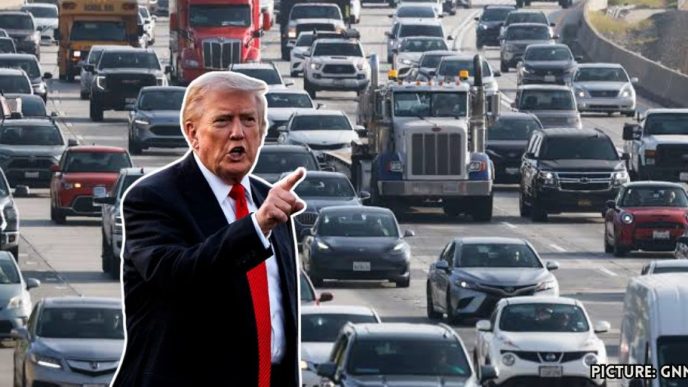
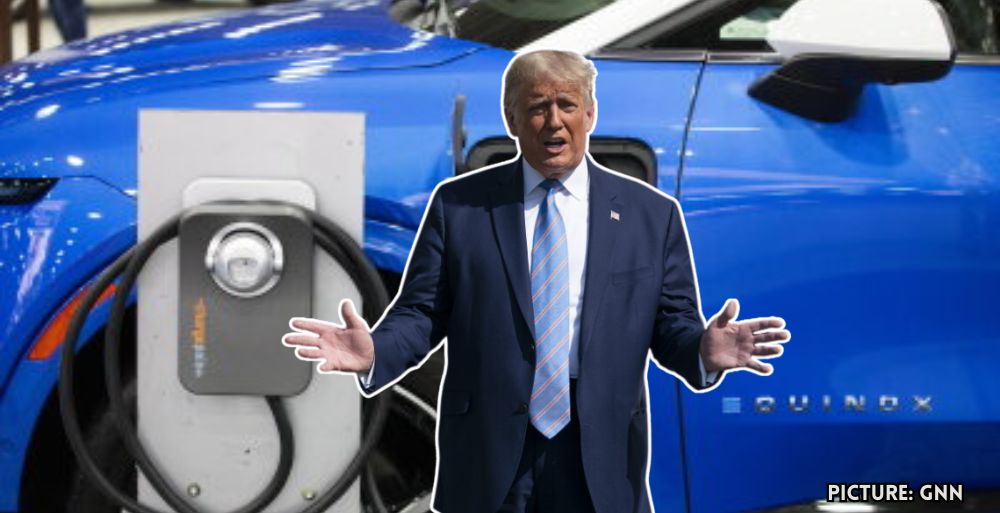
President Trump has announced the approval of new fuel economy standards that eliminate the electric vehicle mandate introduced under the Biden administration, a move that critics argue could increase transportation costs for American families.
Former President Donald Trump announced on Saturday his administration’s decision to approve a new set of fuel economy standards that effectively dismantle the electric vehicle (EV) mandate established during President Joe Biden’s term. The announcement comes as Trump seeks to reassert his influence ahead of the midterm elections, with Republicans aiming to maintain control of Congress amid rising concerns over inflation and fuel prices.
The 2024 EV mandate, introduced by the Biden administration, was designed to accelerate the transition from traditional gas-powered vehicles to electric alternatives. It set stringent pollution standards that many automakers found challenging to meet without investing in new electric or low-emission vehicle models. Trump’s elimination of these standards was hailed in a post on Truth Social, where he described the day as a “BIG DAY FOR AMERICAN AUTO WORKERS AND CAR BUYERS!”
In his statement, Trump asserted, “These new Standards will take the waste out of building cars in America. That means LOWER PRICES, saving families thousands on a new, beautiful, and safe car — Far better than the Environmental Monsters that we were building heretofore.” He further claimed that the rollback would attract automakers, stating, “Every Manufacturer, from General Motors to Ford to Stellantis, has called me wanting to build here, and now they can!”
Context and Background
The decision to revoke the EV mandate aligns with Trump’s broader strategy to dismantle several Biden-era initiatives aimed at reducing greenhouse gas emissions and promoting sustainable energy. This policy shift reflects a significant departure from the previous administration’s emphasis on transitioning towards cleaner energy sources.
Historically, the automotive industry has played a critical role in the U.S. economy, and government regulations have often aimed to balance economic growth with environmental sustainability. The Biden administration’s efforts to promote electric vehicles were part of a larger framework to combat climate change and reduce reliance on fossil fuels, which has been a contentious issue in American politics.
Trump’s announcement comes less than six weeks before the midterm elections, a time when voter concerns about rising fuel prices and the overall cost of living are particularly salient. This political context may serve as a motivation for Trump to appeal to working-class voters who may be feeling the pinch of rising costs.
Reactions to the Decision
The rollback of the EV mandate has drawn criticism from environmental advocates and former government officials. The Sierra Club, a prominent environmental organization, condemned Trump’s decision, arguing that it will lead to increased transportation costs for American families. Katherine García, the director of the Sierra Club’s “Clean Transportation for All” campaign, expressed her discontent in a statement, vowing to “fight this senseless rollback every step of the way.”
García noted, “Families already cannot afford the basics, and now Donald Trump wants to make driving more expensive too. Less fuel-efficient cars mean more gas burned, spending more at the pump, and dirtier air in our communities. Americans need relief from high costs, but instead, Trump is giving automakers a free pass on pollution and handing families the bill – at the pump and with their health.”
Former Transportation Secretary Pete Buttigieg, who served under Biden, also criticized Trump’s decision, asserting that it undermines efforts to bolster U.S. manufacturing and advance clean technology. He remarked on social media, “U.S. manufacturing jobs are down under Trump, including in the auto industry. His strategy failed, and so will this. Lowering standards will accelerate what he has already been doing: handing the clean tech future to China and forcing Americans to pay more at the pump.”
The Biden administration had aimed to establish stricter fuel economy and emissions standards to not only reduce pollution but also to bolster the U.S. market for electric vehicles. The rollback of these standards raises questions about the future trajectory of the automotive industry in the United States and its capacity to compete in a global market increasingly focused on sustainability and clean energy technologies.
Implications for the Future
The long-term implications of Trump’s rollback of the EV mandate remain uncertain. While the former president asserts that the new standards will lead to lower prices for consumers and greater manufacturing opportunities in the U.S., critics warn that this could come at the cost of environmental degradation and increased fuel costs for American families. As the nation navigates the complexities of energy policy and climate change, the debate over electric vehicles and their role in the future of transportation is likely to intensify.