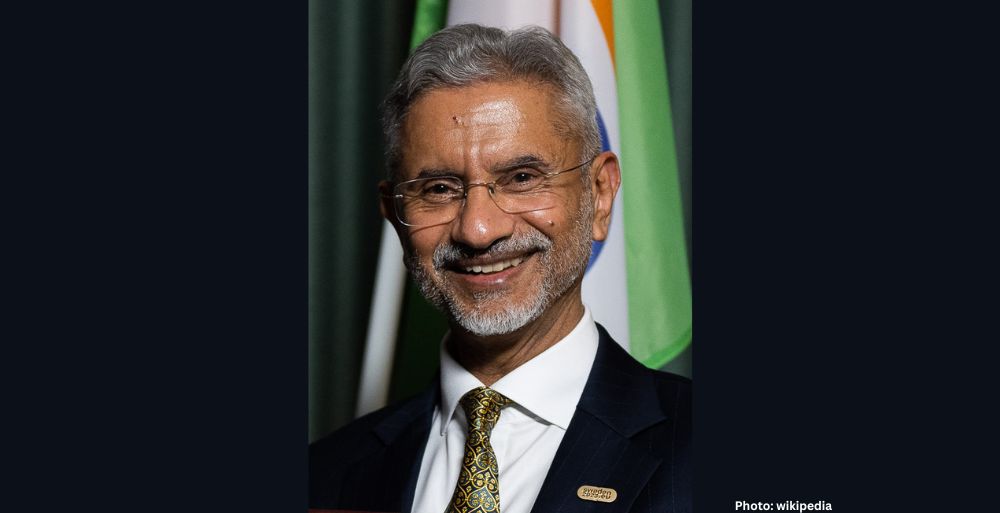
External Affairs Minister S. Jaishankar met U.S. Secretary of State Marco Rubio in New York to discuss the enhancement of the U.S.-India strategic partnership, focusing on key regional issues such as sanctions and ongoing conflicts in Ukraine and the Gulf.
NEW YORK — On September 20, 2023, Indian External Affairs Minister S. Jaishankar held a pivotal meeting with U.S. Secretary of State Marco Rubio, aimed at reinforcing the strategic partnership between India and the United States. This discussion took place against the backdrop of the United Nations General Assembly’s high-level week, where world leaders congregated in New York to deliberate on pressing international matters.
“Great to meet with Indian External Affairs Minister Dr. S. Jaishankar in New York today,” Rubio stated on the social media platform X (formerly Twitter). He emphasized the collaborative efforts between the two nations, declaring, “Together, we are building on the US-India strategic partnership and coordinating on key regional priorities and upcoming multilateral efforts.” This statement highlights the ongoing commitment of both countries to strengthen their bilateral relationship, particularly in light of various geopolitical challenges facing the international community.
Key Discussions on Sanctions and Regional Conflicts
During their meeting, Jaishankar expressed India’s interests and concerns regarding the Lindsey O. Graham Sanctioning Russia and Iran Act of 2026 (SRIA). This proposed legislation could impose significant tariffs on certain petroleum products, raising alarm in New Delhi about its potential impact on India’s energy security and economic stability. India’s growing reliance on energy imports, particularly from Russia, makes the implications of such sanctions particularly concerning for Indian policymakers.
In addition to sanctions, Jaishankar and Rubio discussed critical regional issues such as the ongoing conflicts in the Gulf and Ukraine. The war in Ukraine has emerged as a significant point of international diplomatic focus, with India advocating for dialogue and a peaceful resolution. Prime Minister Narendra Modi had previously urged Russian President Vladimir Putin to end the conflict during the Shanghai Cooperation Organization (SCO) summit held in September 2023, reflecting India’s cautious yet assertive diplomatic stance.
Upcoming Address at the UN General Assembly
Jaishankar is set to address the United Nations General Assembly on September 23, 2023, at 3 p.m. local time, which corresponds to 12:30 a.m. on September 24 in India. His address is expected to cover India’s perspectives on various global issues, including sustainable development, climate change, and security challenges. This platform provides India an opportunity to articulate its position within the international community and reinforce its role as a key player in global governance.
Challenges in Trade Relations
While the strategic partnership between India and the U.S. has made significant strides, it faces several challenges. Recent U.S. legislation permitting tariffs of up to 100 percent on buyers of Russian oil has introduced additional strain on India-U.S. relations, particularly given India’s ongoing engagement with Russian energy markets. Although the enforcement of this measure has not yet taken place, Indian officials remain vigilant regarding its potential ramifications on bilateral trade.
Trade negotiations between Washington and New Delhi have also reached an impasse, with both parties working to address outstanding trade issues that have arisen in recent months. These discussions are critical as both nations seek to enhance economic ties, which are increasingly viewed as vital to their strategic collaboration. The economic dimension of the U.S.-India relationship is essential not only for bilateral growth but also for regional stability.
Continued Cooperation in the Indo-Pacific
Despite these challenges, the cooperation between India and the United States persists across various sectors, particularly within the framework of the Quad—a strategic alliance comprising India, the United States, Japan, and Australia. The Quad nations have actively addressed security concerns in the Indo-Pacific region, especially in response to China’s growing influence.
During a Quad foreign ministers’ meeting held in New Delhi in May 2023, the member countries reaffirmed their commitment to enhancing maritime security, developing port infrastructure, and promoting energy partnerships. Such initiatives underscore a shared understanding of the necessity for coordinated responses to regional security threats and maintaining a free and open Indo-Pacific. The Quad’s collaborative efforts are increasingly seen as a counterbalance to China’s assertive posture in the region.
As illustrated by the discussions between Jaishankar and Rubio, the U.S.-India partnership remains a cornerstone of regional stability and international cooperation. Both nations are navigating complex geopolitical landscapes while striving to bolster ties for mutual benefit. The outcomes of these high-level meetings and upcoming addresses at the United Nations will likely shape the trajectory of U.S.-India relations as they confront shared challenges and opportunities in the evolving global order.