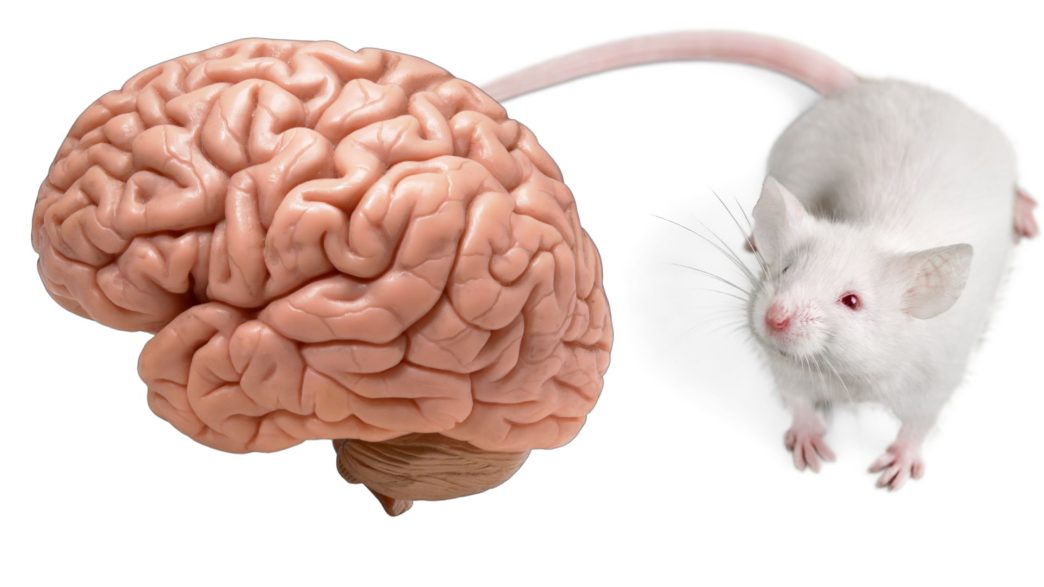
This groundbreaking research aims to enhance understanding of human brain disorders by implanting human brain cells into mice, potentially transforming the study of psychiatric and neurodevelopmental diseases.
Neuroscientists at Stanford University have achieved a significant breakthrough in biomedical research by engineering mice to possess functioning human cells within their brains. This innovative development aims to facilitate the study of psychiatric and neurodevelopmental disorders that are unique to humans, providing a novel platform for potential treatment testing.
Research Overview
Led by Professor Sergiu Pașca, the research team is focusing on creating genetically modified mice to better understand complex brain disorders lacking effective treatments. Pașca highlighted the challenges faced in psychiatric research, noting that the field has one of the lowest success rates for clinical trials. He explained, “Even drugs that actually make it to clinical trial – that seem to be working really well in animal models – fail dramatically in clinic. That tells us we’re missing a lot of information about human biology and capturing that will be essential.” This acknowledgment underscores the need for models that more closely resemble human brain function.
The study specifically targets conditions such as epilepsy, autism, and cerebral palsy. These disorders are difficult to study in traditional rodent models because they do not manifest in the same way in mice. By integrating human brain cells into these genetically altered mice, researchers hope to create a model that more accurately reflects human neurological function and pathology, thereby increasing the potential for finding effective treatments.
Methodological Innovations
The methodology employed in this research involved modifying mice to have significantly reduced cerebral cortex, the brain area responsible for higher cognitive functions such as memory and sensory perception. Subsequently, the researchers reprogrammed human skin cells to grow into brain-like organoids. These organoids, not complete brains but clusters of living cells, were then implanted into the modified mouse brains. Once introduced, the human cells integrated into the existing mouse brain circuitry, establishing connections with the mouse’s nervous system.
Approximately six months after the implantation, the mice underwent behavioral tests designed to assess their performance in a controlled environment. Observations indicated that the implanted mice behaved similarly to their unmodified counterparts, with Pașca noting, “They don’t have any enhancement.” This finding suggests that while the mice possess human brain cells, they do not exhibit human-like cognitive abilities.
Ethical Considerations
The ethical implications of this research are significant and complex. Dr. Sarah Chan, a reader in bioethics at the University of Edinburgh and not involved in the study, emphasized the importance of considering the cognitive experiences of these genetically altered mice. She pointed out that while there is no evidence suggesting these mice can think like humans, the study prompts critical questions about the ethical treatment of laboratory animals when their cognitive capabilities are altered. “How can we know what it’s like to be one of these mice? And how do we take account of that in the ways that we treat laboratory animals?” she queried.
Scientific Implications and Future Directions
Dr. Ilary Allodi, a neuroscientist from St Andrews University who also did not participate in the study, praised the research for its technical achievements, particularly the formation of human-specific cell types that spontaneously appeared within the implanted mice. She remarked, “You’re keeping the human program inside the mouse environment – like the mouse is an incubator.” This innovative approach may provide valuable insights into human-specific brain disorders, potentially leading to the development of new therapeutic strategies.
However, some experts caution that the practical applications of these genetically modified mice may be limited. Professor James Ainge, also from St Andrews University, acknowledged the impressive nature of the research but raised concerns regarding the ethical implications of cultivating living human brain tissue in a mouse. He stated that while the development is technically impressive, these models may have restricted utility in broader research contexts due to ethical issues surrounding animal welfare.
This research opens a new avenue for studying human diseases, as neuroscientists often face limitations when relying on traditional models that do not emulate key aspects of human brain function. By creating mice with human brain cells, researchers can pursue a deeper understanding of neurological conditions and work towards more effective treatments.
Conclusions and Future Challenges
The creation of genetically engineered mice with human brain cells represents a noteworthy advancement in the field of neuroscience. As researchers continue to explore this novel model, balancing scientific innovation with ethical considerations will be crucial. The welfare of laboratory animals must remain a priority, and ongoing discussions surrounding the ethical dimensions of such research will be essential as the field progresses.