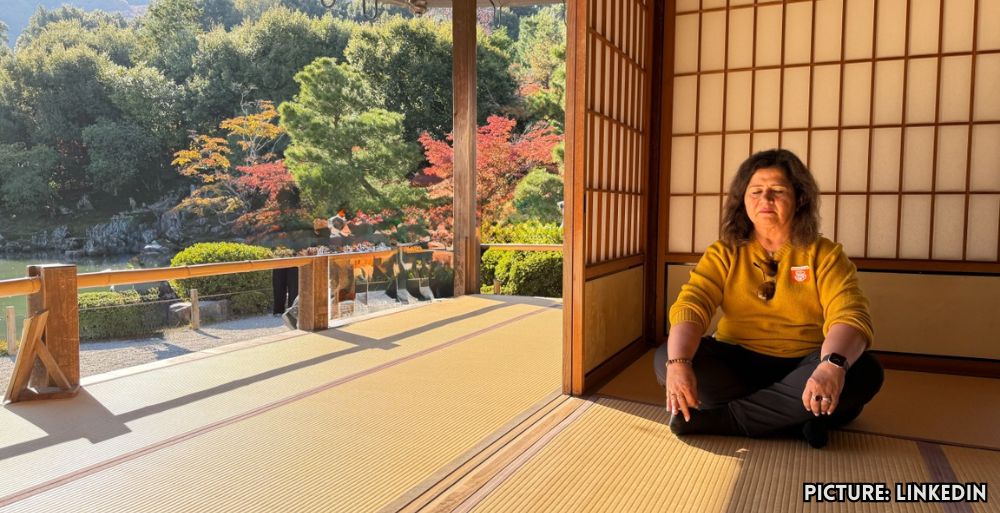
Here’s What Happened When I Spent Ten Days in Silence.

This story isn’t from last month. It happened a couple of years ago — but I find myself thinking back to those ten days again and again, and never more than now. Because of the age we’ve stepped into. Because of the AI world we live in, where every answer arrives in seconds and silence has become the scarcest resource of all. That’s why I’m finally telling this story.
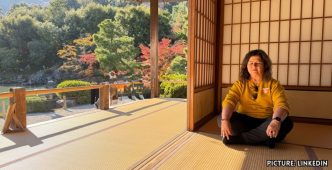
I didn’t plan this. I wasn’t “on a journey.” I had never meditated a day in my life.
I was at lunch with a couple of friends when one of them Ranga Kanchi mentioned that he had attempted a Vipassana course — a ten-day silent meditation retreat — and couldn’t complete it. He wanted to go back and finish what he started.
Something different. Something challenging. Something interesting.
“I’m signing up too,” I said. “I’ll do it with you.”
I went home that afternoon and registered — without reading much, without overthinking, without a single hour of meditation experience behind me. That’s just how I’m wired. I like saying yes. I’ve built my whole life on the belief that saying yes leads somewhere, even when you can’t see where.
The Bets
When I told my friends, the reactions were priceless.
People who had been meditating for years were stunned. For serious practitioners, a ten-day Vipassana is not a starting point — it’s the summit. If meditation were mountaineering, this was Everest. And here I was, someone who had never so much as sat cross-legged with her eyes closed, announcing I was heading straight for the peak.
So they did what good friends do. They took bets.
One day. Two days. The most generous bet gave me three.
The Trunk
As the date approached, the bravado wore off. What did I sign up for?
I remember the drive to the retreat — deep in the forest on the outskirts of the Bay Area — frantically calling my family, friends, my colleagues, everyone under the sun: I won’t be available. Don’t call. Don’t text. I’m off the grid.
Then came the moment I’ll never forget.
At check-in, we had to surrender our phones. Mine was going into what looked like a trunk, to be locked away for ten days. I run a company with teams across two continents. My phone is not a device; it’s an extension of my hand.
My hands were literally shaking as I gave it up.
The Rules
Here is what ten days of Vipassana actually looks like:
The wake-up bell rings at 4:00 AM. I am not — and I cannot stress this enough — a morning person.
More than ten hours of meditation a day. Complete “Noble Silence” — no talking, no gestures, no written notes, not even eye contact. I shared a room with two women whose names I didn’t know, whose voices I never heard, whose eyes I never met.
Simple vegetarian food only — and I am a strict non-vegetarian. A bed so basic I hesitate to call the thin layer on it a mattress. We cleaned our own toilets, tidied our own rooms, volunteered for the daily chores that kept the place running.
No reading. No writing. No music. No exercise beyond walks. Nothing to achieve, nothing to check, no one to be.
Nobody there knew I was a CEO. Nobody cared. And that, I would slowly learn, was the point.
My one indulgence was the evening discourse — an hour of the Buddha’s teachings at the end of each day. In a life stripped of every stimulation, that hour became my movie time. I looked forward to it the way I once looked forward to a Friday night out.
That, and my walks in the woods during breaks. It was a beautiful, cold time of year, and the forest asked nothing of me.
The Wall, Then the Door
I won’t romanticize the first few days. They were brutal.
Fidgeting. Tossing. Turning. Unable to sit on the floor for more than a few minutes without my body staging a full rebellion. My mind ran in every direction — the business, the family, the sheer absurdity of what I was doing. Everything in me wanted to negotiate an exit.
My friends’ bets were looking smart.
But somewhere around day four, something loosened. The technique started to make sense. My body stopped fighting the stillness. I found the flow.
And then came day five.
In the middle of meditation, I felt myself being elevated — as if I were floating in the air. And for the first time in my life, I understood what the word bliss actually means.
I was happy. Not happy about something. Not happy because of someone. I wasn’t thinking about anything or anybody at all. I was simply in a state of happiness — happiness for no reason.
It felt so unreal that I had to consciously bring myself back to earth.
I have chased happiness my whole life the way most driven people do — through goals, wins, milestones, the next big thing. And there, sitting on a floor in the forest with nothing, I found it waiting inside me the entire time.
What I Brought Home
When I finished all ten days — every bet against me quietly called off — the first test came in the car ride home.
My phone was back in my hand. Ten days of messages, emails, news, the whole roaring world. And I felt… no rush. No urge to see what I had missed. No anxiety about what was happening out there. Just a pure state of being.
That’s when I knew something had genuinely changed.
The greatest lesson Dhamma Manda Vipassana teaches is equanimity — the ability to stay balanced, so that nothing sends you soaring too high or crashing too low. As a founder, I’ve lived twenty years on that roller coaster: the euphoria of a big win, the gut-punch of a lost deal. Equanimity doesn’t make you passive. It makes you steady. And steady, I’ve learned, is a superpower.
The second lesson: anything is possible. I went from never having meditated a single day to completing ten days of ten-hour meditation in total silence. If that transformation is possible in ten days, what else are we all capable of that we’ve quietly ruled out?
And the third — the very reason I’m sharing this story years later: in this age of #AI – when every answer, every distraction, every voice in the world is one tap away — the rarest skill is listening to yourself. Your body and your mind are speaking all the time. Most of us have simply never been quiet enough to hear them. The more powerful our technology becomes, the more valuable that inner stillness gets.
The Takeaway
I didn’t go looking for #Vipassana. I said yes to it at a lunch table, almost on a whim.
But that’s the thing about saying yes: half the fun in succeeding is racing towards it — and sometimes the race leads you not outward, but inward, to a version of yourself you didn’t know was there.
Ten days. No phone. No words. No titles.
Best yes I ever said.