India faces new strategic challenges following the formation of the Mecca Pact, a trilateral defense agreement between Saudi Arabia, Türkiye, and Pakistan, signed on August 7, 2026, which raises questions about regional security dynamics.
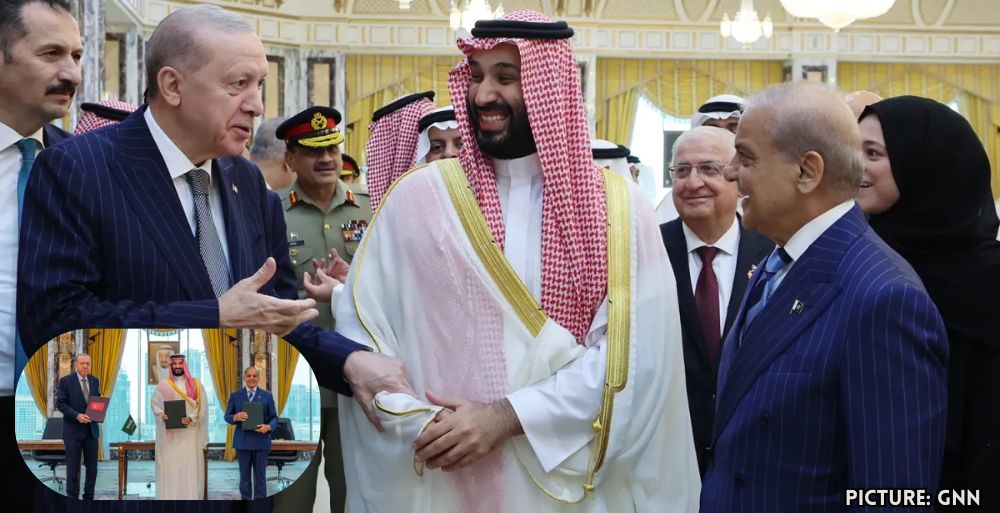
On August 7, 2026, Saudi Arabia, Türkiye, and Pakistan solidified their military cooperation with the signing of the Mecca Joint Defence Agreement at Al-Safa Palace in Mecca. This pact establishes a collective security framework, stipulating that an armed attack on any one of the signatory states will be perceived as an attack on all three. This agreement could signal a significant shift in the strategic landscape of India’s western flank, necessitating careful monitoring and strategic recalibration by New Delhi.
A Shift in Strategic Alliances
The selection of Mecca as the venue for this agreement was not incidental, nor was the timing. The pact emerged amid heightened tensions in the region, particularly in the context of the ongoing Israel-US-Iran conflict, which has seen Saudi Arabia endure missile and drone attacks from Iran-affiliated groups. As a result, confidence in traditional American security assurances appears to be waning for Riyadh.
Turkish Foreign Minister Hakan Fidan characterized the new agreement as akin to NATO’s Article 5, emphasizing that it had been under negotiation for nearly three years. He also indicated that the framework is open to additional countries, with Egypt mentioned as a potential future member. This development builds upon the bilateral Saudi-Pakistan Strategic Mutual Defence Agreement established in September 2025, indicating an evolution from a bilateral to a trilateral security agreement.
Understanding the Implications
India’s initial reaction to the Mecca Pact is likely to be viewed through the lens of its relationship with Pakistan, which remains the only Muslim-majority nation with a nuclear arsenal. The presence of Pakistan’s army chief in Riyadh prior to the signing only adds to the complexity of this situation. While Saudi officials have avoided clarifying the extent of “all military means” implied in the agreement, the absence of explicit references to nuclear capabilities does not diminish the need for vigilance.
This new trilateral arrangement brings together three militaries—Saudi Arabia, Türkiye, and Pakistan—each with distinct histories and military capabilities. Saudi Arabia boasts the Gulf’s most advanced air force, Türkiye is a NATO ally with the second-largest army in the alliance, and Pakistan possesses significant experience in military confrontations with India. Although the signatories have publicly claimed that the pact is not targeted at any specific country, India must assess the potential implications with caution.
The Role of Institutional Structures
Crucially, the establishment of a governance committee and a secretariat in Riyadh will have long-term implications. Institutions can develop their own agendas and influence regional dynamics independent of the founding leaders. Therefore, India’s assessment should extend beyond military capabilities to include how this new secretariat operates, who is invited to its meetings, and what regional issues it addresses.
Economic Considerations
From an economic perspective, the Mecca Pact warrants India’s attention due to its heavy reliance on oil imports. India imports approximately 90% of its crude oil needs, with nearly half sourced from the Middle East. Furthermore, over half of these imports pass through the Strait of Hormuz, a critical chokepoint that has already demonstrated vulnerability in recent months.
Moreover, the presence of nearly ten million Indians working across the Gulf Cooperation Council states underscores the significance of this region for India. Remittances from these workers account for approximately 38% of India’s total inward remittances, making any shifts in Gulf security architecture a matter of immediate concern for countless Indian families.
Building a Robust West Asia Doctrine
The emerging governance structure in the Mecca Pact highlights the necessity for India to evolve its own strategy in West Asia. India has historically relied on personal relationships, such as the rapport between Prime Minister Narendra Modi and Saudi Crown Prince Mohammed bin Salman, but such an approach can be precarious. The signing of the bilateral pact between Saudi Arabia and Pakistan, despite India’s close ties to Riyadh, serves as a reminder of the need for more structured engagement.
To fortify its interests, India should prioritize diversifying its crude oil and liquefied petroleum gas sources, increasing its ties with non-Hormuz suppliers. It is also essential for India to deepen institutional engagement with key Gulf partners such as the UAE and Qatar, ensuring that diplomatic and defense mechanisms are in place that can endure beyond any individual leader’s tenure.
Conclusion
While the signatories of the Mecca Pact assert that their agreement does not target any particular nation, India’s focus should not be on contesting this claim. Instead, India must proactively develop its own layered West Asia doctrine to avoid being caught off guard by future geopolitical shifts. By doing so, New Delhi can ensure that it remains not only responsive but also strategically positioned in an evolving regional security landscape.