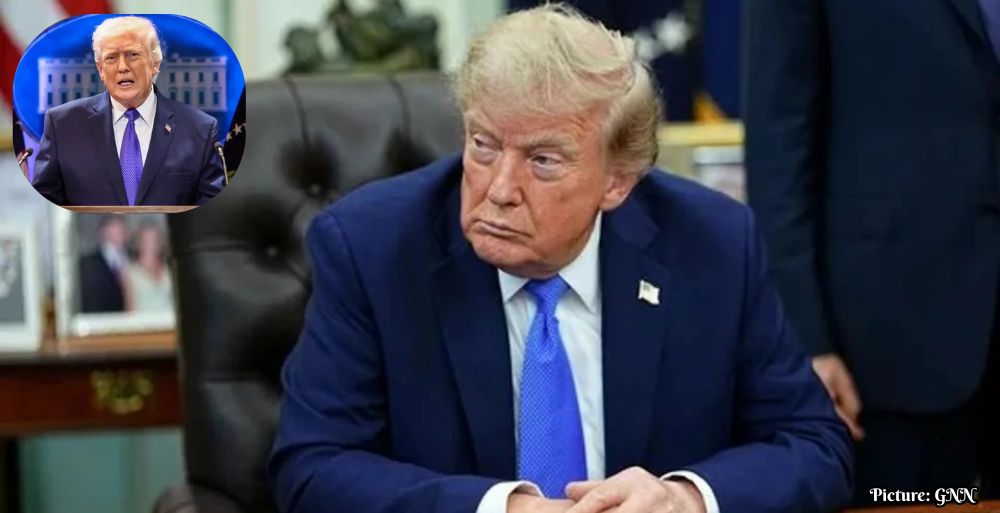
Former President Donald Trump reaffirmed his controversial pledge to provide $5,000 payments to every adult American if Republicans maintain control of Congress during his address at the GOP midterm convention in Dallas. This promise raises significant legal questions regarding its feasibility and implications for federal policy.
Former President Donald Trump reaffirmed his controversial commitment to provide $5,000 payments to all adult citizens in the event that Republicans retain control of Congress in the upcoming midterm elections. During his address at the GOP convention in Dallas, Texas, Trump emphasized the country’s economic strength, stating, “We can do that because our country has never done better. We’re taking in trillions, trillions of dollars.”
However, this assertion comes amid ongoing legal scrutiny regarding the viability of such a payment, often referred to by Trump as a “dividend.” Legal experts have raised significant concerns about whether this proposal would violate federal law, as it entails direct cash transfers to citizens from government revenues, a practice that is legally ambiguous.
Understanding the Financial Proposal
Trump’s promise of a $5,000 payment is not entirely unprecedented in the realm of American political promises, but its scale and direct nature set it apart. Historically, politicians have made ambitious economic proposals to energize their base, yet the implications of this specific pledge could have far-reaching consequences for federal budgeting and economic policy.
The potential cost of such a program could be extraordinarily high. Analysts have estimated that a nationwide rollout of this payment would require substantial federal funding, raising concerns about fiscal responsibility and the long-term impacts on the national budget. Critics argue that such a promise could be deemed fiscally irresponsible, particularly in light of the current national debt, which exceeds $31 trillion.
Moreover, Trump’s claim that the “One Big Beautiful Bill Act” has delivered the “largest tax cuts in American history” has been challenged by fact-checkers, who note that these tax cuts do not rank among the top five largest in U.S. history. This discrepancy raises questions about the credibility of Trump’s financial assertions and whether they can realistically be implemented.
Political Reactions and Implications
During his address, Trump stressed the importance of voter turnout in the upcoming elections, suggesting that his presence on the ballot would significantly influence participation rates. He urged attendees to perform “the biggest favor you’ve ever done me,” implying that their support was crucial for Republican success across various races. This rhetoric reflects a strategic effort to galvanize his base as the party prepares for the midterm elections.
Trump’s remarks were not without controversy. He took time to criticize Republican candidates, including Ken Paxton, the GOP nominee for the U.S. Senate in Texas. While acknowledging Paxton’s previous success as attorney general, Trump made disparaging comments about Paxton’s appearance, prompting mixed reactions from attendees and political observers alike. This approach illustrates Trump’s penchant for personal jabs, which can alienate potential allies within the party.
Additionally, the GOP convention featured a range of speeches from other party leaders. JD Vance, a prominent speaker and potential 2028 presidential candidate, urged voters not to abandon the Republican Party over disagreements on specific policies. Vance utilized his platform to criticize Democratic nominees, stating, “We have done a lot, my friends, and we can do a lot more if we fight together.” His comments reflect a broader strategy within the GOP to unify the party base ahead of the elections.
Opposition from Democrats
The proposed $5,000 payments have drawn significant criticism from various Democratic leaders. Beto O’Rourke, a former gubernatorial candidate in Texas, characterized the payments as a “bribe,” while California Governor Gavin Newsom described them as “pathetic and sad.” These reactions underscore the contentious political climate surrounding the midterm elections, as Democrats seek to frame Trump’s proposals as desperate attempts to maintain political power amid declining approval ratings.
As the midterm elections approach, Trump’s financial promises may resonate with voters seeking tangible benefits. However, they also raise critical questions about the sustainability and legality of such policies. Analysts argue that while financial incentives can be effective campaign strategies, they must be grounded in realistic fiscal policy frameworks to gain broader public support.
Strategic Considerations for Republicans
Trump’s approach to the midterm elections reflects a broader strategy of aligning his personal brand with Republican candidates, despite the inherent risks associated with his low approval ratings from various demographic groups. The former president’s insistence on linking his political future to that of congressional candidates may complicate their campaigns in battleground states, where independent and moderate voters are crucial to securing victories.
Moreover, Vance’s remarks during the convention suggest an awareness of the complexities facing the GOP. He implored voters to “not throw the baby out with the bathwater,” advocating for party loyalty even amidst disagreements on specific policies. This sentiment echoes a growing concern among Republican leaders regarding the potential for intra-party divisions to impact electoral outcomes.
Conclusion: Navigating the Midterm Landscape
Trump’s re-emergence on the political stage, marked by bold financial promises, highlights the challenges and opportunities facing the GOP as they navigate the midterm elections. The implications of his pledge, both legally and politically, are likely to remain a focal point of discussion as candidates seek to balance party loyalty with the demands of an increasingly diverse electorate. As the political landscape continues to evolve, the effectiveness of Trump’s strategies in mobilizing voter support will be tested against the backdrop of economic realities and legal constraints.