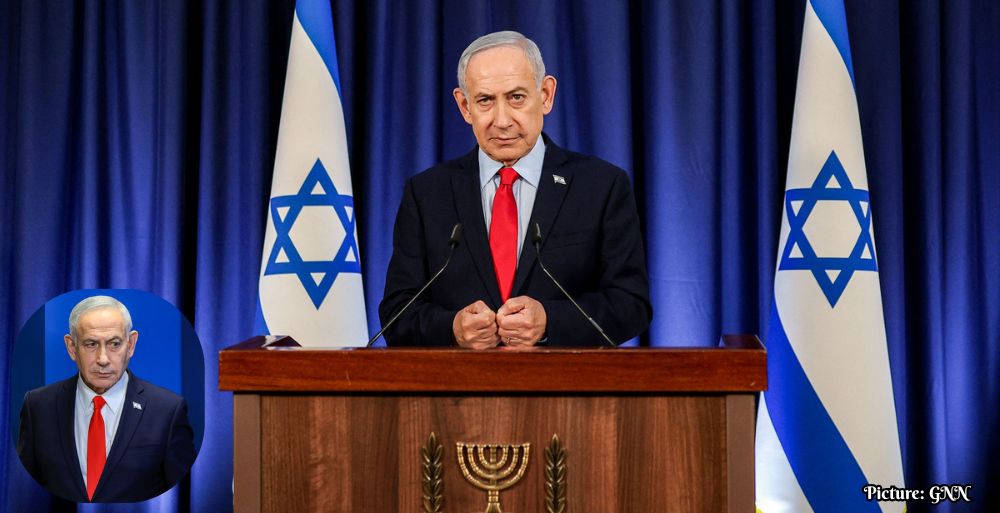
Israeli Prime Minister Benjamin Netanyahu was reportedly warned by UAE President Mohammed bin Zayed about a potential major offensive from Hamas just days before the deadly attack on October 7, 2023. Netanyahu’s office has denied this claim, asserting no communication occurred during that time.
JERUSALEM — In the lead-up to the October 7, 2023, attack orchestrated by Hamas, Israeli Prime Minister Benjamin Netanyahu allegedly received a warning from the President of the United Arab Emirates, Mohammed bin Zayed. According to a report by the Israeli newspaper Haaretz, this conversation took place approximately ten days prior to the assault, during which Bin Zayed cautioned Netanyahu about a planned operation by Hamas leader Yahya Sinwar that could result in significant bloodshed and destabilize the region.
The implications of such a warning are profound, particularly in the context of the Abraham Accords, agreements that have normalized relations between Israel and several Arab nations. Bin Zayed reportedly expressed concerns that the planned offensive could undermine these accords, suggesting a potential setback in the fragile peace that has characterized the region since the agreements were established in 2020.
Netanyahu’s Response
Despite the seriousness of the warning, Haaretz reported that Netanyahu’s response was one of “relative calm.” He allegedly assured the UAE president that Israel was prepared for various scenarios, indicating a belief that any imminent attack might originate from the occupied West Bank rather than Gaza. This assertion contrasts sharply with the subsequent events, where militants from Hamas launched an unprecedented attack that resulted in approximately 1,200 fatalities among Israelis, alongside the kidnapping of 251 individuals.
The aftermath of the October 7 assault has seen escalated violence, with hundreds of Israeli soldiers reported killed in ongoing conflicts across Gaza, Lebanon, and Iran. The scale of this violence has raised questions not only about military preparedness but also about the handling of intelligence by the Israeli government.
Contested Claims
Netanyahu’s office has categorically denied the claims made by Haaretz, labeling the report an “absolute lie.” In a public statement, Netanyahu’s representatives asserted that he did not communicate with the UAE president during the relevant period and received no warnings from him. The statement emphasized that any pertinent intelligence would have been relayed through established intelligence channels between the two nations, suggesting that the exchange of information is a routine part of their diplomatic relations.
The UAE’s Foreign Ministry has opted not to comment on the specifics of conversations between its leadership and Israel, stating that speculation regarding discussions between government leaders is not their practice. However, the Ministry did affirm that the two countries have maintained “open and direct lines of communication” since they formalized ties five years ago. They reiterated that relevant intelligence has been consistently communicated when necessary, underscoring the ongoing collaboration between the nations despite the current tensions.
Political Fallout and Upcoming Elections
As Israel approaches national elections next month, Netanyahu’s management of intelligence leading up to the October 7 attack has become a pivotal issue in the campaign. Gadi Eisenkot, a former chief of staff of the Israel Defense Forces and a prominent challenger to Netanyahu, has publicly accused the prime minister of disregarding numerous warnings prior to the assault, suggesting a failure of leadership. Eisenkot stated on social media, “He is unfit” for leadership, framing Netanyahu’s actions as a significant liability as the country grapples with the consequences of the attack.
Naftali Bennett, another political rival, has echoed similar sentiments, asserting, “Netanyahu bears personal and direct responsibility for the failure that led to the deaths of thousands of Israelis on his watch.” These criticisms reflect a growing narrative among opposition figures who are leveraging perceived intelligence failures as a central critique of Netanyahu’s administration, particularly as the electorate considers the implications of security and governance in Israel.
Humanitarian Impact and International Response
In the wake of the October attack, Israel has launched a military offensive in Gaza that has reportedly resulted in the deaths of over 73,650 Palestinians, according to figures provided by Gaza’s Health Ministry. This staggering number highlights the humanitarian crisis that has emerged from the conflict, raising questions about the proportionality of military responses and the long-term consequences for both Israelis and Palestinians.
The international community has continued to monitor the situation closely, with various nations and organizations calling for de-escalation and a return to dialogue. The complex dynamics of the region, characterized by longstanding tensions and recent diplomatic breakthroughs, underscore the challenges that lie ahead for both Israeli and Palestinian leadership.
The contrasting narratives from Israel and the UAE regarding the warning to Netanyahu exemplify the intricate and often contentious nature of intelligence-sharing and diplomatic relations in a volatile geopolitical environment. As the situation evolves, the implications for regional stability and the prospects for peace remain uncertain, further complicating an already intricate landscape.