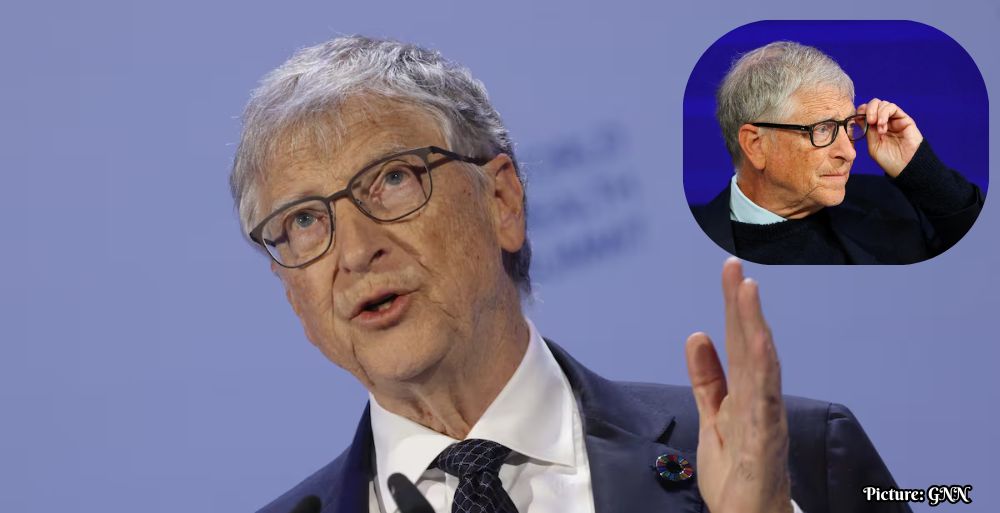
In a recent essay, Bill Gates emphasizes the necessity of establishing ‘human-reserved’ jobs to protect certain professions from the encroaching influence of artificial intelligence, while expressing concern over government readiness to manage AI’s widespread impact.
On Wednesday, Bill Gates, the co-founder of Microsoft and a prominent philanthropist, published an extensive 6,000-word essay titled The Turbulent AI Era is Here. The Choices We Make are Critical. In this piece, Gates advocates for the creation of ‘human-reserved’ jobs, aiming to safeguard specific employment sectors from the rapid advancements in artificial intelligence (AI). He compares this initiative to nature reserves, which prioritize environmental preservation over development, underlining the need for societal measures to ensure that certain roles remain exclusively human.
“Many jobs will disappear forever,” Gates declared in his essay, marking his first substantial commentary on AI in three years. “I believe that as AI and robots improve, we’ll set aside certain things for only people to do. I’ve started calling this domain human reserved. I like the phrase human reserved because it makes me think of nature reserves – places where we could put buildings and roads, but we choose not to because the loss would be too great.”
Personal Reflections on Irreplaceable Human Roles
In illustrating his point, Gates shared poignant reflections on his personal experiences with healthcare, particularly during his father’s battle with Alzheimer’s disease, which culminated in his passing six years ago. Gates emphasized the irreplaceable nature of human compassion in caregiving, stating, “Something in the care they gave my dad was irreplaceably human, no robot could or should have done it.” He further elaborated, “Imagine a robot giving you the awful news that you have an incurable disease. There’s no technical reason why it couldn’t. Yet it shouldn’t.” These insights underscore Gates’ belief that certain roles, particularly those involving sensitive human interactions, must be preserved from automation.
Concerns Over Government Preparedness for AI Integration
Beyond advocating for human-reserved jobs, Gates expressed significant concerns regarding governmental preparedness to address the far-reaching implications of AI technology. He highlighted the urgent need for a comprehensive domestic and international framework to manage AI’s effects, asserting, “The highest priority is a monumental task: creating a domestic and international framework for dealing with AI.” Gates compared the potential need for governmental restructuring to the significant changes that occurred in U.S. national security in response to the September 11 attacks. He warned that the challenges posed by AI are even more extensive, affecting various sectors including national security, education, taxation, public health, and infrastructure.
“It is fair to wonder whether the world’s institutions are up to the task of designing and implementing this new architecture,” he remarked. This statement raises critical questions about the capacity of existing governmental and institutional frameworks to adapt to the transformative nature of AI.
Emphasizing Global Cooperation on AI Issues
Gates also stressed the importance of international collaboration in addressing the complex challenges associated with AI. He indicated that effective global governance will require cooperation between major world powers, specifically the United States and China. His team is reportedly in the process of arranging a meeting with Chinese President Xi Jinping in November to explore collaborative strategies for mitigating AI-related risks. Gates last met Xi three years ago, marking a significant engagement as the first foreign entrepreneur hosted by the Chinese president since the onset of the COVID-19 pandemic.
The Dual Impact of AI on Education
Furthermore, Gates voiced concerns about the dual-edged nature of AI’s impact on education. While the technology has the potential to enhance learning opportunities, Gates warned that it could also diminish critical thinking skills among learners. He cited a preliminary survey indicating that increased AI usage was correlated with reduced critical thinking abilities, particularly among younger populations. “Ironically, the same tool that will allow people to learn more than ever could also lead to many people learning less,” he noted, highlighting the need for a thoughtful approach to integrating AI in educational contexts.
Gates’ Return to Public Discourse
This essay represents a notable re-engagement for Gates in public discourse, particularly following recent controversies surrounding his connections to the late financier Jeffrey Epstein. An external review commissioned by the Bill and Melinda Gates Foundation revealed approximately 30 meetings between Epstein and foundation leaders, including Gates, from 2011 to 2014. While Gates has not been accused of wrongdoing related to Epstein’s activities, he has publicly expressed regret for his past associations with the convicted sex offender.
As AI technology continues to evolve rapidly and exert influence across various sectors, Gates’ call for a structured approach to the establishment of human-reserved jobs, along with a robust framework for AI governance, resonates with ongoing discussions about the future of work and society’s adaptation to technological changes. The implications of Gates’ propositions extend beyond mere job security; they touch upon the very fabric of human interaction and ethical considerations surrounding technology’s role in our lives.