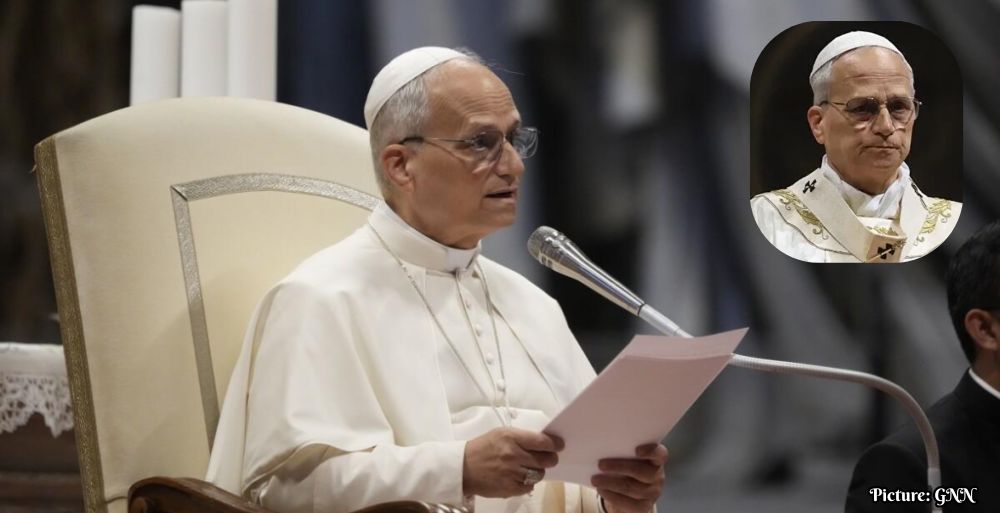
The Holy See continues to advocate for a two-State solution as the only viable path to achieving lasting peace in the Israeli-Palestinian conflict, as reiterated by Pope Leo XIV during a recent address.
Pope Leo XIV has reaffirmed the Vatican’s longstanding support for a two-State solution as the path to peace between Israel and Palestine. Speaking at the Angelus in Castel Gandolfo on August 16, 2023, the Pope urged the international community to advance this diplomatic framework, which has been the Holy See’s position for nearly eight decades. Despite the escalating violence in the region, particularly since the outbreak of conflict on October 7, 2023, the Pope emphasized that the two-State solution remains the only prospect for achieving justice and lasting peace.
Pope Leo XIV’s comments echoed a historical stance that has characterized the Vatican’s diplomacy since the mid-20th century. The two-State solution was first proposed in 1947 by the United Nations General Assembly, which recommended the partition of Mandatory Palestine into separate Jewish and Arab states. Although this plan has faced significant opposition, particularly from the Israeli government, the Holy See has consistently advocated for it as the only viable resolution to the ongoing conflict.
A Historical Overview of the Holy See’s Position
The Vatican’s commitment to a two-State solution began with calls for the internationalization of Jerusalem’s holy sites in 1947. Pope Pius XII was among the first to express concern for the region’s stability, urging leaders to secure a peaceful existence for both Israelis and Palestinians in his 1948 encyclical In multiplicibus curis. He later reinforced this message in 1949, calling for a legal status for Jerusalem to ensure its protection from the ravages of war.
In the decades that followed, Popes have continued to advocate for Palestinian rights alongside Israel’s right to security. Pope Paul VI, during his 1964 visit to the Holy Land, addressed the legitimate rights of Palestinians and sought recognition of Jerusalem as an inviolable city. His successor, Pope John Paul II, made significant strides by explicitly supporting the Palestinian claim to statehood while reaffirming Israel’s security needs in his 1984 Apostolic Letter Redemptionis anno.
Pope John Paul II’s historic pilgrimage to the Holy Land in 2000 further solidified the Vatican’s dual advocacy for peace and justice in the region. His successor, Pope Benedict XVI, echoed these sentiments during his 2009 visit, emphasizing that the two-State formula is essential for ending violence and securing a peaceful future for all inhabitants of the region.
Pope Francis and the Diplomatic Push
Pope Francis has taken the Holy See’s commitment to a two-State solution a step further, both diplomatically and symbolically. Notably, in 2015, the Vatican signed a Comprehensive Agreement recognizing the State of Palestine. The Pope also facilitated a historic peace prayer in the Vatican Gardens in 2014, bringing together Israeli President Shimon Peres and Palestinian President Mahmoud Abbas in a gesture of goodwill.
Throughout his papacy, Pope Francis has called for collective courage and creativity in pursuing peace, insisting on the necessity of recognizing the rights of both peoples to live in security and peace within internationally recognized borders. His administration has consistently pushed for diplomatic initiatives that align with this vision, furthering the dialogue on the two-State solution.
The Current Reality and Future Implications
Now, as Pope Leo XIV takes up this mantle, he has re-emphasized the urgency of the two-State solution in the context of ongoing violence and humanitarian crises resulting from the conflict. His remarks during his Apostolic Journey from Istanbul to Beirut highlighted the Vatican’s continued support for the two-State framework, despite Israel’s current rejection of it. The Pope’s insistence that this solution is the only way to resolve the enduring conflict exemplifies the Vatican’s role as a mediator in international dialogue.
In a broader historical context, the calls for a two-State solution reflect not only the Vatican’s commitment to peace but also the persistent challenges facing both Israelis and Palestinians. The Vatican’s position has remained firm even amidst changing geopolitical landscapes and the evolving dynamics of the Israeli-Palestinian conflict. The situation remains dire, with ongoing violence underscoring the need for urgent action from the global community.
Pope Leo XIV’s appeals to the international community are a reminder that while political deadlock and humanitarian crises may seem overwhelming, the pursuit of a two-State solution is not just a diplomatic ideal but a necessity for the future of both peoples. As the Holy See continues to advocate for this approach, the hope remains that a just and lasting peace can be achieved.