The Department of Health Research and Indian Council of Medical Research celebrated India’s 80th Independence Day, reaffirming their commitment to advancing medical research and innovation for national development.
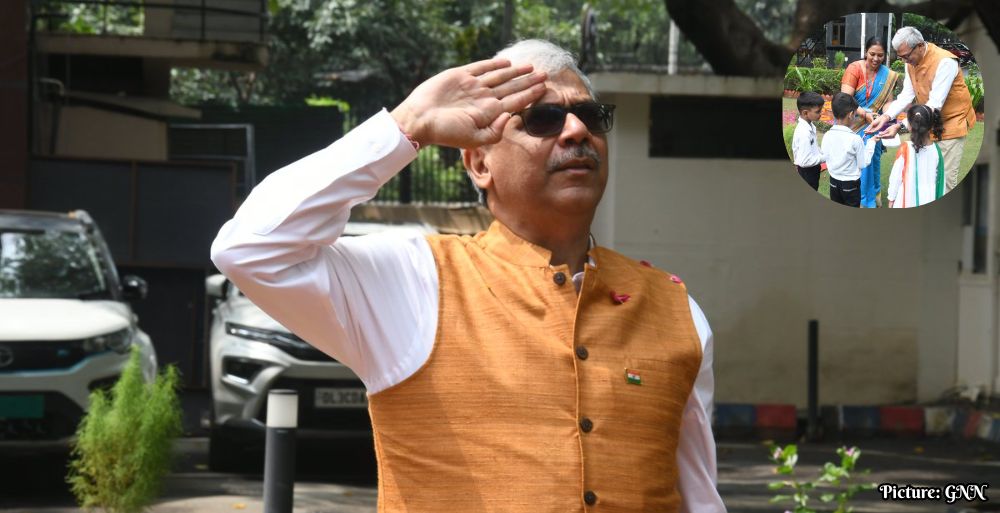
The Department of Health Research (DHR) and the Indian Council of Medical Research (ICMR) commemorated the 80th anniversary of India’s Independence on August 15, 2026, with a significant ceremony at the ICMR Headquarters located in V. Ramalingaswami Bhawan, New Delhi. The event was marked by a display of patriotic fervour and a resolute commitment to advancing health research and medical innovation, aligning with the vision of a ‘Viksit Bharat,’ or developed India.
Dr. Rajiv Bahl, Secretary of the DHR and Director General of the ICMR, presided over the flag hoisting ceremony, attended by senior officials including Ms. Richa Khoda, Joint Secretary of DHR, and Mr. Vivek Kumar Daksh, Senior Deputy Director General of Administration, as well as numerous scientists, researchers, and staff members. This occasion not only celebrated the nation’s independence but also served as a platform to reflect on the crucial role that health research plays in contributing to national development.
The Role of Health Research in Nation-Building
Addressing the audience, Dr. Bahl underscored the integral role of health research and innovation in enhancing the nation’s healthcare ecosystem. He stated, “Our work at ICMR is not merely a job; it is a contribution to nation-building. Through medical research, innovation, and health technologies, we are helping build a Viksit Bharat—and a Bharat that can become a global leader in medical research and innovation.”
Dr. Bahl emphasized that achieving scientific excellence and fostering innovation in indigenous health technologies are vital for establishing a resilient and self-reliant healthcare system. He urged the ICMR community to persist in developing solutions that improve healthcare accessibility and address the evolving health needs of the population. This focus on self-reliance, encapsulated in the term ‘Aatmanirbharta,’ reflects a broader national policy aimed at reducing dependency on foreign health technologies and fostering local innovation.
Engagement and Recognition Through Competitions
The Independence Day celebrations also featured a Prize Distribution Ceremony, recognizing outstanding contributions from ICMR staff. Awards were presented to winners of the Essay Writing and Quiz Competitions held earlier in August. These competitions were designed to encourage creativity, knowledge, and active participation among DHR-ICMR officials and staff, thereby enhancing camaraderie and collaboration within the organization.
This initiative aligns with the government’s broader goals of fostering a culture of innovation and engagement within public health institutions. By involving staff in creative competitions, the DHR and ICMR aim to instill a sense of ownership and pride in their contributions to the nation’s health landscape.
Strategic Vision for the Future
The event concluded with a renewed call for the scientific and administrative personnel to strive for excellence in biomedical research and innovation. Dr. Bahl reiterated the necessity of contributing towards Aatmanirbharta, particularly in health technologies, as India aspires to strengthen its position as a global leader in medical research and healthcare innovation. He articulated a vision where India not only develops indigenous health solutions but also plays a pivotal role in global health discussions.
In light of the ongoing global health challenges, including pandemics and the rise of non-communicable diseases, the DHR and ICMR’s commitment to advancing health research becomes increasingly vital. As India grapples with the dual challenge of providing quality healthcare to a vast population while also striving for global competitiveness in health technologies, the initiatives outlined during the celebrations serve as a foundational element in this endeavor.
Implications for India’s Health Sector
Historically, India has faced significant public health challenges, from infectious diseases to maternal and child health issues. The ICMR, established in 1911, has evolved into one of the foremost medical research agencies in the country, driving pivotal studies that have shaped health policies and practices. The emphasis on innovation and indigenous technologies reflects a paradigm shift in how healthcare challenges are approached in India.
The commitment to a self-reliant healthcare system is particularly relevant in the context of the COVID-19 pandemic, which exposed vulnerabilities in global supply chains and highlighted the necessity for countries to bolster their domestic capabilities. By focusing on developing local solutions, India aims not only to improve its healthcare outcomes but also to enhance its role in the global health arena.
As India continues to work towards becoming a Viksit Bharat, the DHR and ICMR stand at the forefront of this transformation, tasked with not only advancing health research but also ensuring that the benefits of such advancements are accessible to all segments of the population. This dual focus on innovation and accessibility will be crucial as the nation strives to address both immediate health challenges and long-term healthcare goals.
In conclusion, the 80th Independence Day celebration at the DHR and ICMR symbolizes more than a national holiday; it represents a renewed commitment to health research and innovation as essential components of nation-building. As India charts its course towards a developed future, the contributions of health research will undoubtedly play a critical role in shaping the health and well-being of its citizens.