Nita Ambani commemorates India’s 80th Independence Day by showcasing a hand-painted saree that emphasizes the rich artistic heritage of Odisha’s Pattachitra art, reflecting her commitment to Indian craftsmanship and cultural preservation.
Nita Ambani, a distinguished figure in Indian philanthropy and cultural advocacy, marked the 80th Independence Day of India on August 15, 2023, by donning a saree that embodies the nation’s vibrant artistic heritage. The saree, crafted using traditional Pattachitra art from Odisha, highlights Ambani’s dedication to celebrating Indian craftsmanship and the rich cultural legacy that comes with it.
Artistry Behind the Saree
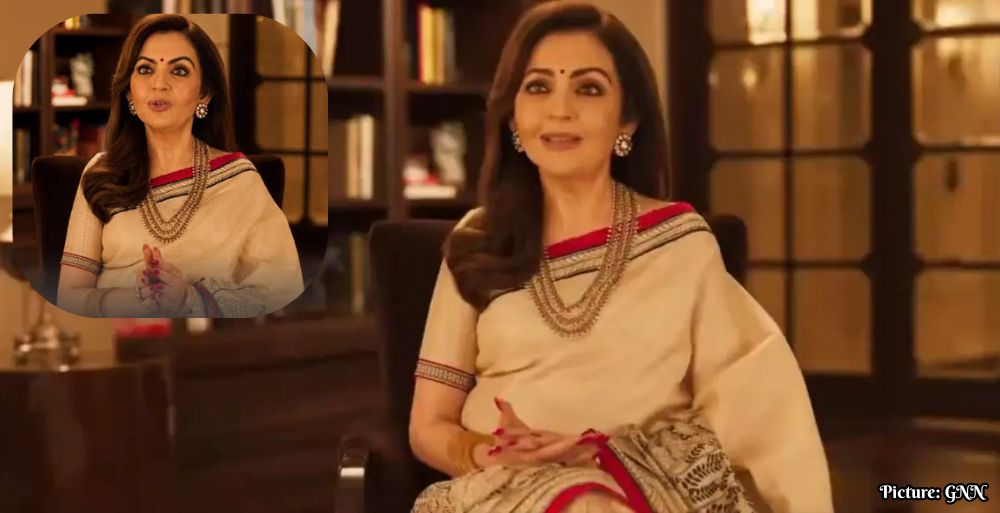
The saree worn by Ambani is a handcrafted creation designed exclusively by Swadesh, a brand recognized for its commitment to Indian arts and crafts. This exquisite piece features artwork by the renowned Pattachitra artist Prashanta Moharana, known for his intricate designs that adhere to age-old traditional techniques. The fabric of the saree is made from luminous Tussar silk, meticulously woven by master weavers from Raghurajpur, a village in Odisha celebrated for its artistic heritage.
At the heart of the saree lies the Tree of Life motif, inspired by the Vedic Ashvattha tree, which holds significant cultural symbolism in India, representing creation, continuity, and the interconnectedness of life. The branches, leaves, and birds depicted in the saree are rendered in the distinctive Pattachitra style, transforming the garment into what Swadesh describes as a “living canvas” that celebrates the artistic traditions of Odisha. This intricate design not only showcases the skill of local artisans but also serves as a visual narrative of Indian culture and spirituality.
Styling Choices
Nita Ambani complemented the saree with a matching blouse featuring a red-and-black border, maintaining a timeless aesthetic that allows the artwork to take center stage. Her choice of accessories included layered traditional necklaces, statement earrings, bangles, and a ring, enhancing the cultural narrative of her attire. Ambani styled her hair in soft curls, and she completed her look with a red bindi and defined eye makeup, which added to the overall elegance and traditional appeal of her outfit.
Significance of the Occasion
Ambani’s sartorial choice for Independence Day extends beyond mere fashion; it underscores the significance of preserving and promoting Indian craftsmanship. By wearing a saree that integrates the artistry of Odisha’s artisans, she draws attention to the skills and cultural narratives embedded in their work. This aligns with her role as the founder of the Nita Mukesh Ambani Cultural Centre (NMACC), which aims to foster a deeper appreciation of India’s diverse artistic expressions and heritage.
The timing of Ambani’s appearance also coincides with the return of “The Great Indian Musical: Civilization to Nation” at the Grand Theatre of NMACC. This production, which traces India’s historical journey through music, dance, and drama, further emphasizes Ambani’s commitment to cultural preservation and education. Her visibility during such significant cultural events reinforces the connection between fashion and cultural identity.
Broader Implications
The saree worn by Nita Ambani serves as a poignant reminder of the importance of traditional arts in contemporary society. In an age where globalization increasingly influences fashion and culture, wearing traditional attire can become a powerful statement of identity and pride in one’s heritage. Ambani’s choice of a handcrafted saree can inspire renewed interest in indigenous art forms and encourage younger generations to engage with their cultural roots.
Moreover, the significance of hand-crafted garments, such as the Pattachitra saree, is being increasingly recognized in discussions surrounding sustainability and ethical fashion. In a market dominated by mass-produced clothing, Ambani’s decision to support local artisans highlights the intrinsic value of craftsmanship and the rich stories embedded within handmade products. This approach not only promotes sustainability but also underscores the importance of preserving traditional skills and knowledge.
Nita Ambani’s Profile
Nita Ambani is widely recognized not only for her philanthropic initiatives through the Reliance Foundation but also for her influential role in promoting arts and culture in India. She serves as the chairperson of the Dhirubhai Ambani International School and is a board member of Reliance Industries. Married to Mukesh Ambani, one of the wealthiest individuals in the world, she is a mother to three children: Akash, Isha, and Anant Ambani.
Ambani’s public appearances frequently attract media attention, and her fashion choices often reflect her advocacy for Indian art and culture. Through her actions, she continues to inspire conversations about the significance of heritage, the preservation of traditional arts, and the role of contemporary figures in promoting these narratives. Her commitment to cultural expression and education remains a pivotal aspect of her public persona, making her a key player in the discourse surrounding India’s rich artistic traditions.
As India continues to evolve within a global context, the example set by figures like Nita Ambani serves to reinforce the relevance and necessity of celebrating and maintaining cultural identities. The intersection of traditional arts with modern expressions, as exemplified by Ambani’s Independence Day attire, offers both a tribute to India’s past and a beacon for its cultural future.