Iran has announced that it is close to finalizing a deal with Oman to manage the Strait of Hormuz, potentially granting Tehran control over ships entering the Gulf, a crucial maritime route for global oil supplies.
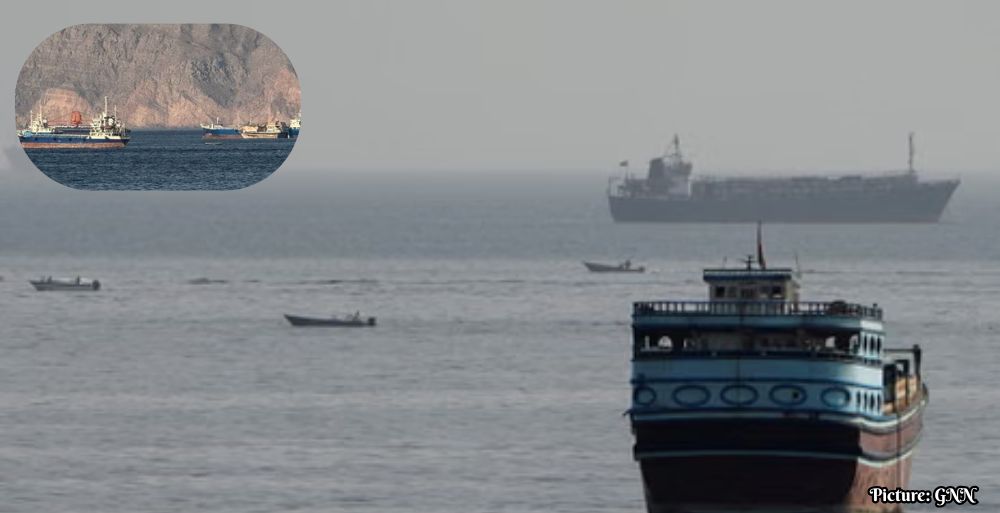
TEHRAN — Iran’s government indicated on Thursday that it is nearing a significant agreement with Oman regarding the management of the Strait of Hormuz, a vital waterway for global oil and gas transport. Iranian officials reported that under the proposed terms, Tehran would exert control over the inbound traffic of vessels entering the Gulf, a strategic maritime route that has been effectively closed since the onset of the current conflict in February.
The Strait of Hormuz is a narrow passage that facilitates the transit of approximately 20% of the world’s oil supply. The negotiations between Iran and Oman, which are geographically positioned at opposite ends of the strait, have focused on a framework for jointly managing this critical shipping lane. While reports suggest that Oman would supervise outbound shipping, Iran has maintained that the strait would not function as an open international waterway as it did prior to the conflict.
Details of the Negotiations
Despite the optimistic tone from Iranian officials, reports from Reuters indicated that sources within Iran dismissed claims made by U.S. President Donald Trump that a deal was imminent. According to these sources, key details are still under negotiation, and Iranian officials emphasized that the control over inbound traffic represents a significant concession.
“The concession has already been made regarding some form of control over Hormuz,” one source stated, highlighting the complexities involved in the ongoing discussions. Additionally, Iran’s willingness to reopen the strait appears contingent upon the United States lifting its blockade of Iranian ports, underscoring the interconnected nature of regional geopolitical dynamics.
U.S. and Regional Reactions
President Trump recently asserted during an interview that talks regarding the strait were “moving along nicely” and predicted that it would soon be open. However, the mixed signals from Iranian officials suggest that the reality on the ground remains fluid. The implications of any agreement on the Strait of Hormuz extend beyond regional trade, potentially influencing broader U.S.-Iran relations and the stability of oil markets worldwide.
In a related development, the Houthi movement in Yemen, which receives backing from Iran, claimed responsibility for missile attacks on two Saudi oil tankers. This escalation comes amidst an ongoing maritime blockade of Saudi Arabia by Houthi forces and raises concerns about further disruptions to shipping in the region.
Escalating Tensions in Lebanon and Broader Middle East Context
As discussions over the Strait of Hormuz continue, tensions have escalated in neighboring Lebanon. Two Israeli reserve soldiers were killed in an explosion in southern Lebanon, marking the first Israeli casualties since the fragile ceasefire between Israel and the Iran-aligned militant group Hezbollah took effect in June. The Israeli military confirmed that the explosion occurred as the soldiers entered a site in the village of Majdal Zoun, and investigations into the nature of the explosive are ongoing.
In response to the mounting violence, Israeli forces executed targeted strikes in southern Lebanon, claiming these actions were necessary to address violations of the ceasefire by Hezbollah. The recent military engagements have underscored the precarious security situation in the region, further complicating the ongoing U.S.-mediated negotiations aimed at achieving a long-term resolution to hostilities between Lebanon and Israel.
International Responses and Future Prospects
The situation continues to attract international scrutiny, with foreign ministers from eight Arab and Muslim nations condemning Israeli actions in Gaza and expressing concern over the humanitarian impact of ongoing military operations. Their joint letter highlighted the need for an immediate ceasefire and respect for international law, emphasizing that the violence cannot be viewed in isolation from the broader context of the Israeli-Palestinian conflict.
As the world watches the developments surrounding the Strait of Hormuz and the broader Middle East, the outcomes of these negotiations could significantly reshape maritime security and geopolitical alliances in the region. The potential for an agreement between Iran and Oman on the management of this strategic waterway carries implications not only for regional trade but also for the ongoing U.S.-Iran tensions and maritime security in the Gulf.
Background on the Strait of Hormuz
The Strait of Hormuz is one of the most strategically important waterways in the world, serving as the conduit for a substantial portion of global oil shipments. Historical tensions in this region have often revolved around control and access to this vital chokepoint. Over the years, various geopolitical events, including military conflicts and sanctions, have heightened the stakes for countries reliant on oil exports through the strait.
Potential Implications of the Iran-Oman Deal
The agreement being negotiated between Iran and Oman could have far-reaching effects on both regional and international markets. Should Iran gain control over inbound traffic, it may allow Tehran to exert greater influence over global oil prices and shipping routes, potentially leading to increased prices for consumers worldwide. Furthermore, the deal could alter the balance of power in the region, complicating U.S. interests and strategies in the Middle East.
In conclusion, the ongoing discussions about the Strait of Hormuz encapsulate a broader narrative of conflict, negotiation, and geopolitical maneuvering in the Middle East. As various stakeholders position themselves in the face of shifting alliances and confrontations, the outcomes of these negotiations will be pivotal in shaping the future of maritime security and energy distribution on a global scale.