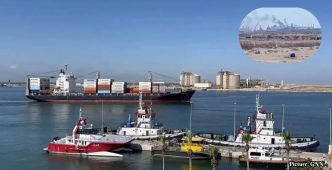
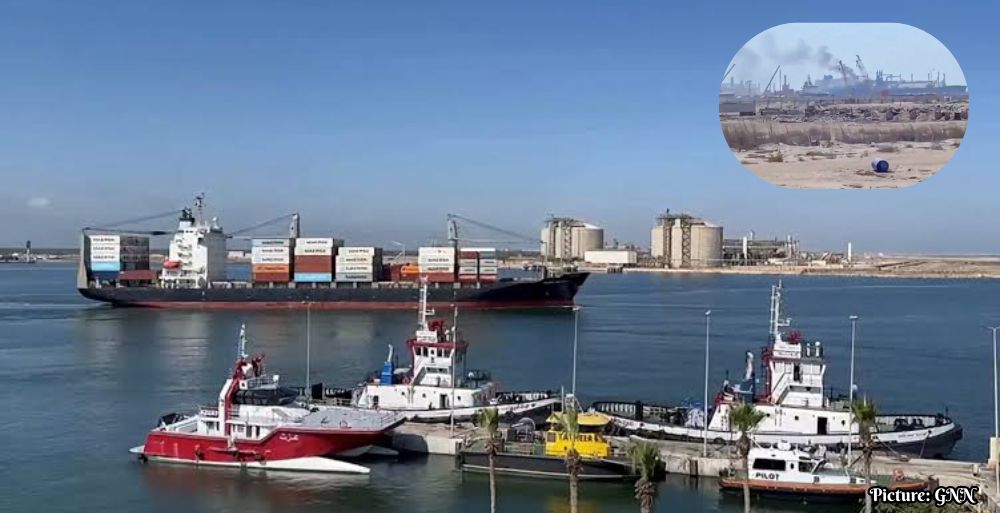
Egyptian officials confirmed that a drone strike caused a fire at Damietta Port, coinciding with escalating military hostilities between the U.S. and Iran, including recent missile exchanges and U.S. airstrikes against Iranian targets.
Damietta, Egypt – On Wednesday, July 29, 2026, a significant fire erupted at the Damietta Port in northeastern Egypt, later confirmed by the Egyptian cabinet to have been caused by a drone. This incident has heightened concerns about regional security as tensions between the U.S. and Iran continue to escalate. Preliminary investigations indicated that the fire impacted two vessels, including a storage tanker and another ship utilized for converting liquid fuel into gas. While the cabinet’s statement did not assign responsibility for the drone strike, it emphasized ongoing investigations to safeguard Egypt’s national interests.
In a statement regarding the incident, the Egyptian cabinet noted, “The relevant authorities continue to conduct investigations to determine the circumstances of the incident and take the necessary measures to protect Egypt’s interests and national security.” This development comes amid heightened military activity in the region and contributes to a growing sense of instability.
Escalating Tensions Between the U.S. and Iran
The backdrop of this incident is a series of military confrontations between the U.S. and Iran. On February 28, 2026, U.S. President Donald Trump declared the initiation of “major combat operations” against Iran. This declaration was followed by extensive airstrikes targeting Iranian military installations, governmental structures, and critical infrastructure. These military operations represent a significant escalation in what has been a prolonged and fraught relationship between the two nations, which had previously engaged in negotiations aimed at a potential war-ending agreement.
Despite diplomatic efforts and a memorandum of understanding signed in June 2026 between U.S. and Iranian delegations, military exchanges have persisted. The Strait of Hormuz, through which approximately 20% of the world’s oil flows, has become a focal point for these hostilities. The recent drone attack at Damietta Port underscores the ongoing volatility in the region and raises questions about the broader implications for international shipping and security.
Jordan’s Interception of Iranian Missiles
In a related incident, the Jordanian Armed Forces announced on Thursday that they successfully intercepted five missiles launched from Iran early that morning. This interception further illustrates the ongoing threats posed by Iranian missile capabilities and the precarious nature of regional security. Jordan’s proactive defense measures highlight the necessity for neighboring countries to remain vigilant amid escalating military activities.
Casualties from Iranian Strikes
Additionally, the Kuwaiti Army reported an Iranian strike on Thursday targeting a facility owned by a Chinese construction company in northern Kuwait, resulting in one worker’s death and considerable damage to the premises. The attack’s specifics, including the identity of the company, were not disclosed, but it adds complexity to the already intricate international relations within the region, as countries navigate their ties with both Iran and the United States.
U.S. Military Response and Strategic Implications
In response to the heightened aggression from Iran, U.S. Central Command (CENTCOM) declared that it had executed a “heavy wave” of strikes against Iranian targets, specifically in retaliation for an attempted missile attack on U.S. forces earlier in the week. CENTCOM’s operations purportedly targeted multiple installations of Iran’s Islamic Revolutionary Guard Corps (IRGC), including military command centers, missile and drone facilities, and coastal defense sites. This military response underscores the U.S. commitment to protecting its interests and those of its allies in the Gulf region.
CENTCOM confirmed that Iran had launched a series of ballistic missiles toward U.S. forces stationed in the Middle East on Tuesday, all of which were successfully intercepted, illustrating the ongoing cat-and-mouse dynamic in the region. This series of military actions continues to exacerbate already strained relations between Iran and the U.S., along with their respective allies, resulting in a precarious international situation.
Global Implications and Future Outlook
The incidents at Damietta Port, as well as the missile interceptions and strikes, highlight the fragile state of security in the Middle East. As investigations into the drone strike continue and military operations escalate, regional stability remains in jeopardy. The international community is closely monitoring these developments, recognizing their potential implications for global security, oil markets, and diplomatic relations.
Analysts suggest that sustained military confrontations could lead to broader conflicts involving multiple nations, which may further destabilize an already volatile region. The risk of miscalculation remains high, and with both the U.S. and Iran demonstrating military capabilities, the potential for escalation into a wider conflict looms. The events at Damietta Port serve as a stark reminder of the interconnectedness of regional conflicts and global security dynamics.