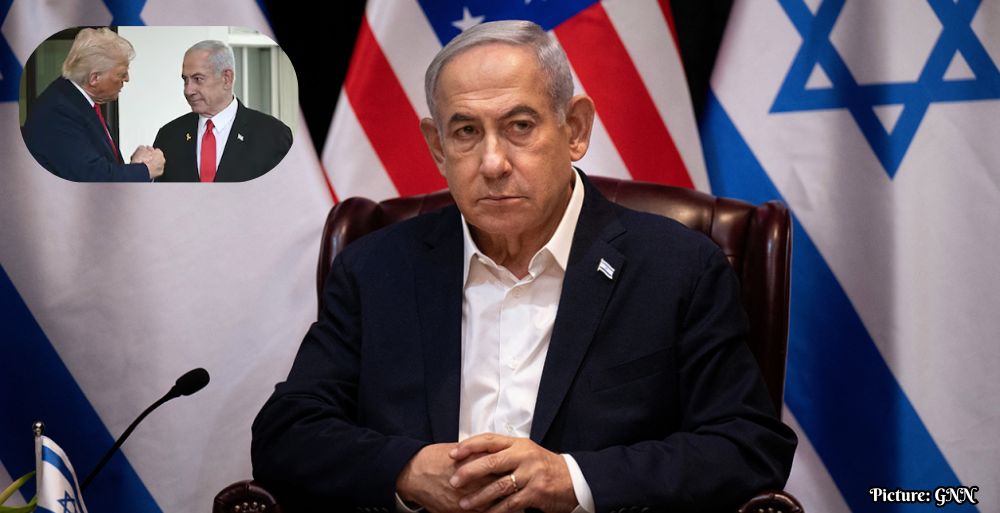
Israeli Prime Minister Benjamin Netanyahu has arrived in Washington for discussions with U.S. President Donald Trump, prioritizing the confrontation with Iran amid broader regional security concerns.
Tel Aviv, July 28 (ANI) – Israeli Prime Minister Benjamin Netanyahu arrived in Washington on Monday for high-level discussions with U.S. President Donald Trump, with a primary focus on regional security and the ongoing confrontation with Iran. This visit marks an important chapter in the ongoing collaboration between the two nations, particularly as they navigate shared concerns in the Middle East.
Prior to his departure, Netanyahu articulated his intention to make discussions surrounding the threats posed by Tehran his main priority. In a statement shared on the social media platform X, he remarked, “We will discuss all the issues on the agenda, first and foremost, Iran. Naturally, our goal is to safeguard our security and also to expand the circle of peace around us. I am embarking on this mission with one clear goal – to ensure the security, strength, and future of our dear State of Israel.”
Significance of the Meeting
This meeting represents the eighth face-to-face encounter between Netanyahu and Trump since the latter assumed office for his second term, underscoring the close coordination between Washington and Jerusalem. Netanyahu highlighted the significance of their ongoing dialogue, stating, “I am on my way to Washington for a meeting with our friend, President Donald Trump. This is my eighth meeting with him since he was elected president for his second term, more than any other international leader. This is a great privilege, but it is also a great responsibility.”
In this context, Netanyahu emphasized the need for a balanced approach to current challenges, stating, “From my experience as Prime Minister, during these complex times we must act with both great determination and great wisdom.” This reflects a recognition of the nuanced and multifaceted nature of geopolitical dynamics in the region.
Funeral Attendance and Diplomatic Context
In addition to his strategic discussions at the White House, Netanyahu confirmed that he would attend the funeral of the late U.S. Senator Lindsey Graham, who passed away earlier this month. Graham was known for his strong support of Israel during his tenure in the Senate. “And I am also embarking on another mission: To pay final respects to our friend, a true friend of mine and of the State of Israel, Lindsey Graham, one of the greatest friends the State of Israel has ever known,” Netanyahu expressed. “And I am certain that in this matter, I also represent you, the citizens of Israel.”
The announcement of Netanyahu’s visit was made by Trump during his remarks at the White House Correspondents’ Association Dinner on Friday, setting the stage for this significant diplomatic engagement. This meeting follows a recent phone call wherein Netanyahu congratulated Trump on the 250th anniversary of the founding of the United States and praised the robust ties between the two allies.
Broader Diplomatic Engagements
In a related diplomatic context, CNN reported that President Trump is also scheduled to meet with Ukrainian President Volodymyr Zelensky, alongside Netanyahu, for separate discussions focused on the ongoing conflicts in Ukraine and the Middle East. This scheduling highlights the interconnectedness of global conflicts and the role both Israel and Ukraine play in U.S. foreign policy.
According to a White House official, Trump and Netanyahu will discuss various critical issues, including the ongoing war in Iran, advancements in negotiations with Lebanon, and strategies to expand the Abraham Accords, which aim to normalize relations between Israel and several Arab nations. Since their inception, the Abraham Accords have been seen as a significant step toward reshaping Middle Eastern alliances and reducing tensions among countries in the region.
While Trump acknowledged that he and Netanyahu may have differing views on certain aspects regarding Iran, he affirmed their close alignment on many issues, stating, “We have a little difference, but pretty close.” This remark highlights the complexities of U.S.-Israeli relations, particularly as both leaders navigate the intricate landscape of Middle Eastern politics.
Implications for U.S.-Israeli Relations
The discussions between Netanyahu and Trump are anticipated to address not just immediate threats but also long-term strategies for stability in the region. The U.S. has long been a critical ally of Israel, and this meeting will likely reaffirm their commitment to collaborative security efforts. The geopolitical landscape, with the ongoing war in Iran and the broader implications of regional conflicts, necessitates consistent dialogue between the two nations.
The backdrop of these discussions includes rising tensions with Iran, which has been a persistent concern for Israel. The Islamic Republic’s nuclear ambitions and its support for militant groups in the region pose significant challenges for Israeli security. The Biden administration’s approach to Iran has also shifted, with some critics voicing concerns over potential concessions in negotiations aimed at curbing Iran’s nuclear program.
As such, the outcomes of this meeting could influence future U.S. policy in the region and reshape Israel’s strategic approach to its neighbors. The potential for conflict or cooperation in the Middle East remains a critical issue for both nations, particularly as they seek to forge alliances and promote peace amidst ongoing tensions.
In conclusion, Netanyahu’s visit to Washington underscores the importance of U.S.-Israeli relations in addressing regional security challenges. Both leaders face the task of navigating a complex and evolving geopolitical landscape, where diplomatic efforts and military considerations intersect in the pursuit of stability and security.