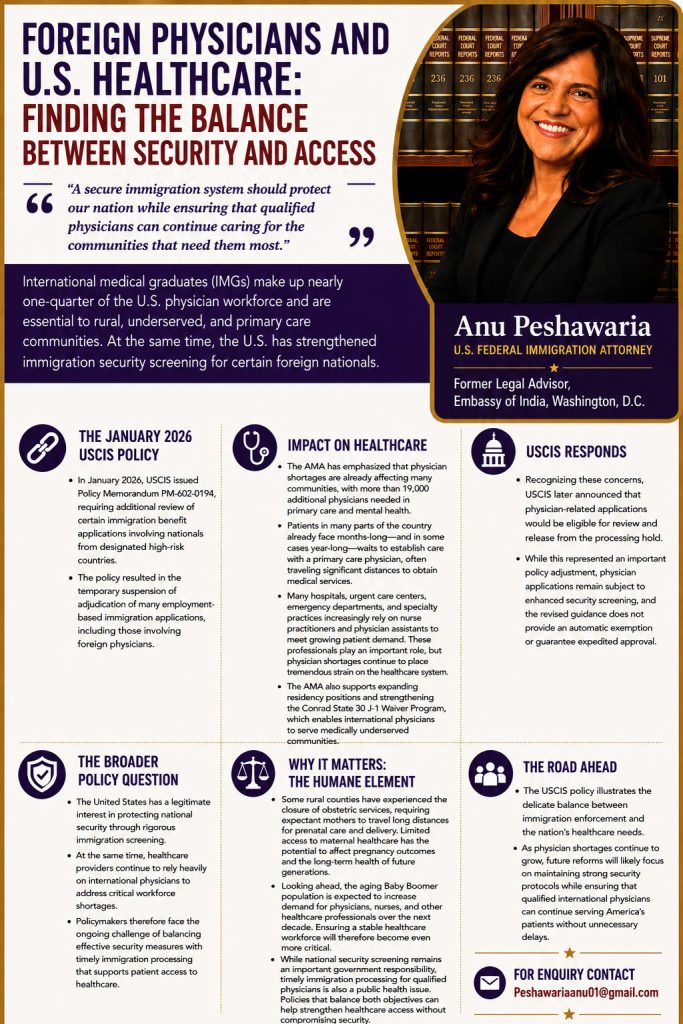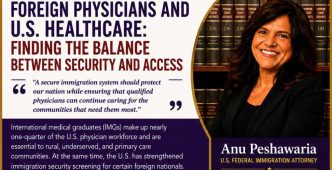
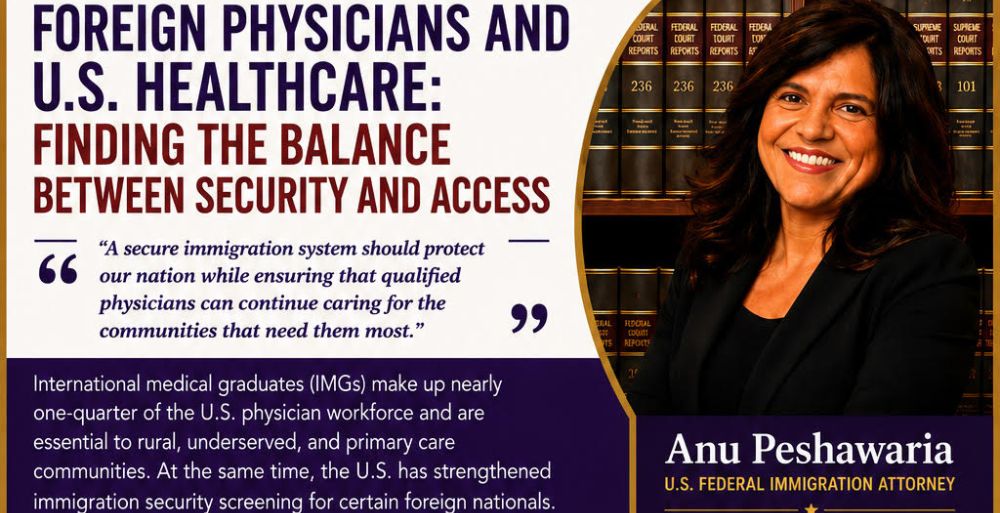
“A secure immigration system should protect our nation while ensuring that qualified physicians can continue caring for the communities that need them most.”
International medical graduates (IMGs) make up nearly one-quarter of the U.S. physician workforce and are essential to rural, underserved, and primary care communities. At the same time, the U.S. has strengthened immigration security screening for certain foreign nationals.
Anu Peshawaria
U.S. FEDERAL IMMIGRATION ATTORNEY
Former Legal Advisor, Embassy of India, Washington, D.C.
THE JANUARY 2026 USCIS POLICY
- In January 2026, USCIS issued Policy Memorandum PM-602-0194, requiring additional review of certain immigration benefit applications involving nationals from designated high-risk countries.
- The policy resulted in the temporary suspension of adjudication of many employment-based immigration applications, including those involving foreign physicians.
IMPACT ON HEALTHCARE
- The AMA has emphasized that physician shortages are already affecting many communities, with more than 19,000 additional physicians needed in primary care and mental health.
- Patients in many parts of the country already face months-long—and in some cases year-long—waits to establish care with a primary care physician, often traveling significant distances to obtain medical services.
- Many hospitals, urgent care centers, emergency departments, and specialty practices increasingly rely on nurse practitioners and physician assistants to meet growing patient demand. These professionals play an important role, but physician shortages continue to place tremendous strain on the healthcare system.
- The AMA also supports expanding residency positions and strengthening the Conrad State 30 J-1 Waiver Program, which enables international physicians to serve medically underserved communities.
USCIS RESPONDS
- Recognizing these concerns, USCIS later announced that physician-related applications would be eligible for review and release from the processing hold.
- While this represented an important policy adjustment, physician applications remain subject to enhanced security screening, and the revised guidance does not provide an automatic exemption or guarantee expedited approval.
THE BROADER POLICY QUESTION
- The United States has a legitimate interest in protecting national security through rigorous immigration screening.
- At the same time, healthcare providers continue to rely heavily on international physicians to address critical workforce shortages.
- Policymakers therefore face the ongoing challenge of balancing effective security measures with timely immigration processing that supports patient access to healthcare.
WHY IT MATTERS: THE HUMANE ELEMENT
- Some rural counties have experienced the closure of obstetric services, requiring expectant mothers to travel long distances for prenatal care and delivery. Limited access to maternal healthcare has the potential to affect pregnancy outcomes and the long-term health of future generations.
- Looking ahead, the aging Baby Boomer population is expected to increase demand for physicians, nurses, and other healthcare professionals over the next decade. Ensuring a stable healthcare workforce will therefore become even more critical.
- While national security screening remains an important government responsibility, timely immigration processing for qualified physicians is also a public health issue. Policies that balance both objectives can help strengthen healthcare access without compromising security.
THE ROAD AHEAD
- The USCIS policy illustrates the delicate balance between immigration enforcement and the nation’s healthcare needs.
- As physician shortages continue to grow, future reforms will likely focus on maintaining strong security protocols while ensuring that qualified international physicians can continue serving America’s patients without unnecessary delays.