Egypt has reopened the tomb of Amenhotep III, a pivotal figure of the 18th Dynasty, as part of its broader strategy to boost tourism with historical attractions.
CAIRO, Egypt — After being closed to the public for over two decades, the tomb of Amenhotep III, one of ancient Egypt’s most powerful pharaohs, has been reopened to visitors. This significant archaeological site, which lies 14 meters underground, has become a key attraction in Egypt’s efforts to enhance its tourism sector, particularly with the anticipated influx of visitors in the 2026 tourism season. The tomb’s reopening coincides with the unveiling of the Grand Egyptian Museum, a monumental project that aims to showcase the richness of Egypt’s ancient heritage.
A Glimpse into Ancient Royalty
Amenhotep III, who reigned from approximately 1390 to 1350 BCE during the zenith of the 18th Dynasty, is often celebrated for his contributions to Egyptian architecture and culture. His reign is marked by the construction of grand temples, palaces, and colossal statues, including the famous Colossi of Memnon, which stand sentinel near Luxor. The architectural advancements and artistic achievements during his reign have made his legacy a subject of intense scholarly research, as historians explore the vast array of monuments and artifacts from his time.
Historical Discovery and Looting
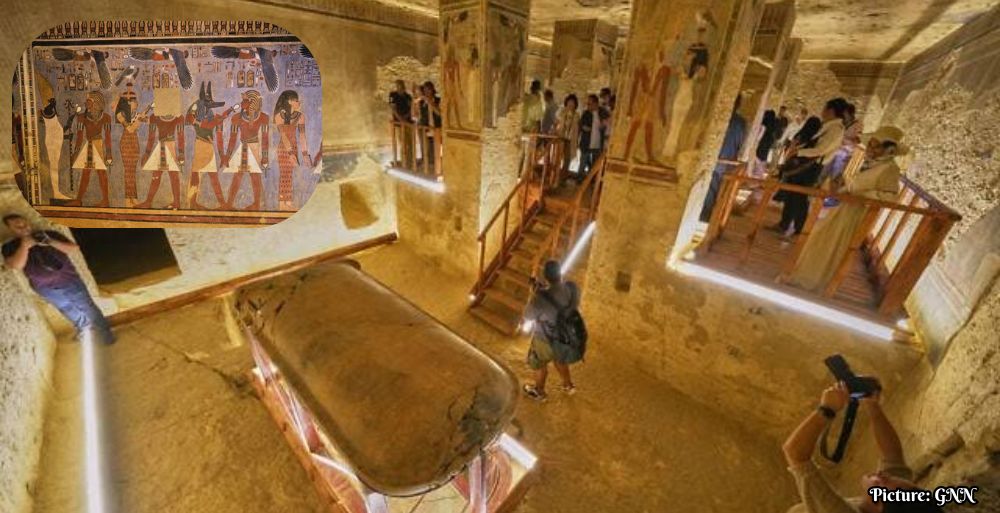
The tomb was first discovered by French engineers in 1799 during Napoleon’s campaign in Egypt, but it was British archaeologist Howard Carter who conducted a thorough excavation in 1915. Unfortunately, by that time, the tomb had already been extensively looted, leaving it largely empty. Mohamed Ismail from Egypt’s Supreme Council of Antiquities noted, “The tomb was found empty, having been looted before.” Despite this, the remaining elements, such as vibrant wall paintings and inscriptions from the Book of the Dead, offer a captivating glimpse into the burial practices and beliefs of ancient Egyptians regarding the afterlife.
Restoration Efforts and International Collaboration
The restoration of the tomb has been a meticulous process spanning over 20 years, undertaken in three phases from 2001 to 2024. This extensive project involved collaboration among Egyptian, Japanese, and international experts, coordinated with UNESCO. Nuria Sanz, UNESCO’s regional director, emphasized the significance of this collaborative effort, stating, “Two hundred and sixty representatives over these 20 years,” calling it “a special achievement.” The restoration team focused on cleaning and stabilizing the fragile paintings, which depict Amenhotep III alongside his principal wife, Queen Tiye, showcasing the artistry that characterized the period.
The Burial Complex and Its Significance
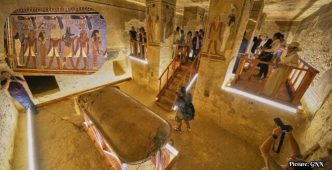
Visitors to the tomb will navigate a 36-meter sloping passage that leads to three interconnected chambers. One chamber is designated for the pharaoh, while the other two are for his queens, Tiye and Sitamun. Stunning wall scenes illustrate Amenhotep III among the gods, surrounded by inscriptions that invoke eternal life. However, unlike other tombs located in the Valley of the Kings, this tomb was never fully decorated. The pharaoh’s mummy, which was moved for safety many centuries ago, is now housed in the National Museum of Egyptian Civilization in Cairo, alongside 16 other royal mummies. This relocation was part of a broader effort to protect these invaluable artifacts from potential threats.
A Strategic Tourism Initiative
The reopening of Amenhotep III’s tomb is strategically timed, occurring just before the Grand Egyptian Museum’s grand opening on November 1, 2025. The museum, which aims to be the largest in the world dedicated to a single civilization, has already begun attracting significant crowds, with daily visitor numbers ranging from 20,000 to 24,000. The Egyptian tourism ministry reports a steady increase in tourist arrivals, approximately 20% annually, and is optimistic that historical sites like the Amenhotep III tomb will contribute to record visitor numbers. Unlike recent archaeological discoveries, this reopening showcases the results of extensive restoration work, providing travelers with a tangible connection to Egypt’s illustrious past.
The Broader Implications for Egyptian Tourism
The revitalization of Egypt’s archaeological sites comes at a crucial time for the country’s tourism industry, which has faced significant challenges over the years due to political instability and economic fluctuations. The Egyptian government has actively sought to restore and promote its cultural heritage as a way to attract international tourists. The reopening of the tomb, alongside the Grand Egyptian Museum, is part of a broader strategy to enhance Egypt’s appeal as a travel destination, especially in light of increased competition from other countries with rich archaeological histories.
Additionally, the Egyptian government has invested heavily in infrastructure improvements, including transportation and hospitality services, to accommodate the expected surge in tourism. This comprehensive approach aims not only to boost visitor numbers but also to enhance the overall experience for tourists seeking to explore the ancient wonders of Egypt.
As Egypt prepares for what it hopes will be a blockbuster year in tourism, the reopening of Amenhotep III’s tomb symbolizes more than just a restoration of a physical space; it represents a revival of interest in Egypt’s ancient history and a commitment to preserving its cultural heritage for future generations. The tomb serves as a reminder of the grandeur of ancient Egypt and its enduring legacy, inviting visitors from around the world to step back in time and experience the magnificence of one of history’s most remarkable civilizations.